
Anthropic’s Revenue Run Rate Hits $65 Billion Ahead of IPO
Anthropic's annualized revenue run rate reached $65 billion at the end of July, a sevenfold jump in seven months, as the Claude maker prepares for a potential fall IPO.

Morgan Stanley is a leading banking and financial services company using AI, data, and digital platforms across banking workflows.
Morgan Stanley is a major banking company in the AI economy, and its importance comes from the way financial institutions now combine scale, data, trust, compliance, and software. The company is listed here because banks, fintech companies, and payment networks are becoming some of the most consequential adopters of artificial intelligence. They use machine learning for fraud detection, customer service, credit decisioning, treasury operations, compliance review, personalization, developer platforms, risk analytics, document processing, and operational automation. In finance, AI is not only a product feature. It is a way to run higher-volume services with better controls, faster decisions, and more responsive customer experiences. Founded in 1935, Morgan Stanley is headquartered in New York, New York, United States. Its current leadership is represented by Ted Pick, and its company profile is best described as a Public investment banking and wealth management company. The organization is associated with Henry S. Morgan and Harold Stanley. Its major brands, platforms, or operating units include Morgan Stanley, E*TRADE, Morgan Stanley Wealth Management, Parametric, Eaton Vance. Within AIstify’s company directory, Morgan Stanley fits into the Banking and Financial Services category because it has a large role in money movement, banking infrastructure, digital finance, or financial automation. Employee count is listed as 80,000+, funding status is Public company, valuation is described as Public market capitalization varies, ownership is Public, and stock ticker information is MS. The company’s products and services include Wealth management, investment banking, markets, asset management, digital brokerage, financial advisory, AI assistant tools. That product surface matters because modern finance runs on data-rich workflows. A consumer bank has to recognize identity, price credit, detect scams, guide customers, and meet regulatory standards. A payment company has to authorize transactions in milliseconds, score fraud, route payments, manage merchants, and support cross-border activity. A fintech infrastructure company has to expose reliable APIs, connect accounts, automate back-office work, and protect sensitive financial data. These are exactly the kinds of environments where artificial intelligence can deliver measurable value when it is governed carefully. For Morgan Stanley, AI-related opportunity usually appears in several layers. The first layer is customer interaction: chat assistants, service routing, personalized insights, search, dispute support, and proactive alerts. The second layer is risk and compliance: anti-money laundering monitoring, sanctions screening, transaction anomaly detection, credit modeling, model governance, and audit support. The third layer is operations: document review, workflow automation, software engineering acceleration, knowledge retrieval, call summarization, merchant onboarding, and employee productivity. The fourth layer is product innovation: embedded finance, instant underwriting, intelligent payment routing, automated treasury, open banking, and smarter money management tools. Financial companies cannot adopt AI casually. They operate under banking, securities, privacy, payments, consumer protection, and operational resilience rules. That makes Morgan Stanley’s AI posture especially important. The company has to balance speed with controls, explainability with performance, and automation with human accountability. In practice, the strongest financial AI programs usually combine model monitoring, access controls, data lineage, vendor governance, security review, red-team testing, and clear escalation paths for sensitive decisions. This is why major banks and payment platforms often treat AI as enterprise infrastructure, not just as a feature added to an app. The competitive landscape around Morgan Stanley is also changing. Banks are competing with digital banks on speed and user experience. Payment networks are competing with wallets, real-time payment rails, and embedded checkout providers. Fintech startups are competing with incumbent institutions while also depending on banking partners, card networks, cloud platforms, and regulatory approvals. AI makes that competition sharper because it can reduce service costs, improve fraud defenses, personalize products, and help smaller teams ship sophisticated financial experiences. At the same time, it raises expectations for transparency, security, and resilience. From an investor, operator, or technology buyer perspective, Morgan Stanley is relevant because it sits near the intersection of finance and applied AI. The company’s website, support channels, developer tools, and product documentation are useful signals for how it serves customers and partners. Its public filings, product launches, hiring patterns, and platform integrations can show how aggressively it is investing in automation, data science, cybersecurity, and AI-enabled services. The most important question is not whether Morgan Stanley uses AI, but where AI is embedded in the business model and whether those systems create durable advantages. The profile also supports directory comparison across scale, products, data strategy, governance, market role, customer. For AIstify, this makes Morgan Stanley a practical reference point for tracking how artificial intelligence, financial infrastructure, payments, compliance, customer experience, and data-driven automation are converging across the global finance industry.
Digital banking platforms, risk analytics, AI operations tooling, customer service automation, fraud detection, data platforms, and partner integrations.
Interest income, fees, wealth and advisory revenue, transaction services, card economics, treasury services, and enterprise financial products.
Anthropic's annualized revenue run rate reached $65 billion at the end of July, a sevenfold jump in seven months, as the Claude maker prepares for a potential fall IPO.

Anthropic is scheduling investor meetings ahead of a potential IPO as soon as October, a move that could take the Claude maker public before rival OpenAI.

IBM shares sank about 23% after it warned that preliminary second-quarter results fell short, as clients diverted spending toward memory and servers ahead of price increases.

Big Tech's AI capital spending is projected to reach about 3.2% of US GDP by 2027, overtaking national defense spending as a share of the economy for the first time.
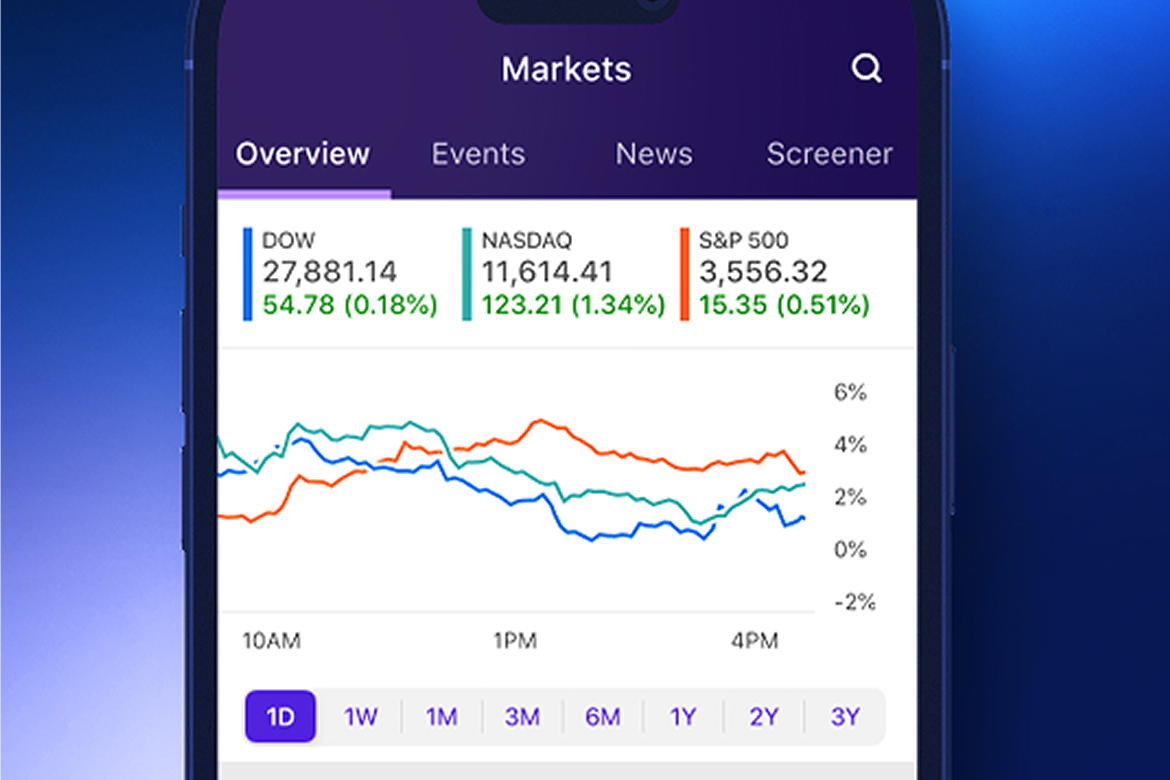
Morgan Stanley’s E*Trade is in talks to lead retail distribution for SpaceX’s record IPO, potentially sidelining platforms like Robinhood and SoFi.