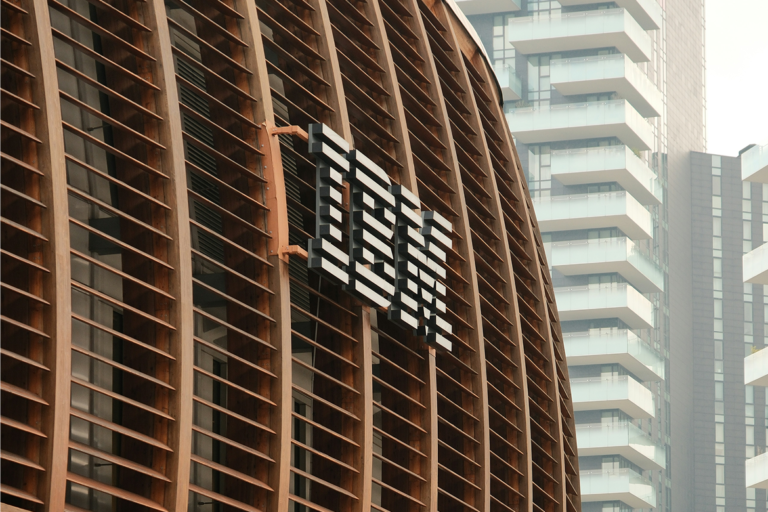

IBM shares plunged about 23% on July 14, one of the company’s steepest single-day declines in decades, after it warned that preliminary second-quarter results had fallen short of Wall Street expectations.
The company reported adjusted earnings of $2.93 a share on revenue of $17.2 billion, below analyst forecasts of $3.01 a share and $17.86 billion, according to FactSet. Revenue rose just 1% from a year earlier, and GAAP earnings of $2.27 a share fell 2%. CEO Arvind Krishna called the quarter “disappointing” and took ownership of it, writing to investors that “these conditions require our teams to execute perfectly, and this quarter we faltered,” acknowledging that numerous large deals failed to close on the timelines IBM expected.
The most consequential explanation was a sudden shift in how customers spent. In the final weeks of June, Krishna said, clients redirected their capital budgets toward servers, storage and memory to lock in supply-constrained hardware ahead of expected price increases, spending that came at the expense of IBM’s software and mainframe products. IBM had anticipated some supply-chain impact but not the magnitude of the reprioritization.
The pain landed in infrastructure, where revenue fell 7%, dragged down by weaker sales of its Z mainframe line and the associated Transaction Processing software. Software revenue still rose 5% and consulting was roughly flat. Krishna also cited industry-wide cybersecurity concerns as a distraction that delayed customer purchasing decisions, adding that these were “not excuses, but realities.”
The reaction was severe and swift, wiping out a large chunk of IBM’s market value in premarket trading and dragging the stock toward two-month lows. IBM has long trailed the growth rates of peers like Microsoft and Amazon, which post double-digit revenue gains while IBM’s business has stayed in single digits, leaving it little room for error.
Analysts split on the news: Morgan Stanley and Oppenheimer raised their price targets, while HSBC downgraded the stock to “Reduce,” arguing investors could assemble a cheaper “synthetic IBM” from other companies with similar exposure. Full results are due July 22.
The AI Boom Cuts Both Ways
The miss is a vivid illustration of how the AI infrastructure frenzy is reshaping enterprise budgets, and not always to incumbents’ benefit. The same memory-chip shortage and “chipflation” that has lifted SK Hynix, Micron and Samsung, and forced price increases at Apple and Microsoft, is now pulling corporate spending away from software and mainframes toward securing scarce hardware.
IBM has effectively become a casualty of the boom rather than a beneficiary, its steady software-and-services model squeezed as clients hoard servers and memory before prices climb further. It also raises an uncomfortable question about whether AI-driven capital reallocation is a temporary June rush, as Krishna implied, or the start of a durable shift in where technology dollars flow.
What It Signals for the Sector
The warning lands amid broader unease about the AI trade, arriving days after memory stocks tipped into bear-market territory and the Magnificent Seven shed trillions on doubts about whether AI spending will pay off.
IBM’s stumble adds a new wrinkle: even beyond questions about returns on AI investment, the scramble to secure AI-adjacent hardware is actively disrupting the results of established software vendors caught in the middle. Krishna sought to redirect attention to IBM’s long-term bets, reiterating a plan to invest more than $10 billion in quantum computing over five years and a letter of intent with the Commerce Department to build a quantum wafer foundry backed by CHIPS Act funds.
Whether that future-facing story reassures investors, or the execution stumbles and budget shifts define the narrative, will become clearer when IBM reports full results and updates its outlook on July 22.
Disclaimer: AIstify is an independent media brand owned and operated by NuvexMedia LLC, publishing news, research, and insights on artificial intelligence, emerging technologies, automation, and related industries. NuvexMedia LLC invests in and collaborates with companies across the AI, technology, software, and digital innovation sectors. These relationships do not influence AIstify’s editorial coverage, and the publication maintains full editorial independence to provide accurate, timely, and objective information. © 2026 NuvexMedia LLC. All rights reserved. This content is for informational purposes only and should not be considered legal, tax, investment, financial, or other professional advice.