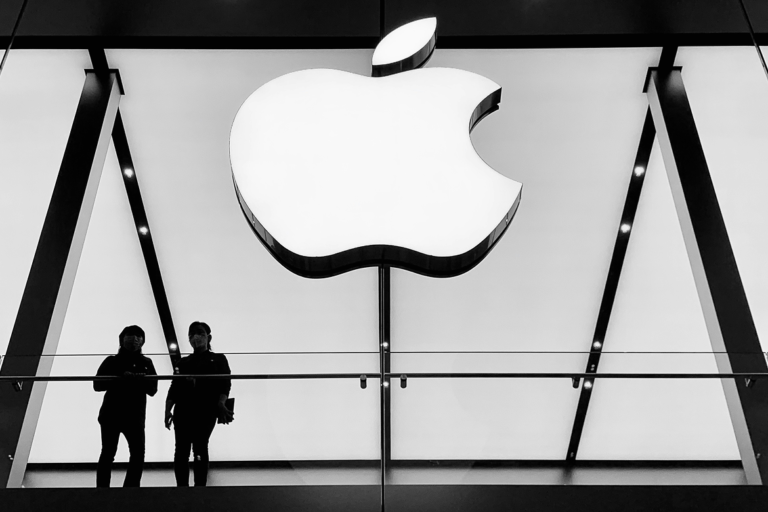

Apple said on July 8 that it is expanding its partnership with the chipmaker Broadcom in a multi-year deal expected to exceed $30 billion, its largest US manufacturing commitment to date. The agreement will lead to the production of more than 15 billion US-made chips and includes a $1.5 billion expansion of Broadcom’s facility in Fort Collins, Colorado, though Apple did not say when the new capacity will come online.
Broadcom disclosed in a securities filing earlier in the week that the two companies had signed new long-term agreements to develop and supply custom chips for multiple generations of Apple products through 2031. The deal is the biggest piece of Apple’s previously announced $600 billion, four-year US investment plan.
Broadcom has supplied Apple for years, chiefly with the wireless components that connect iPhones to cellular, Wi-Fi and Bluetooth networks, so the new agreement deepens an existing relationship rather than starting a new one.
What makes it notable is the emphasis on US-made custom silicon, described in Broadcom’s filing as application-specific integrated circuits, or ASICs. These are chips built for a narrow purpose, and they are increasingly central to AI, where custom designs handle tasks like running AI models more efficiently than general-purpose processors. Apple framed the deal as advancing an end-to-end silicon supply chain built in America.
The politics are unmistakable. Outgoing CEO Tim Cook, whose successor is set to take over amid this push, has made American manufacturing a signature theme aligned with the Trump administration’s priorities, and he thanked President Trump directly for supporting the project. Domestic chip commitments have become a way for large technology firms to secure goodwill in Washington amid tariff threats and pressure to reshore production. For Apple, the announcement also serves a defensive purpose, showing tangible progress on its $600 billion pledge and framing a routine supply renewal as a patriotic investment.
The Strategic Fit
The timing reflects how thoroughly AI has reshaped the chip business. Demand for custom silicon is surging as companies build processors tailored to AI inference, and that same demand has strained capacity at Apple’s main manufacturing partner, Taiwan Semiconductor, which also serves Nvidia.
Locking in Broadcom capacity through 2031 gives Apple supply certainty for components it cannot easily make itself, even as it designs more of its own chips in-house. The deal notably validates Broadcom’s custom-chip strategy at a moment when many big customers are trying to build silicon internally. Broadcom’s filing ties into its broader AI-era push, which includes developing Google’s next-generation Tensor Processing Units and supplying networking components for Anthropic’s AI infrastructure through 2031, positioning it as a key arms dealer of the AI buildout.
Reasons for Caution
A few caveats temper the headline number. The $30 billion figure spans roughly five years and multiple product generations, so it represents an expanded long-term supply arrangement rather than sudden new spending, and Apple gave no timeline for the Fort Collins capacity or precise job figures beyond hundreds of roles.
Reshoring advanced chip production is also slow and costly, and it remains to be seen how much of the 15 billion chips reflects genuinely new domestic capacity versus work that would have happened anyway. Investors have separately worried about Apple’s broader effort to replace outside suppliers with in-house designs, a tension this deal both eases, by committing to Broadcom, and highlights. For now it is a substantial vote of confidence in US chipmaking, with the execution details still to be filled in.
Disclaimer: AIstify is an independent media brand owned and operated by NuvexMedia LLC, publishing news, research, and insights on artificial intelligence, emerging technologies, automation, and related industries. NuvexMedia LLC invests in and collaborates with companies across the AI, technology, software, and digital innovation sectors. These relationships do not influence AIstify’s editorial coverage, and the publication maintains full editorial independence to provide accurate, timely, and objective information. © 2026 NuvexMedia LLC. All rights reserved. This content is for informational purposes only and should not be considered legal, tax, investment, financial, or other professional advice.