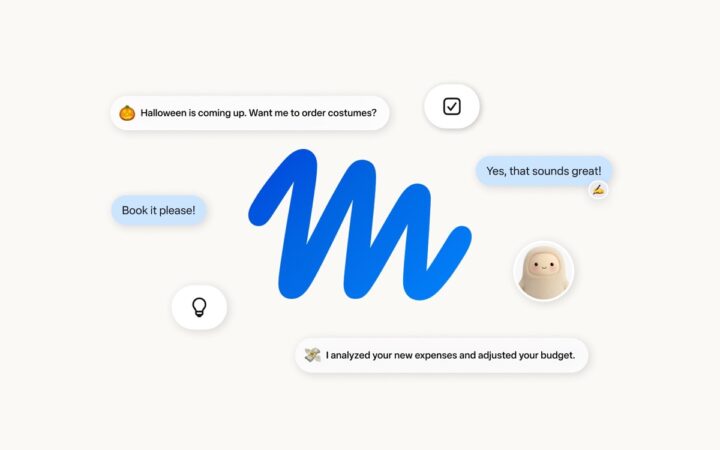
Meta has quietly launched Pocket, a mobile app that lets people create small interactive games and apps by typing a description, with no coding required. The app, which Meta describes as a creative platform for making and sharing “gizmos,” pairs a prompt-based creation tool with a scrollable, TikTok-style feed where users can play, like and remix creations made by others.
A gizmo can respond to touch, phone tilt, sound and even the camera, turning a short prompt into a playable object rather than a static image or video. Meta did not formally announce Pocket, and app-tracking firm Appfigures dates its debut on the App Store and Google Play to June 29.
Pocket is the product of Meta’s acquisition earlier this year of the team behind Gizmo, a vibe-coded gaming startup, and it closely resembles the original Gizmo app, which is still listed; the Android package name even retains “com.facebook.gizmo.”
The Gizmo team now reports into Meta Superintelligence Labs, the unit behind Meta’s Muse Spark model and its $14.3 billion superintelligence push. The original Gizmo app had drawn about 635,000 lifetime installs with a 98% positive sentiment rating, a track record that suggests the format has an audience and helps explain why Meta wants to own it.
The launch fits two overlapping Meta strategies. One is making generative AI a mainstream habit, extending earlier tools like AI images in the Meta AI app, AI videos in Vibes and AI features baked into its Edits video editor. The other is a deliberate pattern of shipping many small, standalone experimental apps, such as the recent Forum and Instants, to test what resonates before folding ideas into Facebook and Instagram. CEO Mark Zuckerberg has reportedly told staff that AI efficiencies now let the company build products far faster.
The Open Questions
Several caveats temper the ambition. Pocket is a soft-launch, currently available only in Brazil, with no official announcement, which signals an early test rather than a finished product. Appfigures cannot yet detect meaningful downloads.
The market is also crowded, with rivals like Sekai, which raised $20 million, and Wabi and Vibecode chasing the same idea. The core uncertainty is whether AI-generated mini-games are genuinely fun enough to sustain repeat play, or whether they wear off as a novelty.
Analysts are watching closely to see whether snackable creations can deliver the long-term engagement needed to justify Meta’s enormous AI spending, and privacy questions loom given the app’s access to sensors, camera and personal data to power its feed.
Disclaimer: AIstify is an independent media brand owned and operated by NuvexMedia LLC, publishing news, research, and insights on artificial intelligence, emerging technologies, automation, and related industries. NuvexMedia LLC invests in and collaborates with companies across the AI, technology, software, and digital innovation sectors. These relationships do not influence AIstify’s editorial coverage, and the publication maintains full editorial independence to provide accurate, timely, and objective information. © 2026 NuvexMedia LLC. All rights reserved. This content is for informational purposes only and should not be considered legal, tax, investment, financial, or other professional advice.