Samsung Electronics is a leading consumer electronics and semiconductors company shaping semiconductors, AI chips, and computing infrastructure across AI, cloud, chips, software, devices, and enterprise technology.
Samsung Electronics is a major big technology company in semiconductors, AI chips, and computing infrastructure. It belongs in an AIstify company directory because the largest technology companies increasingly define how artificial intelligence is built, distributed, commercialized, and adopted. These companies influence the market through cloud infrastructure, semiconductors, consumer devices, enterprise software, developer ecosystems, digital commerce, operating systems, data platforms, and AI-enabled workflows. Founded in 1969, Samsung Electronics is headquartered in Suwon, South Korea. Its leadership field is listed as Jong-Hee Han, and its business profile is best described as a Public electronics, semiconductor, mobile, display, appliance, and AI device company. The organization is associated with Samsung Group heritage. Its major brands, platforms, or programs include Samsung Electronics, Galaxy, Exynos, SmartThings, Samsung Foundry, HBM memory. Within AIstify’s company directory, Samsung Electronics fits into the Consumer Electronics and Semiconductors category.
Employee count is listed as 270,000+, funding status is Public company, valuation is described as Public market capitalization varies, ownership is Public, and stock ticker information is SSNLF, 005930. KS. The company’s products and services include Smartphones, memory chips, foundry services, displays, consumer electronics, AI devices, home appliances, edge AI hardware, connected devices. This product surface matters because big tech companies tend to control several layers of the AI value chain at once. One company might supply cloud compute, another might manufacture chips, another might own consumer distribution, and another might provide enterprise software that brings AI into daily business processes. The most important companies are not only building models; they are also shaping procurement, developer tooling, infrastructure spending, data governance, security expectations, and customer adoption. Samsung Electronics’s relevance can be understood through several practical layers.
The first layer is infrastructure: compute, networks, storage, chips, servers, and data centers determine what AI systems can run at scale. The second layer is software: operating systems, cloud platforms, business applications, creative tools, developer frameworks, and databases determine how AI reaches users. The third layer is ecosystem: partners, app stores, marketplaces, system integrators, and enterprise channels determine how quickly technology spreads. The fourth layer is trust: privacy, security, reliability, compliance, and responsible deployment matter when AI becomes part of everyday products and workflows. AI is now central to the competitive strategy of major technology companies. Semiconductor firms are building faster accelerators, memory, networking, and manufacturing equipment for model training and inference. Cloud providers are competing on model hosting, AI agents, developer services, and managed infrastructure.
Enterprise software companies are embedding AI into CRM, ERP, service management, analytics, design, documents, and collaboration. Device companies are bringing AI to phones, PCs, wearables, and edge hardware. Networking and infrastructure vendors are redesigning systems for data-intensive AI workloads. The competitive context around Samsung Electronics is changing quickly. Capital spending on AI infrastructure is reshaping cloud, chip, and data center markets. Generative AI is changing search, creativity, enterprise productivity, customer service, coding, analytics, and business operations. Regulators are paying closer attention to platform power, data use, competition, privacy, and safety. Customers are asking whether AI features produce measurable value, whether vendors can control costs, and whether large platforms can be trusted with sensitive workflows. In this environment, scale is powerful, but execution still matters.
From an operator, investor, or technology buyer perspective, Samsung Electronics is worth tracking because big tech companies can move entire markets with product launches, pricing changes, developer tools, supply agreements, cloud regions, chip roadmaps, AI model releases, and partner programs. AIstify tracks Samsung Electronics with tags including samsung electronics, big tech, semiconductors, ai devices, memory chips, consumer electronics, samsung electronics profile, samsung electronics company profile. The company’s public website is https://www. samsung. com/.
For AIstify, this makes Samsung Electronics a useful reference point for tracking how big technology companies shape AI infrastructure, software platforms, chips, cloud services, devices, and enterprise automation.
Click to see more
Products & Business
Products & Services
Smartphones
memory chips
foundry services
displays
consumer electronics
AI devices
home appliances
edge AI hardware
connected devices
Platform & Tools
Cloud platforms, developer tools, AI model services, APIs, SDKs, data platforms, chip software, enterprise software marketplaces, or partner ecosystems where available.
Revenue Model
Hardware sales, cloud consumption, software subscriptions, enterprise licenses, usage-based AI services, advertising, marketplace revenue, services contracts, and platform fees.
Key Information
Business Type
Public electronics, semiconductor, mobile, display, appliance, and AI device company
French AI startup Mistral AI has closed a €3 billion Series D round at a valuation of approximately $24 billion, the largest equity fundraise by a privately held European technology company.
Google is designing Frozen v2, a chip that hardwires parts of its Gemini model into silicon and could serve six to ten times more tokens per watt, targeting deployment by 2028.
IBM shares sank about 23% after it warned that preliminary second-quarter results fell short, as clients diverted spending toward memory and servers ahead of price increases.
SK Hynix raised $26.5 billion in its Nasdaq debut, the largest US listing ever by a foreign company, as investors rushed to buy into the AI memory chip boom.
South Korea announced about $880 billion in planned investment to expand chipmaking, AI data centers and robotics, aiming to double memory output and revive regions outside Seoul.
SK Hynix filed to raise about $29 billion through a Nasdaq ADR listing set for July 10, roughly double earlier estimates, to fund its AI memory expansion.
More than 45,000 Samsung workers are threatening an 18-day strike over bonus disparities tied to the AI chip boom. The dispute risks disrupting global semiconductor supply chains and deepening tensions inside Samsung’s chip business.
Xiaomi plans to release a new smartphone processor each year and launch an AI assistant for international markets as it expands its chip design and AI ecosystem.
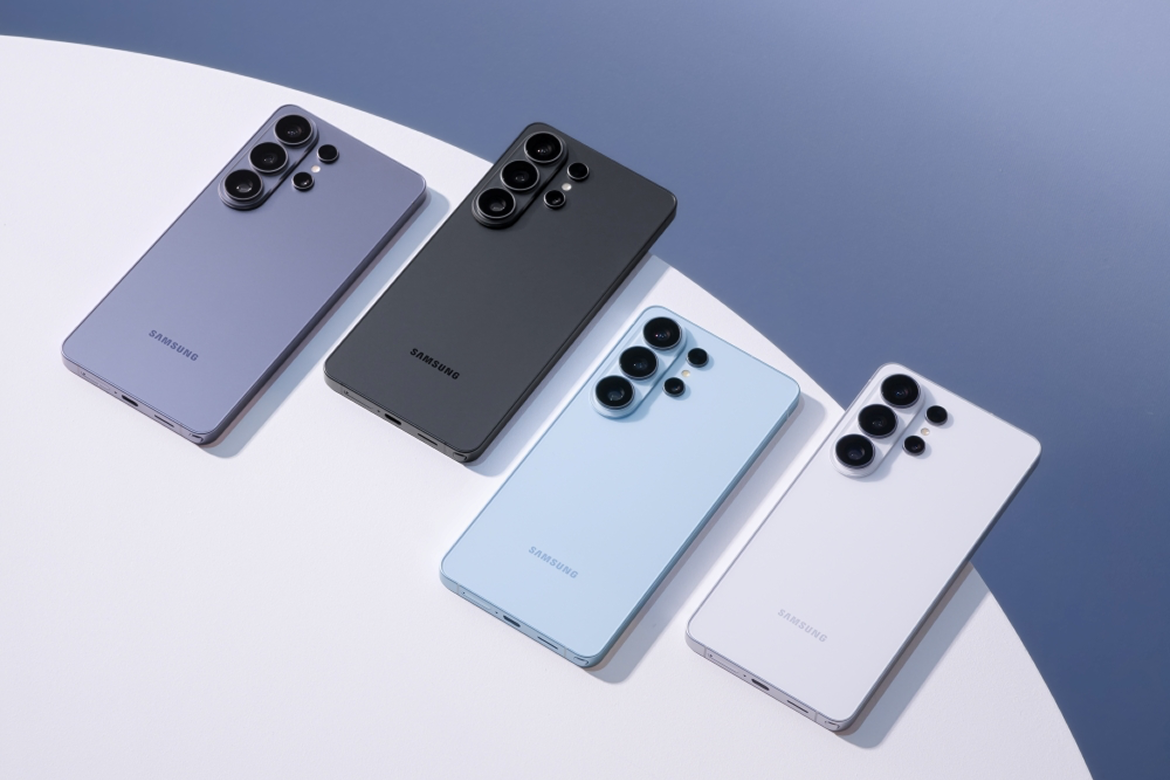
Samsung introduces the Galaxy S26, S26+ and S26 Ultra, featuring advanced Galaxy AI, a new Privacy Display, and upgraded performance powered by Snapdragon 8 Elite Gen 5 for Galaxy.