Key Notes
- Anthropic and OpenEvidence are partnering to offer a free version of OpenEvidence's AI clinical decision support tool to physicians in roughly 100 low and middle income countries, including Angola, Haiti, Mongolia, Sudan, and Uganda.
- OpenEvidence, which US clinicians already consulted 42 million times in August alone according to founder Daniel Nadler, will handle regional customization while Anthropic provides the underlying technology, and the companies did not disclose financial terms.
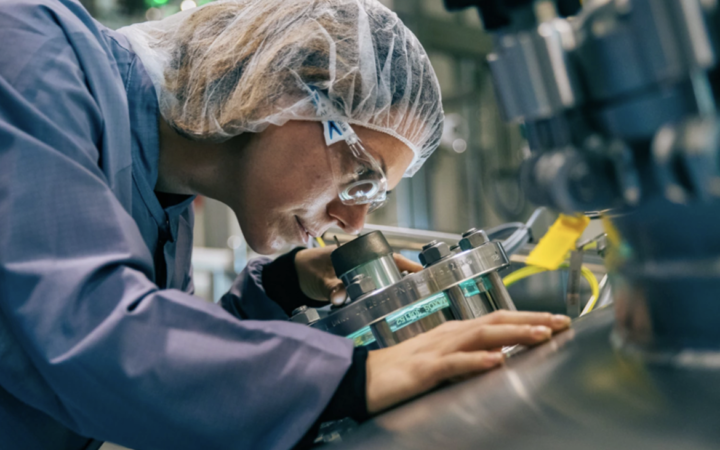
- The partnership follows Reuters reporting last week that Anthropic built a physical biology lab for AI assisted drug discovery, underscoring a broader push by the company into healthcare and life sciences applications.
Anthropic and medical knowledge platform OpenEvidence are partnering to bring free AI powered clinical decision support to physicians in dozens of low and middle income countries, extending a tool that already answers tens of millions of questions a month for clinicians in the United States and Europe.
Free Access in Nearly 100 Countries
According to a Reuters report, OpenEvidence answers physicians’ clinical questions by drawing on peer reviewed medical research and treatment guidelines, and the platform is already free to clinicians in the US and Europe. The new initiative is a specialized version of that tool, offered at no cost to healthcare providers in roughly 100 countries, including Angola, Haiti, Mongolia, Sudan, and Uganda, where limited access to medical literature, specialist expertise, and continuing medical education can affect patient care.
OpenEvidence founder Daniel Nadler said access to medical knowledge should not depend on geography. Under the partnership, Anthropic’s technology will provide back end support for the expanded tool, while OpenEvidence tailors the system to different regions and health systems. Anthropic and OpenEvidence did not disclose the financial terms of the collaboration.
A Fast Growing Platform in the US
OpenEvidence has built a substantial user base among American physicians already. According to Nadler, US clinicians consulted the platform 42 million times in August alone, and he said several hundred million Americans will have been treated in 2026 by a doctor who used OpenEvidence to help guide care.
The company, which brands itself as a kind of ChatGPT for doctors, has separately struck content partnerships with medical publishers including the New England Journal of Medicine and JAMA Network, giving it access to full text clinical research to ground its answers.
Part of Anthropic’s Broader Health Push
The OpenEvidence partnership follows closely on Reuters reporting last week that Anthropic had built a physical biology lab to support AI assisted drug discovery, part of a wider push by the company into health and life sciences even as some of its own executives and outside lawmakers continue to call for caution around the pace of AI development more broadly.
Taken together, the two moves suggest Anthropic sees clinical and biomedical applications as a priority area for its technology, distinct from the consumer chat and coding products that have driven much of its commercial growth to date.
Debate Over AI Trained on Wealthy Country Data
Healthcare systems around the world are increasingly exploring whether generative AI can help offset shortages of physicians and medical specialists, particularly in regions where both are scarce. Supporters argue that AI tools let clinicians quickly work through large volumes of medical information that would otherwise take far longer to review manually.
Critics have cautioned that systems trained primarily on data from wealthier countries may not always reflect local practice conditions, disease patterns, or treatment availability in the lower and middle income countries where OpenEvidence’s expanded tool is being offered.
Neither Anthropic nor OpenEvidence detailed how the expanded platform will account for those regional differences, or how clinicians in the newly covered countries will be able to flag inaccurate or locally inapplicable guidance once the tool is in wider use. The companies also did not say when the free international version will formally launch or how quickly it will be rolled out across the roughly 100 countries on OpenEvidence’s list.
A Crowded Field For AI In Medicine
OpenEvidence has grown quickly since its founding by building relationships directly with medical publishers rather than scraping clinical literature from the open web, a model Nadler has said helps the platform avoid the kind of copyright disputes that have dogged other AI companies.
That approach has made it a partner of choice for organizations such as the National Organization for Rare Disorders, which struck its own deal with OpenEvidence earlier this year to expand access to rare disease information for clinicians and patients.
The partnership also places Anthropic in more direct competition with other AI companies pursuing healthcare applications, including efforts at OpenAI and Google to build clinical and biomedical tools of their own.
For Anthropic specifically, pairing a physical biology lab focused on drug discovery with a widely used clinical support platform gives the company touchpoints on both the research and bedside ends of medicine, even as the company continues to face broader scrutiny over the pace and safety of frontier AI development.
Disclaimer: AIstify is an independent media brand owned and operated by NuvexMedia LLC, publishing news, research, and insights on artificial intelligence, emerging technologies, automation, and related industries. NuvexMedia LLC invests in and collaborates with companies across the AI, technology, software, and digital innovation sectors. These relationships do not influence AIstify’s editorial coverage, and the publication maintains full editorial independence to provide accurate, timely, and objective information. © 2026 NuvexMedia LLC. All rights reserved. This content is for informational purposes only and should not be considered legal, tax, investment, financial, or other professional advice.