
Key Notes
- Home buyout offers near Musk’s Southaven AI power plant are linked to releasing residents’ noise claims, and the plaintiffs’ lawyers describe the offers as separate from a court-approved settlement.
- The residents’ lawyers say they are not involved in the offers and cannot establish the full scope of the waiver because the required release has not been made public.
- Southaven’s mayor describes the purchases as a way to address neighbors’ concerns and house workers, while local reporting highlights disagreements over price and the effect on renters.
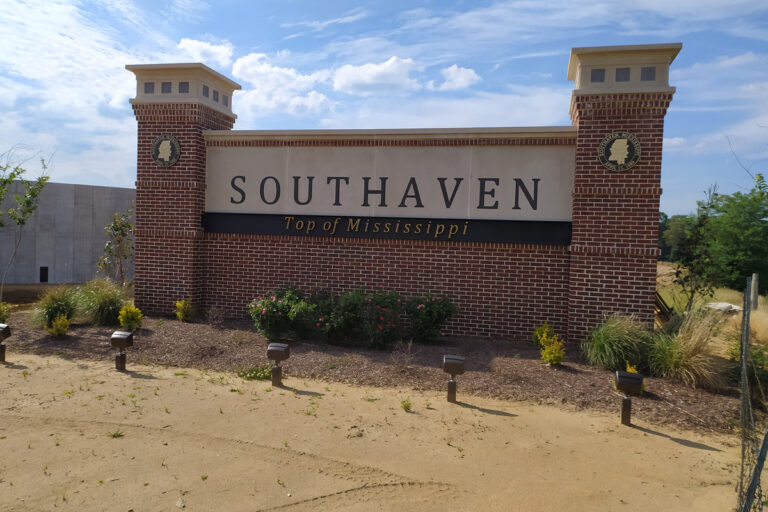
Elon Musk’s xAI operation is offering to buy homes near its Southaven, Mississippi power plant, with a condition attached: sellers must release claims connected to a proposed class action over turbine noise. The offers bring the physical footprint of the AI boom directly into the housing decisions of nearby residents.
Mississippi Today documented a letter offering purchases on behalf of affiliate MZX Tech LLC in exchange for a release of claims associated with the case. The Guardian reported an agent citing 418 targeted homes and 18 agreed sellers; the company did not confirm those totals.
The residents’ case page describes allegations that noise and vibration from the power plant disrupt daily life and reduce property values. Their lawyers are seeking a court order to reduce the disturbance, as well as financial compensation. These are allegations in litigation, rather than findings that the company is liable; MZX denied the allegations in the letter reported by Mississippi Today.
The Waiver’s Full Scope Is Unclear
The three law firms representing the plaintiffs say in a published FAQ that they are not involved in the buyout offers. They also say that, to their knowledge, no court has examined or approved the offers as a settlement of the lawsuit.
The lawyers identify a further uncertainty: the required release has not been made public, so they cannot say exactly which rights a seller would surrender. Their FAQ warns that the offers concern claims in the noise case and potentially other claims. That makes the terms of the actual agreement important, beyond the purchase price described in an initial letter.
The case is described as a proposed class action. The lawyers are asking the court to allow it to proceed on behalf of residents in an affected area, including people who have lived there since August 2025. A home-buying program and a request to certify a class are separate processes, and an agreement to sell should not be counted as a completed property transfer.
Housing for Workers, Uncertainty for Residents
Southaven Mayor Darren Musselwhite has defended the program. In an October 1 city statement, he called noise a legitimate concern but said it had not violated the city’s ordinance. He described spending on mitigation and a conversion from temporary turbines to quieter permanent equipment.
The mayor presented home purchases as a parallel approach to addressing neighbors’ concerns and providing housing for workers moving to the city. He also defended the expectation of a litigation waiver. His stated purpose is employee housing and neighborhood improvement; the city statement does not announce that the homes will become data center sites.
Residents do not all view the offers in the same way. DeSoto County News reported on November 1 that one homeowner had rejected an offer after the parties could not agree on a price. That account illustrates why a reported target for hundreds of properties should not be treated as a settled acquisition of an entire neighborhood.
Renters can face a different problem because they do not control whether a property is sold. Mississippi Today described a tenant being given 60 days to leave after her landlord accepted a buyout, shortly after she had extended her lease. A sale that offers an exit to an owner can therefore create a relocation problem for someone living in the home.
The dispute adds a local dimension to the capacity race behind Musk’s chip financing. Buying processors is only one part of expanding an AI operation: power generation, noise controls, housing and relations with neighboring communities also affect how that expansion works in practice.
For Southaven residents, the immediate questions concern the offers, the rights attached to them and whether turbine mitigation changes conditions at home. For the AI industry, the episode shows how the costs of serving more requests can extend beyond the server hall and into the surrounding community.
Disclaimer: AIstify is an independent media brand owned and operated by NuvexMedia LLC, publishing news, research, and insights on artificial intelligence, emerging technologies, automation, and related industries. NuvexMedia LLC invests in and collaborates with companies across the AI, technology, software, and digital innovation sectors. These relationships do not influence AIstify’s editorial coverage, and the publication maintains full editorial independence to provide accurate, timely, and objective information. © 2026 NuvexMedia LLC. All rights reserved. This content is for informational purposes only and should not be considered legal, tax, investment, financial, or other professional advice.