
Key Notes
- Google reports that Gemma 4 returned a poem from a TPU in orbit, marking an early computing milestone for the Suncatcher prototype launched in October.
- The engineering campaign must establish how orbital hardware handles radiation and heat, with ground tests providing a baseline for comparison.
- A linked pair of satellites is planned for 2027 to test optical connections, while the wider case for space-based AI still depends on reliability and economics.
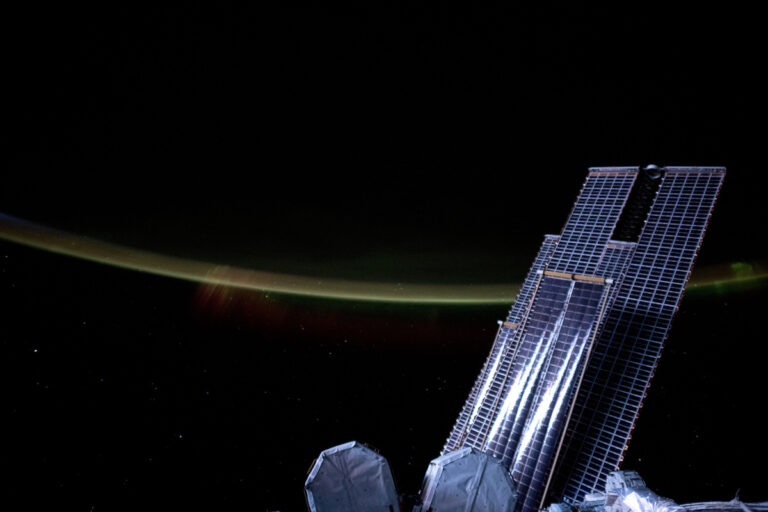
Google has received a haiku from Gemma 4 running aboard its Project Suncatcher prototype satellite. The short reply marks an early success for an experiment aimed at finding out whether data center-class AI chips can work reliably in orbit.
In an October 30 update, Google said engineers sent the onboard model a prompt asking for a poem about being in space. The response came down as the satellite passed Svalbard, Norway:
Blue marble below
Data streams in silent grace
Starlight feeds my core.
The accomplishment is inference: using an existing model to generate an output aboard the spacecraft. The poem is an approachable demonstration of the computing and communications chain, while the larger research question concerns how that hardware behaves during sustained exposure to the space environment.
The prototype, developed with Planet Labs, launched on October 1 aboard SpaceX’s Transporter-18 rideshare mission. Google then spent the following weeks commissioning the spacecraft and running early tests. Our launch coverage outlined the first step in that orbital experiment.
TechCrunch reported four TPUs, up to 1 kW generation and roughly 20-minute runs on one chip at a time.
The Test Is About Hardware Survival
Google’s pre-launch technical overview explains why a successful trip into orbit is only the beginning. The team tested hardware against launch vibration and exposed Trillium TPUs to a proton beam while running AI workloads. Those ground experiments gave engineers a way to study radiation effects before putting a payload into space.
Radiation can produce errors such as bit flips, changing a stored binary value and potentially corrupting data. Testing a chip’s survival and checking the integrity of its work are therefore related questions. The flight campaign will give engineers evidence from the actual orbital environment to compare with their laboratory results.
Heat removal is another major constraint. A spacecraft has no surrounding airflow to carry waste heat away. NASA’s thermal guide explains that heat transfer in a vacuum relies on conduction and radiation, with radiators providing surfaces that emit excess heat into space.
Google says it has been testing approaches involving heat pipes and radiators, including work in a thermal vacuum chamber. The aim is to move heat safely away from concentrated electronics and reject it from the spacecraft. Moving a processor off Earth changes the cooling design; it does not remove the need to manage temperature.
The Next Step Is a Linked Pair
The program’s next planned milestone is a pair of interconnected satellites in 2027. Google wants to test optical links that could eventually let closely spaced spacecraft share machine learning workloads. That is a different engineering task from receiving an answer from a single onboard model.
The broader system design envisions solar-powered satellites flying in compact formations. Distributed AI computing needs substantial bandwidth and low latency, so the proposed links must support much heavier data flows than a simple command sent from the ground and a short reply returned to it.
Solar collection is a central attraction of the concept, particularly in orbits that receive sunlight almost continuously. Its economics still depend on assumptions about launch costs, hardware life and operation at scale. Our earlier examination of the launch economics covered the modeling behind the prospect of more competitive costs in the 2030s.
For now, the useful result is a functioning prototype executing an AI workload and communicating with Earth. The haiku gives that milestone a memorable form. Reliability testing and the linked-satellite experiment will provide the next evidence for whether the idea can grow into practical computing infrastructure.
Disclaimer: AIstify is an independent media brand owned and operated by NuvexMedia LLC, publishing news, research, and insights on artificial intelligence, emerging technologies, automation, and related industries. NuvexMedia LLC invests in and collaborates with companies across the AI, technology, software, and digital innovation sectors. These relationships do not influence AIstify’s editorial coverage, and the publication maintains full editorial independence to provide accurate, timely, and objective information. © 2026 NuvexMedia LLC. All rights reserved. This content is for informational purposes only and should not be considered legal, tax, investment, financial, or other professional advice.