Key Notes
- SpaceX is targeting October 1 for the Transporter-18 launch carrying a Planet Labs prototype with Google AI chips.
- Project Suncatcher will test how the hardware handles radiation, temperature extremes and the demands of spaceflight.
- A separate two-satellite demonstration targeted for early 2027 will study computing and communication between spacecraft.
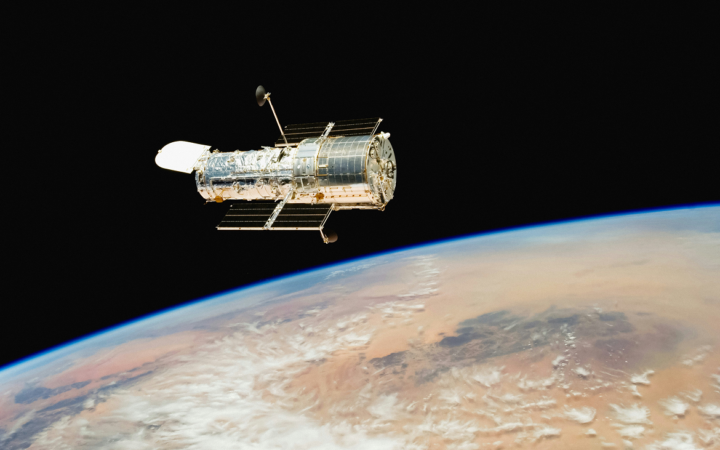
SpaceX is preparing to launch Google’s AI chips into orbit on October 1, carrying a Planet Labs prototype that will test whether the hardware can operate beyond Earth’s atmosphere. The flight is an early step for Project Suncatcher, Google’s research program exploring solar-powered computing in space.
The experiment moves a practical question into orbit: whether the chips, their cooling system and the spacecraft supporting them can keep working under conditions that terrestrial data centers never encounter. It follows AIstify’s earlier coverage of the planned test.
What Is Scheduled to Launch
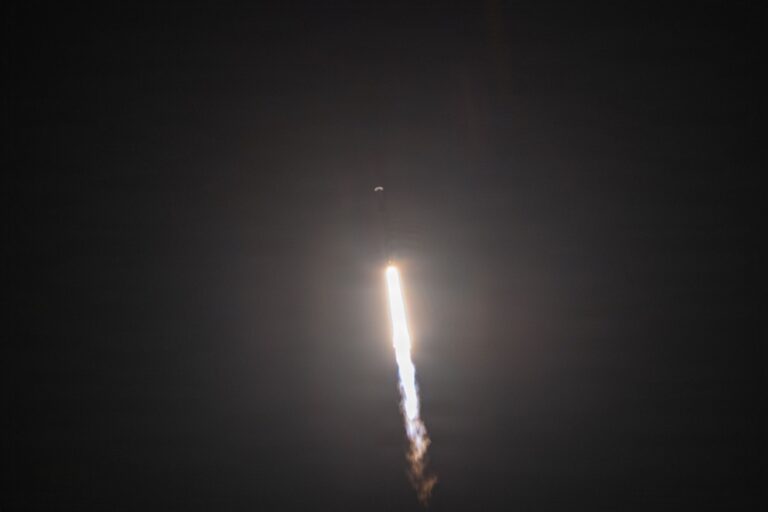
SpaceX’s mission page lists a 58-minute launch window opening at 11:18 a.m. Pacific time, or 18:18 UTC, from Vandenberg Space Force Base in California. A backup opportunity is available on October 2 at the same time.
The Falcon 9 flight, Transporter-18, is a dedicated rideshare carrying 130 payloads. Its deployment schedule identifies Project Suncatcher M1 as a Planet Labs payload, with release planned roughly an hour after liftoff. Planet’s Tanager-2 satellite is also on the manifest.
The launch and deployment times remain targets. At publication, SpaceX was still listing the mission as upcoming, so successful liftoff, spacecraft separation and operation of the AI hardware had yet to be confirmed.
From a Research Proposal to an Orbital Test
Google introduced Project Suncatcher in November 2025 as an investigation into networks of satellites equipped with its Tensor Processing Units, or TPUs. The long-term proposal combines onboard AI accelerators, solar energy and links between spacecraft.
That makes the October flight a test of an infrastructure concept. Sending processors into space does not by itself establish a commercially useful data center, just as powering a server does not demonstrate that an entire cloud service is reliable or economical. The hardware must operate consistently, communicate effectively and produce enough useful computation to justify its deployment.
AIstify previously reported on Google’s launch discussions with SpaceX and other providers. The mission now listed by SpaceX gives that broader exploration a specific flight and deployment plan.
Radiation and Heat Are Immediate Challenges
In its September 24 technical update, Google said the first flight would measure how TPUs handle launch stress, radiation and extreme temperatures. Engineers have already subjected the satellite to vibration testing and run AI workloads during proton-beam tests at UC Davis.
Google reported encouraging radiation results for its Trillium chips, including tolerance of a cumulative dose beyond the level expected during a five-year mission. Those laboratory findings give the team a starting point; the orbital test is intended to reveal how the complete system behaves in practice.
Cooling poses a separate problem. A vacuum provides no airflow to carry heat away from the processors, so the team is testing heat pipes and radiators. Google has evaluated the design in a thermal-vacuum chamber and plans to refine it using flight data.
Planet’s Role Extends to a Two-Satellite Mission
Planet’s original announcement described a two-satellite demonstration targeted for early 2027. The company plans to apply its experience designing, building and operating spacecraft to a mission that tests both Google’s processors and communication between satellites flying together.
Planet also connected the work to its Owl technology roadmap, saying the projects would use the same satellite bus, the platform that supports a spacecraft’s payload. That provides an existing engineering base for a program extending beyond Earth observation and onboard image processing.
The sequence separates two questions. This first flight tests the computing hardware in its operating environment. The later mission is intended to examine how multiple spacecraft can work together, an essential requirement for a larger distributed system.
Why Google Wants Computing Clusters in Space
Google’s system design centers on satellites in a dawn-dusk, sun-synchronous orbit. In a suitable orbit, the company estimates that solar panels could produce up to 8x as much energy as comparable panels on Earth, while reducing dependence on batteries.
Turning that power into coordinated AI computation requires exceptionally fast connections. Google’s researchers describe links carrying tens of terabits per second and satellites flying close together to support them. A laboratory demonstrator achieved 800 gigabits per second in each direction using a single transceiver pair.
Those are design studies and ground demonstrations. They do not establish that a large orbital cluster can deliver the same performance, availability or operating cost as a terrestrial facility. The practical challenge is to combine the energy advantage with reliable networking, thermal control and spacecraft operations.
The Economics Remain Conditional
The project’s research paper makes launch costs central to the case. Its modeled pathway assumes prices could fall below $200 per kilogram by the mid-2030s. Under those assumptions, launch costs amortized over a spacecraft’s lifetime could approach terrestrial data-center energy costs on a per-kilowatt basis.
That comparison concerns a particular cost measure, excludes infrastructure and chip costs, and depends on future launch economics. It is not evidence that an orbital data center is cheaper today, or that every expense of building and maintaining one has been eliminated.
The immediate result to watch is therefore whether the prototype survives launch, deploys successfully and returns useful engineering data. Evidence from those steps will help determine what Google and Planet build next. A working commercial network remains a longer-term objective.
Disclaimer: AIstify is an independent media brand owned and operated by NuvexMedia LLC, publishing news, research, and insights on artificial intelligence, emerging technologies, automation, and related industries. NuvexMedia LLC invests in and collaborates with companies across the AI, technology, software, and digital innovation sectors. These relationships do not influence AIstify’s editorial coverage, and the publication maintains full editorial independence to provide accurate, timely, and objective information. © 2026 NuvexMedia LLC. All rights reserved. This content is for informational purposes only and should not be considered legal, tax, investment, financial, or other professional advice.