Key Notes
- Jamie Raskin and Robert Garcia want official chatbot prompts and responses preserved and have requested a closed-door White House briefing by November 11.
- Their letter follows reporting about Trump consulting Grok on Venezuela, but it does not establish that the chatbot determined a military decision.
- The White House says it preserves required records, while the lawmakers seek details of retention, vendor access and safeguards for sensitive information.
Two senior House Democrats are demanding that President Donald Trump preserve his conversations with AI chatbots after reports that he asked Elon Musk’s Grok about a military operation in Venezuela. Their request brings a familiar presidential accountability question into the chatbot era: what advice reached the president, and what record survives of it?
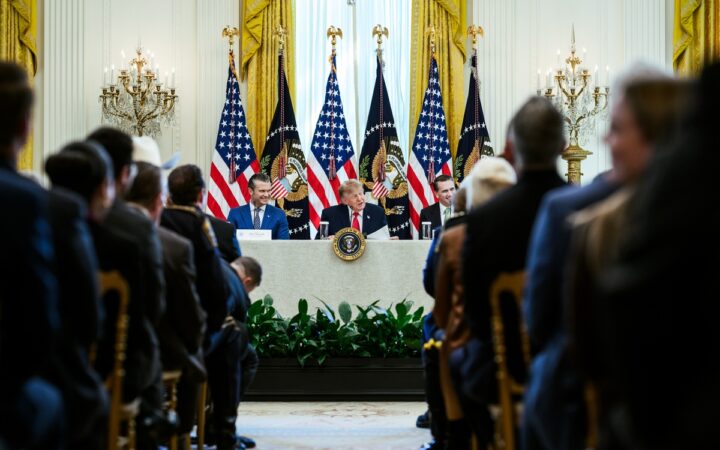
Representatives Jamie Raskin and Robert Garcia, the top Democrats on the Judiciary and Oversight committees, sent their letter on October 28. They want a closed-door briefing by November 11 on White House chatbot use, record retention and security. The Judiciary Democrats published the request the following day.
A White House official told POLITICO that “the White House preserves all required records in accordance with the law.” The statement does not set out the administration’s specific process for retaining chatbot conversations.
The Grok Conversation Behind the Request
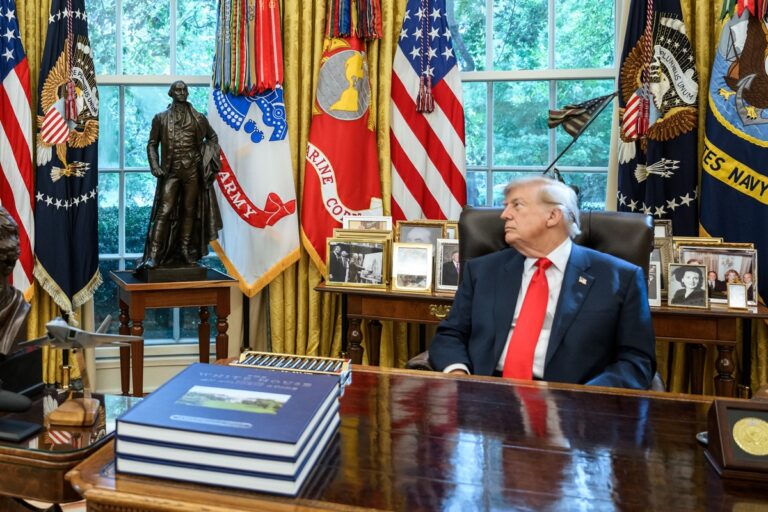
The lawmakers cite an October 1 TIME report describing an Oval Office meeting with Musk in December 2025. According to an official present, Trump spent hours asking Grok questions, including how Venezuelans would react if the United States captured Nicolás Maduro. TIME reported that the chatbot predicted many would celebrate his removal, and that Trump later regarded its answer favorably after Maduro’s capture.
That account describes a reported exchange and a subsequent military operation. It does not establish that Grok caused the decision or reveal the full set of advice Trump received. Raskin and Garcia argue that consulting the chatbot while bypassing congressional authorization raises questions about the way military policy was made.
Their demand is an oversight request from two ranking Democrats. It is not a court finding about Trump’s decision-making or proof that a chatbot directed an operation. Preserving the exchanges would help distinguish a passing conversation from advice that materially influenced official deliberations.
A Presidential Record Can Begin With a Prompt
The request extends beyond Grok to prompts and responses involving ChatGPT, Claude, Gemini and Perplexity when used for official duties. The lawmakers argue that those exchanges qualify as presidential records even when they take place through privately operated services.
The National Archives’ explanation of the Presidential Records Act says the law establishes public ownership of presidential records and places responsibility for managing an incumbent president’s records with the president. Personal materials are treated separately. The relevant issue is therefore the work an exchange documents, rather than whether its interface resembles an informal chat.
Preservation also differs from immediate public disclosure. The Archives describes a later access process involving statutory restrictions and reviews for executive privilege. A demand to keep a conversation intact does not mean the public will automatically be able to read it, particularly when national security is involved.
The briefing request asks about vendor contracts, whether submitted information can be used for training, restrictions on classified inputs and access to conversation logs. It also seeks details of auditing and safeguards against unauthorized access. Those are questions about how the White House uses the services, rather than evidence that each service has received classified material.
Who Can Reconstruct the Advice?
For oversight, retaining a polished answer alone would leave important gaps. The wording of the question, follow-up exchanges and the information supplied by officials can help explain what the system was being asked to do. Keeping that context would make it easier to assess whether an output was challenged, misunderstood or treated as authoritative.
The dispute adds an accountability question to the administration’s broader AI agenda: how can an official decision be examined when part of the discussion takes place with a privately controlled model? The November 11 briefing request gives the White House an opportunity to explain how its recordkeeping assurance applies to those conversations.
Disclaimer: AIstify is an independent media brand owned and operated by NuvexMedia LLC, publishing news, research, and insights on artificial intelligence, emerging technologies, automation, and related industries. NuvexMedia LLC invests in and collaborates with companies across the AI, technology, software, and digital innovation sectors. These relationships do not influence AIstify’s editorial coverage, and the publication maintains full editorial independence to provide accurate, timely, and objective information. © 2026 NuvexMedia LLC. All rights reserved. This content is for informational purposes only and should not be considered legal, tax, investment, financial, or other professional advice.