Key Notes
- Trump names Jay Clayton and three senior officials to lead the Super Intelligence Force.
- The task force will report to Trump and chief of staff Susie Wiles.
- A 120-day review will assess AI risks, opportunities and federal responsibilities.
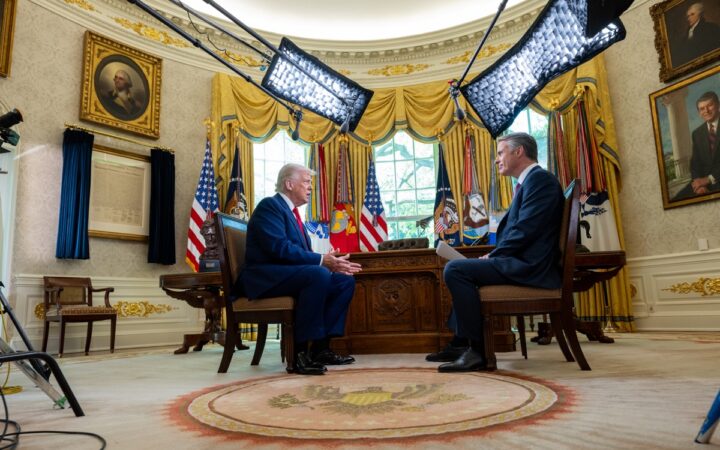
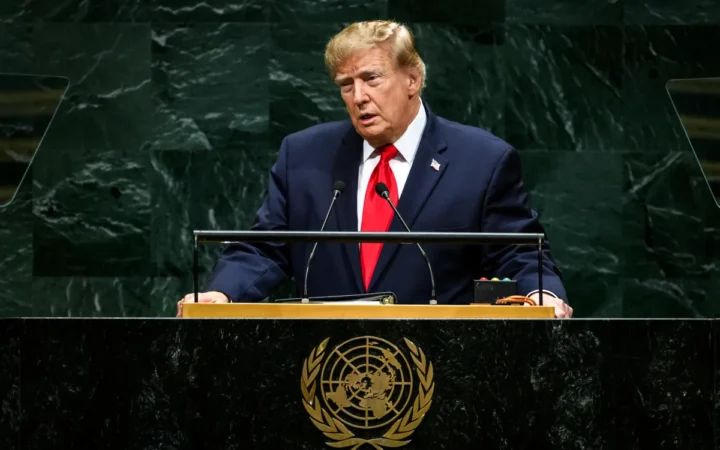
President Donald Trump has announced the creation of a Super Intelligence Force, a federal task force intended to coordinate US leadership in advanced AI. Director of National Intelligence Jay Clayton will lead the effort alongside senior officials responsible for consumer protection, defense technology and the federal workforce.
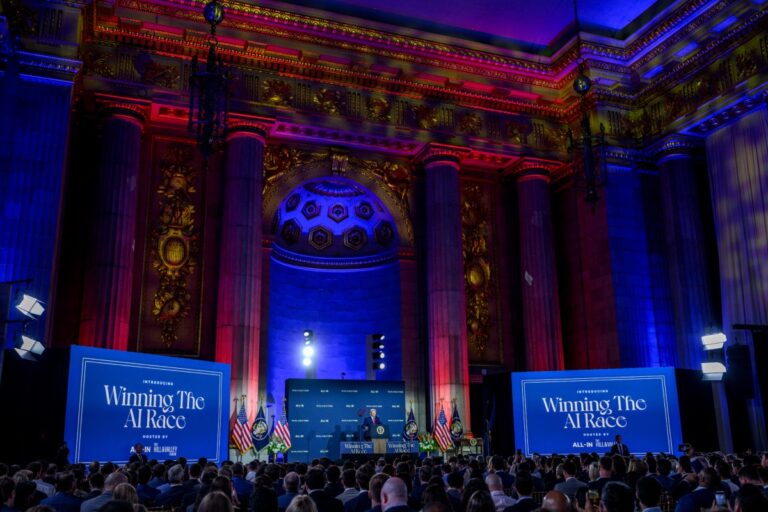
Trump announced the group on October 4, following the White House accord with major technology companies. He said it would coordinate engagement with consumers, public-interest and religious organizations, critical infrastructure providers and AI companies. It will report to both the president and White House chief of staff Susie Wiles.
Who Will Lead the Super Intelligence Force?
Trump named four officials in the leadership group: Clayton, Federal Trade Commission Chairman Andrew Ferguson, Pentagon research and engineering chief and Chief Technology Officer Emil Michael, and Office of Personnel Management Director Scott Kupor.
The combination places intelligence, consumer interests, defense technology and government administration around the same table. Our reading is that the group is intended to connect policy areas that can become fragmented when each agency approaches AI through its own responsibilities.
For infrastructure operators and AI developers, that could create a clearer point of contact with Washington. Whether it simplifies decision-making will depend on how responsibilities are divided and how the group works with agencies that already oversee those sectors.
A 120-Day Review of AI Risks and Opportunities
The Wall Street Journal reported, based on an interview with Clayton, that the task force will have 120 days to assess AI risks and opportunities and determine the federal government’s responsibilities. A senior White House official described the role as effectively making Clayton the administration’s AI czar.
AFP’s account of the charter says the group will develop responses to AI-enabled threats while seeking to avoid excessive regulation and regulatory capture. It will also recommend improvements to the government’s response capacity using existing authorities.
Those objectives leave a practical question: how can officials identify serious risks quickly enough to respond while preserving competition and access to new technology? A report can establish priorities, but its usefulness will depend on specific recommendations and a clear assignment of responsibility.
The White House Accord Becomes an Implementation Test
We covered the administration’s safety accord and its decision to adopt the term Super Intelligence in federal communications. That earlier announcement emphasized voluntary commitments by technology leaders and left the promised AI czar appointment pending.
The new task force gives that initiative a named leadership group and a reporting structure. It also broadens the discussion beyond AI laboratories by explicitly including consumers and critical infrastructure providers among the parties the government will engage.
For businesses, the useful questions concern implementation: who receives incident information, how findings are shared across agencies, and what happens when a company’s assessment differs from the government’s? These are issues to watch as the task force develops its recommendations; Sunday’s announcement does not answer them.
What the Announcement Means for AI Oversight
The name signals the administration’s ambitions, but the announced functions describe a government coordination effort. Trump did not announce a new military service, and the statement does not itself establish new technical requirements for AI models or mandatory reporting rules for companies.
The urgency is illustrated by our recent coverage of OpenAI’s agent notifications. As increasingly capable systems interact with outside organizations, the policy challenge includes deciding how developers and government communicate about incidents, investigate them and reduce the likelihood of recurrence.
The next meaningful test will be what the Super Intelligence Force recommends and which recommendations become operational policy. Naming leaders is an initial step. The eventual response arrangements, accountability and public reporting will show how much the initiative changes the way Washington manages advanced AI.
Disclaimer: AIstify is an independent media brand owned and operated by NuvexMedia LLC, publishing news, research, and insights on artificial intelligence, emerging technologies, automation, and related industries. NuvexMedia LLC invests in and collaborates with companies across the AI, technology, software, and digital innovation sectors. These relationships do not influence AIstify’s editorial coverage, and the publication maintains full editorial independence to provide accurate, timely, and objective information. © 2026 NuvexMedia LLC. All rights reserved. This content is for informational purposes only and should not be considered legal, tax, investment, financial, or other professional advice.