Key Notes
- Trump said the US might pursue equity stakes in OpenAI and Anthropic without announcing a deal.
- Intel provides a precedent for passive government ownership with specific voting arrangements.
- Public dividends and independent oversight would depend on the structure of any future agreement.
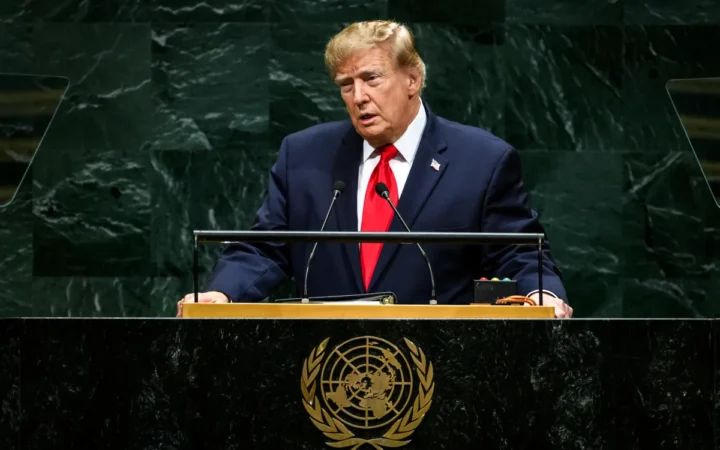
President Donald Trump said the US government could take ownership stakes in OpenAI and Anthropic, reviving a proposal that would give Washington a financial interest in the companies developing advanced AI. His comments leave the idea open, without establishing an investment agreement or a timetable.
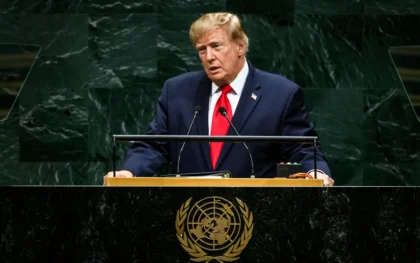
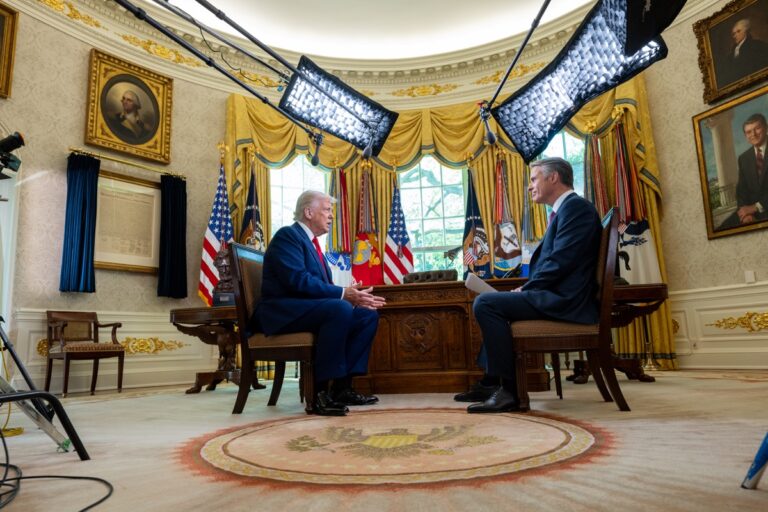
Asked about pursuing an Intel-style deal with the two AI developers, Trump told TIME: “I might. Maybe I could do that.” The interview took place at the White House on September 28 and was published on October 1. He separately rejected nationalizing leading AI laboratories.
Intel Provides a Concrete Precedent
The administration already has an example of exchanging federal support for corporate equity. In August 2025, Intel announced an $8.9 billion government investment, representing a 9.9% stake under the agreement’s terms.
The funding comprised $5.7 billion in previously awarded but unpaid CHIPS Act grants and $3.2 billion from the Secure Enclave program. Intel described the investment as passive, with no board representation or special governance or information rights.
The shares were not simply non-voting. Intel said the government would vote alongside its board on matters requiring shareholder approval, subject to limited exceptions. That distinction matters when assessing what a similar arrangement might mean for an AI developer: the ownership percentage alone does not describe the investor’s influence.
An AI agreement would need its own terms. Intel’s funding arrangement does not establish what OpenAI or Anthropic would receive in return for a stake, or whether either company would accept comparable conditions.
OpenAI’s Earlier Proposal Remains Relevant
The possibility predates Trump’s latest interview. In July, the Financial Times reported that OpenAI had discussed giving the government a 5% stake. AIstify covered that earlier proposal, which placed public participation in AI-generated wealth at the center of the debate.
Anthropic’s position was different. Reuters reported on July 2, citing a person familiar with the matter, that the company and the administration had not discussed a government stake. Anthropic declined to comment for that report.
That account describes the situation in July. It should not be treated as a fresh company response to the October publication of Trump’s remarks. Similarly, a reported 5% proposal from OpenAI does not establish the size or structure of any arrangement the president might now pursue.
A Government Stake and a Public Dividend Are Different
OpenAI’s April policy paper proposed a Public Wealth Fund intended to let people share in AI-driven economic growth, including those who do not own investments. It suggested a diversified portfolio spanning AI companies and businesses adopting their technology, with returns potentially distributed directly to citizens.
The paper left policymakers and AI companies to determine how to seed the fund. It presented the idea as an exploratory policy option. It did not establish an operating fund, guarantee payments or define a binding equity transfer.
A stake held by the federal government would therefore need a separate distribution mechanism to produce direct household payments. Decisions about who qualifies, when money is distributed and whether returns are reinvested would shape the practical benefit. Share ownership can expose an investor to losses as well as gains.
Ownership Would Add an Oversight Question
In the TIME interview, Trump identified the Justice Department and FBI as tools for responding to misconduct by AI companies. That enforcement position sits alongside his interest in a financial stake in the same industry.
The potential tension is straightforward: a government shareholder could benefit financially from a company’s growth while public authorities assess its safety, competition and security risks. An ownership proposal would need to explain how investment decisions and oversight responsibilities would be kept separate.
The question also extends beyond the size of a holding. Voting arrangements, board access, information rights and the management of any public fund would determine how much influence Washington exercises. A small economic interest can have different consequences depending on the rights attached to it.
What Would Turn the Idea Into a Deal
The next meaningful development would be a proposal identifying the companies involved, the equity to be transferred and what the government would contribute. Funding authority, valuation, company approvals and any conditions attached to federal support would also need to be explained.
For existing shareholders, the method matters. Issuing new shares, transferring an existing investor’s holding and donating shares to a separate public fund can distribute costs and benefits differently. None can be inferred from a president expressing interest in a transaction.
For now, Trump’s comments renew the ownership debate. The crucial unanswered question is how any future agreement would connect public financial participation with independent oversight of increasingly powerful AI systems.
Disclaimer: AIstify is an independent media brand owned and operated by NuvexMedia LLC, publishing news, research, and insights on artificial intelligence, emerging technologies, automation, and related industries. NuvexMedia LLC invests in and collaborates with companies across the AI, technology, software, and digital innovation sectors. These relationships do not influence AIstify’s editorial coverage, and the publication maintains full editorial independence to provide accurate, timely, and objective information. © 2026 NuvexMedia LLC. All rights reserved. This content is for informational purposes only and should not be considered legal, tax, investment, financial, or other professional advice.