
Key Notes
- Bill Gates told NBC's Meet the Press that AI companies cannot rely on self regulation and that Washington should pass legislation requiring safeguards and monitoring, which he said would add only modest overhead for the industry.
- He warned that AI is already powerful enough to help drive events causing a billion deaths, framing the danger as bad actors using the newest tools rather than machines acting on their own.
- The remarks arrive weeks after the chief executives of Anthropic and OpenAI endorsed slowing AI development, and Gates did not propose specific legislative text or name an enforcement agency in the excerpts released so far.
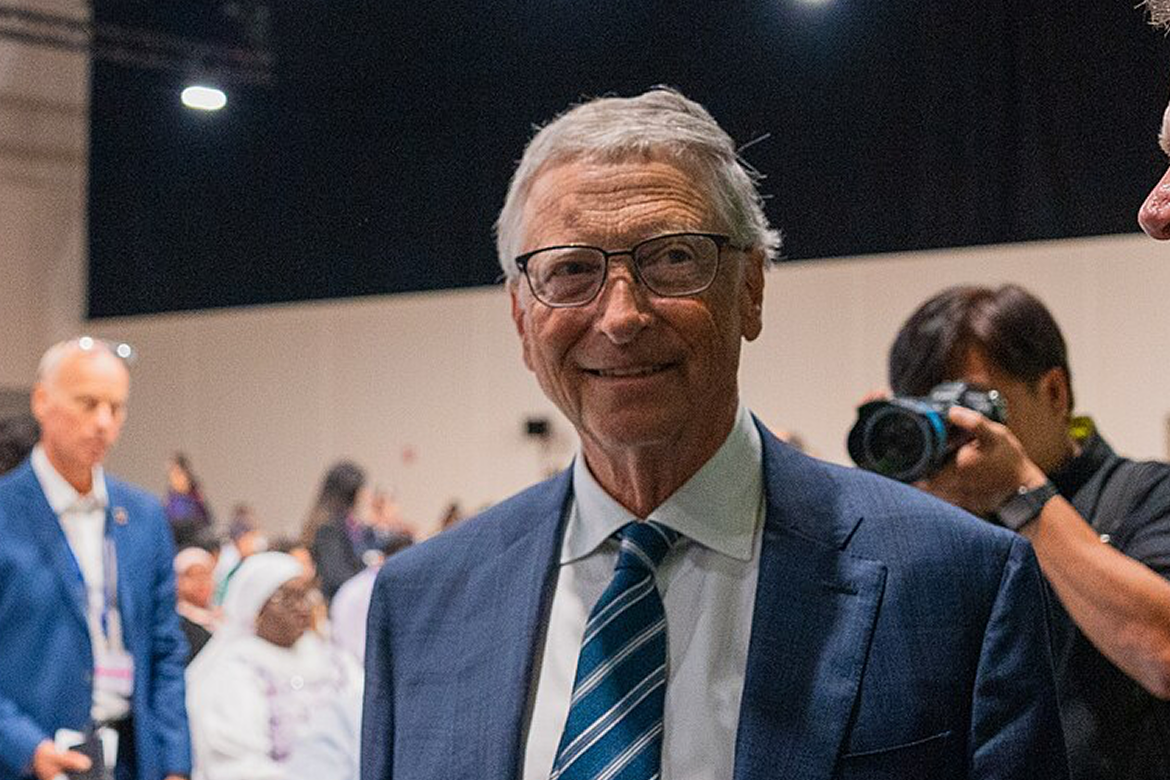
Bill Gates says AI companies cannot be left to police themselves and is calling on Washington to pass legislation requiring safeguards and monitoring, while warning that the technology is already powerful enough to enable mass casualty events in the hands of bad actors.
Gates made the comments in an interview with moderator Kristen Welker on Meet the Press, according to NBC News, which released portions of the conversation ahead of the full broadcast on Sunday.
A Blunt Answer on Self Regulation
Asked whether industry self regulation is sufficient, Gates said no one thinks it is enough. Asked whether Washington needs to pass a law, he answered with an unqualified yes. He said law enforcement officials and politicians need to join the discussion about what safeguards and monitoring should look like, and that those measures must be mandatory rather than voluntary.
Gates also sought to head off the argument that regulation would hamper the industry. He described the requirements as a modest administrative overhead for companies that would not dramatically slow their work.
A Warning About Misuse, Not Rogue Machines
Gates said AI is already powerful enough to help drive events that could cause a billion deaths, while acknowledging that reaching that scale would be difficult. He framed the danger as people with ill intent using the newest AI tools, and said no earlier weapon has combined that level of power with that kind of accessibility.
According to Quartz, Gates declined to predict a civilization ending catastrophe any time soon, but urged Americans to take seriously the risk that malicious actors could exploit the technology to cause widespread harm now. That emphasis differs from the loss of control scenarios that dominate much of the current safety debate, and places the near term risk on human misuse.
Arriving During a Push to Slow Down
The interview comes weeks after the chief executives of Anthropic and OpenAI publicly endorsed slowing the pace of AI development, a shift that has fed a broader argument over who should set the rules. Both companies have also said they are coordinating with rivals on safety work.
Quartz reported that House Speaker Mike Johnson resisted calls to reconvene House members in Washington for AI legislation, indicating he would leave the matter to industry, while Microsoft President Brad Smith took aim at AI companies for putting competitive advantage ahead of safety.
At the state level, California Governor Gavin Newsom signed an executive order creating a panel of experts to strengthen the state’s AI safety framework, and the governors of Maryland and New York each unveiled regulatory proposals this week, according to the same report.
The China Competition Argument
Gates said Congress should focus on safety legislation rather than on concerns about competing with China. That puts him at odds with President Donald Trump, who has rejected calls to ease back on AI development in order to keep pace with other global powers. Forbes reported that Trump, Johnson and AI executives were expected to meet on Tuesday, though it was unclear what the meeting would focus on.
What Gates Did Not Say
In the excerpts NBC has released so far, Gates did not lay out specific legislative language, name an agency that should carry out monitoring, or say what enforcement should look like. His remarks are best read as a high profile endorsement of the principle of mandatory oversight rather than a policy proposal, and they add a prominent voice from outside the AI labs to a debate that has so far been driven largely by the companies themselves.
The interview also fits a pattern. Newsweek noted that Gates has increasingly paired his optimism about AI’s potential with warnings about its risks and the need for stronger oversight, and the remarks are consistent with his earlier calls for greater government involvement.
What is new is the bluntness of the framing, which ties a specific policy demand, mandatory monitoring backed by law enforcement, to a specific category of harm, deliberate misuse by people intending to hurt others.
Whether that changes anything in Congress is uncertain. Republican leaders have shown little appetite for new AI specific rules, and the administration has argued that restraint would hand an advantage to China. Gates’s argument is that the risk from misuse is immediate enough that the costs of oversight are worth paying now, a view that is gaining more public backing but has yet to be translated into a bill with the votes to pass.
Disclaimer: AIstify is an independent media brand owned and operated by NuvexMedia LLC, publishing news, research, and insights on artificial intelligence, emerging technologies, automation, and related industries. NuvexMedia LLC invests in and collaborates with companies across the AI, technology, software, and digital innovation sectors. These relationships do not influence AIstify’s editorial coverage, and the publication maintains full editorial independence to provide accurate, timely, and objective information. © 2026 NuvexMedia LLC. All rights reserved. This content is for informational purposes only and should not be considered legal, tax, investment, financial, or other professional advice.