
Key Notes
- Ansari says pausing advanced AI and banning superintelligence should be a top congressional priority before 2027.
- Her November 23 post amplified Meta AI chief Alexandr Wang's warning about maintaining human control.
- The statement renews her earlier position and does not itself put new restrictions into force.
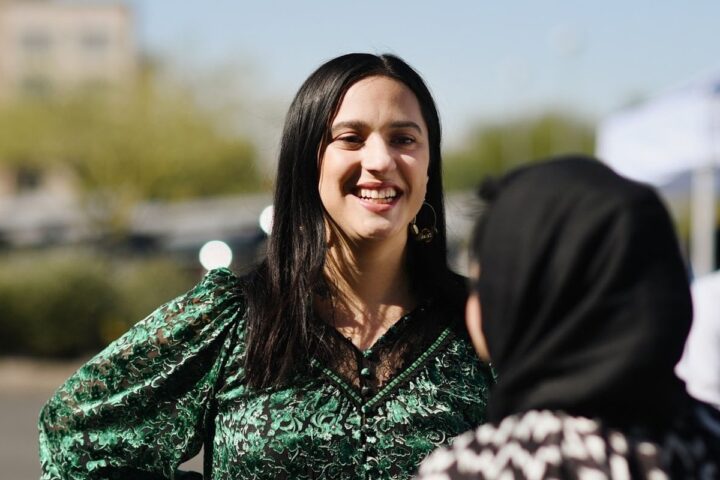
Rep. Yassamin Ansari is urging Congress to make pausing advanced AI development and banning artificial superintelligence an immediate priority, saying action should come before 2027.
The Arizona Democrat renewed her demand in a November 23 post that shared Meta chief AI officer Alexandr Wang’s warning about humanity retaining control of increasingly capable systems. “And it can’t wait until 2027,” she wrote.
And it can’t wait until 2027.
- Congresswoman Yassamin Ansari (@RepYassAnsari) November 23, 2026
A Renewed Push After Wang’s Warning
Ansari called for a similar pause and ban on November 4, when she argued the measures should top the agenda for the incoming Congress. Her latest statement presses for intervention sooner, citing repeated warnings from people building the technology.
Wang’s November 22 essay questioned whether people could maintain control over unconstrained AI self-improvement or systems 1,000x more capable across fields. He urged the industry to preserve human agency and change its approach to development.
That warning describes a future scenario, not a measured capability of a current Meta model. Ansari’s response turns the concern into a demand for congressional intervention. It does not establish that Congress has agreed on her preferred response.
The Legislative Path
There is already a proposal for sweeping restrictions. Rep. Greg Casar and Sen. Bernie Sanders introduced the Ban Artificial Superintelligence Act on September 23. Their announcement described a ban on superintelligence, a pause on advanced AI development and a new cabinet-level Department of Artificial Intelligence to establish and enforce safety rules.
The Sanders-Casar proposal separates a temporary development pause from a lasting prohibition on superintelligence. Those are different policy choices: the first sets conditions for development to resume, while the second establishes a boundary that developers may not cross.
Ansari’s new post is a political demand, with no separate legislative text, vote or enforcement date attached. Any binding measure would need to define the systems it covers, the activities it restricts and the authority responsible for implementation.
For AI developers and businesses planning to use their models, those details determine the practical effect. A call to pause advanced development does not specify that existing assistants or business applications must be switched off. The immediate question is whether her demand gains support for concrete legislative action.
Disclaimer: AIstify is an independent media brand owned and operated by NuvexMedia LLC, publishing news, research, and insights on artificial intelligence, emerging technologies, automation, and related industries. NuvexMedia LLC invests in and collaborates with companies across the AI, technology, software, and digital innovation sectors. These relationships do not influence AIstify’s editorial coverage, and the publication maintains full editorial independence to provide accurate, timely, and objective information. © 2026 NuvexMedia LLC. All rights reserved. This content is for informational purposes only and should not be considered legal, tax, investment, financial, or other professional advice.