Key Notes
- Carter Church says Astra decoded a Napoleonic military letter in six hours of model execution.
- Cryptiana now marks the cipher as solved and records a corrected date of 1809.
- A published key and verification scripts support further review, with five signs still uncertain.
GPT-6 Astra has helped decipher a 217-year-old military letter addressed to French General Auguste Marmont, according to AI engineer Carter Church. He says the model completed the work in about six hours of execution time, turning a scan of handwritten symbols into a readable account of troop positions before France’s war with Austria in 1809.
Church shared the result on X, saying he had no previous experience breaking ciphers. His account describes a process that combined image recognition, existing historical research and a program for testing possible keys, with candidate readings checked against both French usage and the original document.
I used GPT-6 Astra to break an unsolved cipher to one of Napoleon’s generals that had gone unread for 217 years.
What makes this impressive isn’t actually the codebreaking, but that Astra completed the entire multi-modal workflow in ~6 hours from a single image and goal.
1/6🧵 pic.twitter.com/vyiGKOsrHq
— Carter Church (@CarterWChurch) September 30, 2026
A Historical Cipher Marked as Solved
The letter appears in Satoshi Tomokiyo’s Cryptiana cipher catalog, which now marks the entry as solved and links to Church’s solution. Tomokiyo records receiving it on September 20 and notes Church’s correction of the document’s date from 1807 to 1809. The six-hour claim concerns the model’s execution time; Church’s accompanying write-up says his own involvement extended over several evenings.
The source was a reproduction in a 1969 French military history journal. A readable opening addressed Marmont, followed by 24 lines of encrypted writing. The catalog describes a mixture of two-digit numbers, alphabetic characters and other symbols, making the document a problem of reading the handwriting as well as recovering the message.
From Handwritten Symbols to a Working Key
Astra began by identifying the marks in the scan and using an already known portion of the key. It then searched for the remaining values with a program, testing whether the resulting text made sense in French. Repeated appearances of the same mark provided another check: a proposed reading needed to fit the document consistently.
Church’s technical account describes 1,300 cipher units and 155 distinct signs. The search used simulated annealing, a method for exploring candidate solutions, with French letter-pattern statistics helping score the results. Some signs represented whole words rather than single letters.
That distinction matters when assessing an AI decryption. A fluent French passage is not enough on its own. A defensible reading needs a mapping from the visible symbols to the proposed text, so other researchers can check where the interpretation comes from and identify places where an ambiguous mark might change it.
What the Letter Revealed
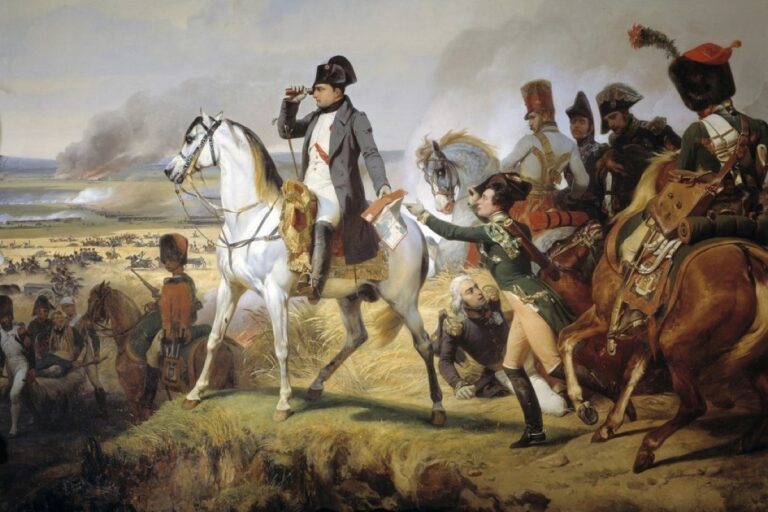
The recovered message sets out the locations of French and allied forces before the 1809 conflict with Austria. It is a military situation report, giving Marmont information about the wider campaign rather than an isolated personal message. Church places it in late March, when French commanders were preparing for the coming war.
Church has released a verification package containing the transcription, key and scripts. His write-up also identifies five signs with uncertain readings. Those qualifications leave room for further historical and linguistic review even though Cryptiana has accepted the entry as solved.
AI as a Tool for Historical Research
The case follows another reported Enigma decryption, in which Carter Leffen used Astra and supporting tools to investigate a German military message from 1941. Both projects concern recovering specific historical messages, with published materials giving readers something more concrete to inspect than a chatbot’s answer.
The broader opportunity is to reduce the work needed to move between an archive image, a transcription and a testable hypothesis. That could make neglected documents more accessible to researchers outside a narrow specialty. The Marmont result remains a particular historical case, however, and provides no basis for concluding that Astra can break modern encryption generally. Its value rests on the recovered text and the evidence supporting each step.
Disclaimer: AIstify is an independent media brand owned and operated by NuvexMedia LLC, publishing news, research, and insights on artificial intelligence, emerging technologies, automation, and related industries. NuvexMedia LLC invests in and collaborates with companies across the AI, technology, software, and digital innovation sectors. These relationships do not influence AIstify’s editorial coverage, and the publication maintains full editorial independence to provide accurate, timely, and objective information. © 2026 NuvexMedia LLC. All rights reserved. This content is for informational purposes only and should not be considered legal, tax, investment, financial, or other professional advice.