
Key Notes
- Bloomberg developer Carter Leffen says he used OpenAI's GPT-6 Astra, running in its highest reasoning mode, to decrypt an 83-year-old unsolved Enigma-encoded German army radio message from July 1941, completing the work in about ten hours.
- The breakthrough came from reusing a town name found in an already-decrypted companion message as a search anchor, combined with a known Enigma property that rules out a letter encrypting to itself.
- Leffen has published the code, search data, and a working Enigma simulator for independent review, and cautioned that the result still needs formal verification from cryptography and history specialists.
A Bloomberg developer says he used OpenAI’s GPT-6 Astra to decrypt an Enigma-encoded German army radio message from 1941 that had gone unsolved for 83 years, completing the work in about ten hours with the model’s highest reasoning setting.
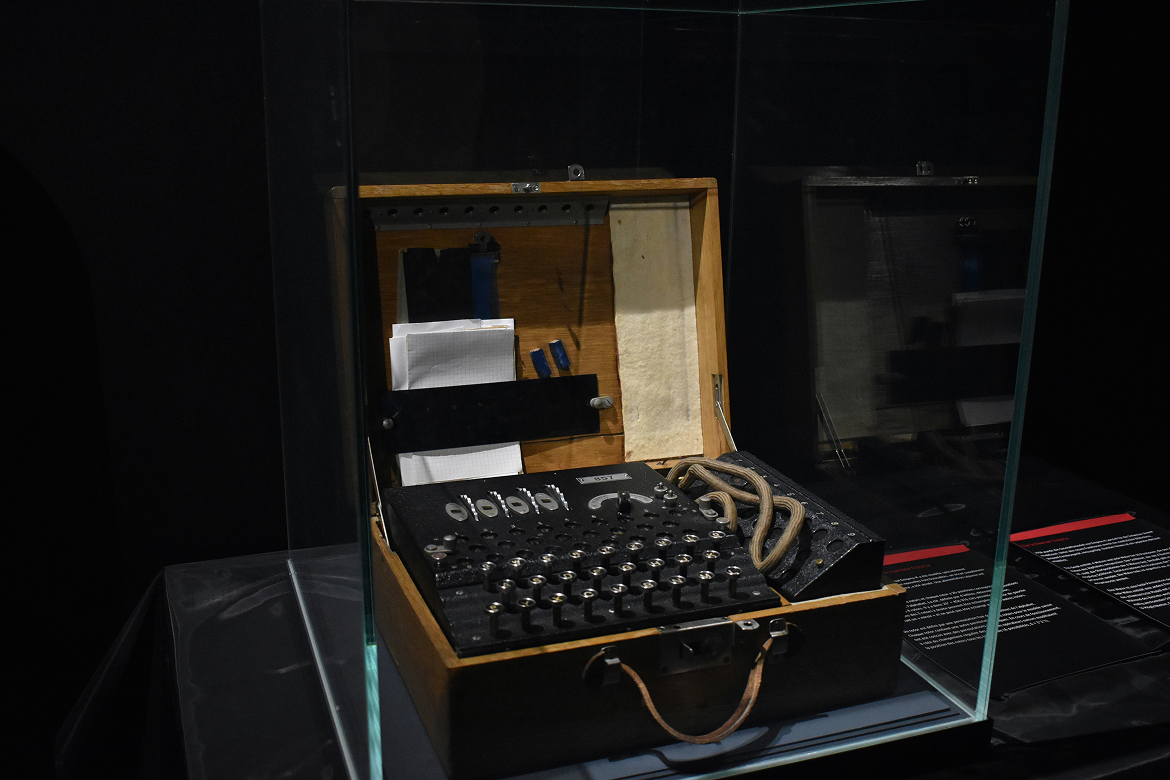
On July 10, 1941, a German soldier used an Enigma machine to encode a short radio transmission, reporting his position near the town of Rosenow and requesting instructions for his march route along with an immediate reply. The 82-character message, catalogued as MVUEH in an archive of intercepted German army communications, had remained on the list of unsolved transmissions ever since, despite the Enigma cipher itself having first been broken by Polish mathematician Marian Rejewski in 1932.
How the Decryption Came Together
According to a detailed case study published by Carter Leffen, a product development coach at Bloomberg LP, the breakthrough came from a related message sent the same day that had already been decrypted and contained the town name Rosenow twice in a row. Leffen and his AI agents guessed the same name might appear in the unsolved message and used it as a search anchor, combined with a well-known Enigma property that the machine never encrypts a letter as itself, which let them rule out large numbers of candidate positions immediately.
Leffen said GPT-6 Astra, running in its Extra High reasoning mode, and several supporting AI agents handled most of the technical work: searching historical archives, comparing uncertain characters, building a working Enigma simulator, writing cryptanalysis code, running parallel key searches, and cross-checking candidate solutions against already-solved messages. At one position, the calculated machine settings produced 68 characters of coherent German text, including the phrases “Sofort Funkantwort,” meaning immediate radio reply, and “Angabe des Marschweges,” specify the march route. A separately preserved message header confirmed the settings independently.
Typos as Evidence of Authenticity
The decrypted text includes apparent transcription errors, such as BTTE instead of BITTE and WASCHBBSCH in place of what was likely Waschbusch, the sender’s name. Leffen said these mistakes support the decryption’s authenticity, since a fabricated or hallucinated solution would be more likely to read as error-free, clean German rather than carry the kind of slip a radio operator might actually make under pressure.
Leffen has published all of the code, search data and a working 3D Enigma simulator on a dedicated project page, allowing outside researchers to verify the calculations and replicate the key search. He was candid that the cryptanalysis was not the most time-consuming part of the project, saying he put roughly 99 times more effort into building the website explaining the problem and solution than into the codebreaking itself. The work builds on decades of cryptanalytic research by Frode Weierud, Geoff Sullivan and Olaf Ostwald, and whether the decryption holds up will depend on independent experts reviewing the published materials, since the released packages verify the underlying calculations but do not by themselves confirm the message’s historical identity.
Part of a Wider Pattern of AI Research Claims
The Enigma decryption follows a run of similar demonstrations in which AI labs and independent users have applied frontier models to long-unsolved technical and historical puzzles. It echoes Anthropic’s own recent claim that an unreleased Claude model made progress on a 160-year-old mathematics problem tied to the Riemann hypothesis, and arrives alongside a wave of other capability demonstrations tied to GPT-6 Astra since its release. As with those cases, the claim rests for now on one researcher’s published account and has not yet received formal peer review from cryptography or World War II historical specialists.
The Enigma machine offered roughly 159 quintillion possible daily settings, a scale that made brute-force approaches infeasible even for modern computing power, which is part of why the MVUEH message had sat unresolved on a published list of intercepted German army transmissions for more than eight decades despite renewed interest in historical Enigma traffic since the cipher’s original wartime break. Several earlier approaches to the message failed, including attempts using known keys from other messages sent the same day and automated searches that returned no usable candidates, before the reused town name and the letter-exclusion property together narrowed the search enough for the AI-assisted process to converge on a solution.
Disclaimer: AIstify is an independent media brand owned and operated by NuvexMedia LLC, publishing news, research, and insights on artificial intelligence, emerging technologies, automation, and related industries. NuvexMedia LLC invests in and collaborates with companies across the AI, technology, software, and digital innovation sectors. These relationships do not influence AIstify’s editorial coverage, and the publication maintains full editorial independence to provide accurate, timely, and objective information. © 2026 NuvexMedia LLC. All rights reserved. This content is for informational purposes only and should not be considered legal, tax, investment, financial, or other professional advice.