Key Notes
- Google’s model links roughly 1,800 Starship launches to a pathway toward cheaper orbital computing.
- The first Project Suncatcher prototype reached orbit on October 1.
- Cooling and satellite connections remain engineering challenges.
Google researchers estimate that roughly 1,800 Starship launches could help bring space-based AI computing closer to economic viability. Their research paper models a path toward much cheaper transport to orbit. That makes launch frequency a central part of the proposal, alongside the engineering required to operate computing hardware in space.
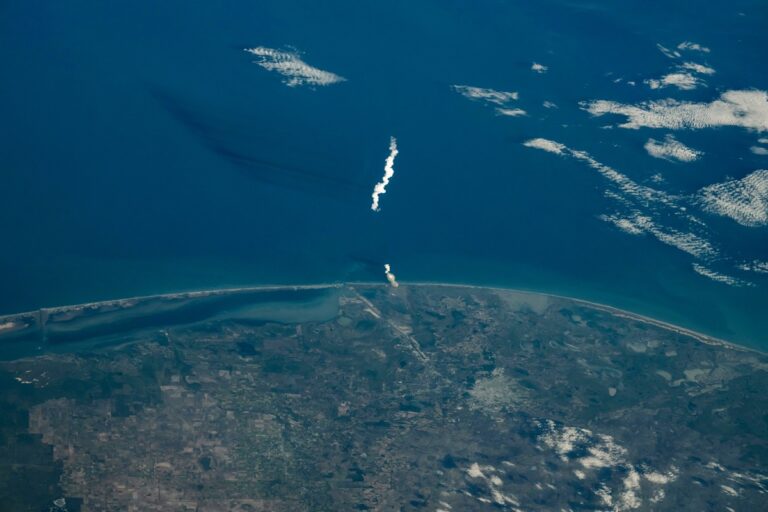
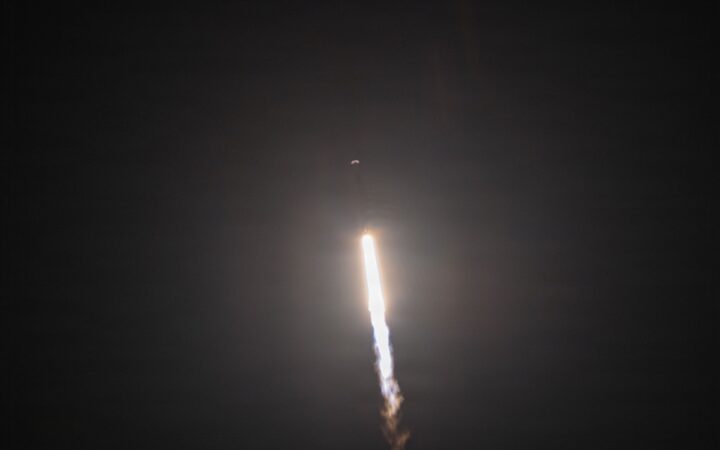
The work has now reached an early flight milestone. Google confirmed on October 1 that its Project Suncatcher prototype, developed with Planet, reached orbit aboard SpaceX’s Transporter-18 mission. The company established contact and said the satellite was operating as expected. As we covered in our launch preview, the mission tests the foundations of an orbital computing system.
What the 1,800-Launch Estimate Assumes
The paper’s scenario requires around 370,000 metric tons of additional payload, equivalent to roughly 1,800 flights at an assumed 200 tons each. Across a decade, that means about 180 launches annually. Its learning curve assumes prices fall roughly 20% whenever cumulative payload mass doubles. The estimate is sensitive to the starting assumptions and does not guarantee future launch prices.
The practical issue is sustained throughput. A single successful mission establishes a capability; an infrastructure business needs that capability repeatedly, with predictable scheduling and enough demand to fill the vehicles. The modeled launch count therefore describes a scale of operations, rather than a switch that automatically makes a computing project profitable after one particular flight.
Why Cheaper Launches Matter
Google’s system design suggests launch prices below $200 per kilogram could emerge by the mid-2030s if cost reductions continue. At that level, launch costs spread over spacecraft lifetimes could approach terrestrial data-center energy costs on a per-kilowatt basis. This is a comparison of specific expenses, not the total cost of two complete facilities.
The attraction is solar power. In a suitable orbit, Google estimates panels could produce up to 8x as much energy as comparable panels on Earth, with near-continuous sunlight reducing battery requirements. The proposal uses that electricity to run Tensor Processing Units, or TPUs, aboard connected satellites, rather than transmitting the power back to the ground.
A useful business comparison would still need to account for everything required to deliver reliable computation. Customers ultimately pay for completed work and dependable service. Any energy advantage has to survive the costs and limitations of deploying, networking and maintaining the hardware that performs it.
The Prototype Tests Hardware, Not Profitability
Over the coming weeks, Google plans to gather flight data on how its TPUs handle radiation, temperature extremes and the physical stresses of spaceflight. The October 1 announcement confirms the satellite’s arrival and initial operation; it does not establish the performance or economics of a commercial orbital data center.
Google’s technical update explains why testing in orbit matters. Engineers have shaken the hardware to simulate launch conditions and exposed chips to proton beams. Those experiments help identify weaknesses, while a flight tests the equipment as part of the complete spacecraft.
Cooling and Connections Remain Major Hurdles
Space offers no airflow to carry heat away from the processors. Google is developing heat pipes and radiators and has tested its approach in a thermal-vacuum chamber. The difficulty is removing the heat generated by concentrated computing hardware safely enough to keep it operating.
Distributed AI workloads also need fast connections between spacecraft. Google plans a two-satellite test in 2027 to investigate high-bandwidth laser links. Keeping those connections aligned while satellites move adds another engineering problem to the energy and launch-cost calculations.
Starship’s own development is advancing: SpaceX’s mission update identifies September 28’s Flight 14 as its first orbital flight, carrying 26 Starlink V3 satellites. That milestone is separate from Google’s prototype, which flew on the Transporter-18 rideshare mission.
The evidence to watch next is operational: how much useful computing the prototype delivers, how consistently it runs and what the flight reveals about failure modes. Lower launch prices could widen the opportunity. A viable data center will also need hardware, cooling and communications that work together for long enough to justify the investment.
Disclaimer: AIstify is an independent media brand owned and operated by NuvexMedia LLC, publishing news, research, and insights on artificial intelligence, emerging technologies, automation, and related industries. NuvexMedia LLC invests in and collaborates with companies across the AI, technology, software, and digital innovation sectors. These relationships do not influence AIstify’s editorial coverage, and the publication maintains full editorial independence to provide accurate, timely, and objective information. © 2026 NuvexMedia LLC. All rights reserved. This content is for informational purposes only and should not be considered legal, tax, investment, financial, or other professional advice.