Hugging Face Says an Autonomous AI Agent Breached Its Systems
Hugging Face disclosed a breach it says was run end to end by an autonomous AI agent, and revealed that safety guardrails blocked frontier models from helping its own forensics.

A KV cache, or key-value cache, speeds up autoregressive transformer inference by storing attention information calculated for tokens that have already been processed. Without the cache, the model would recompute those keys and values each time it generates another token. Reusing them reduces repeated work and improves response latency, especially for long prompts and outputs. The tradeoff is memory: cache size grows with sequence length, batch size, layer count, and model dimensions. Production systems manage this cost with paging, quantization, eviction, prompt caching, and request scheduling. KV caching changes inference efficiency, not the model’s learned knowledge, and cached data must be protected when prompts contain sensitive information.
Hugging Face disclosed a breach it says was run end to end by an autonomous AI agent, and revealed that safety guardrails blocked frontier models from helping its own forensics.

Alibaba previewed Qwen 3.8, a 2.4-trillion-parameter model it claims is second only to Anthropic’s Fable 5, days after Moonshot’s Kimi K3 rattled markets, though no benchmarks back it.
Economists warn AI’s biggest near-term danger may be fiscal: if it displaces high-earning workers, income-tax revenue could fall sharply while welfare costs rise, straining public budgets.
Anthropic’s new ad “There’s hope in hard questions” drew mockery, including from Sam Altman, for pairing bleak imagery like a cemetery with questions about whether AI can be trusted.
SoftBank plans to sell about ¥60 billion of notes in Japan this month, its latest raise to fund a mounting AI bet that includes nearly $65 billion committed to OpenAI.
Chinese startup Moonshot released Kimi K3, a 2.8-trillion-parameter open-weight model it says rivals Anthropic’s Claude, as the US-China AI gap narrows.
Anthropic is scheduling investor meetings ahead of a potential IPO as soon as October, a move that could take the Claude maker public before rival OpenAI.
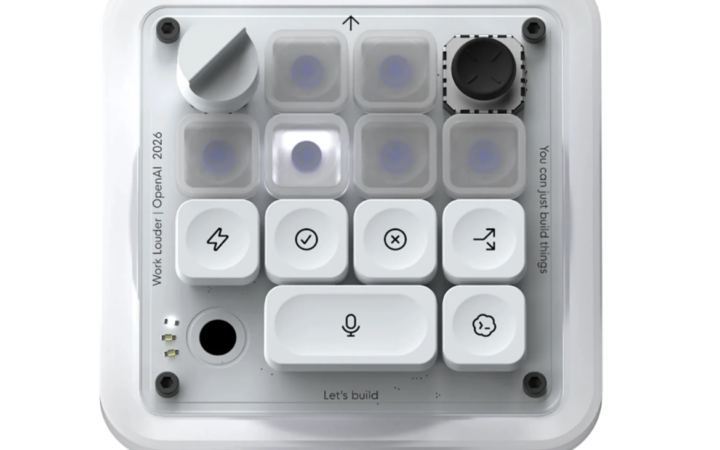
OpenAI launched Codex Micro, a $230 mechanical keypad built with Work Louder that gives developers physical controls for its Codex coding agent, its first hardware to reach market.
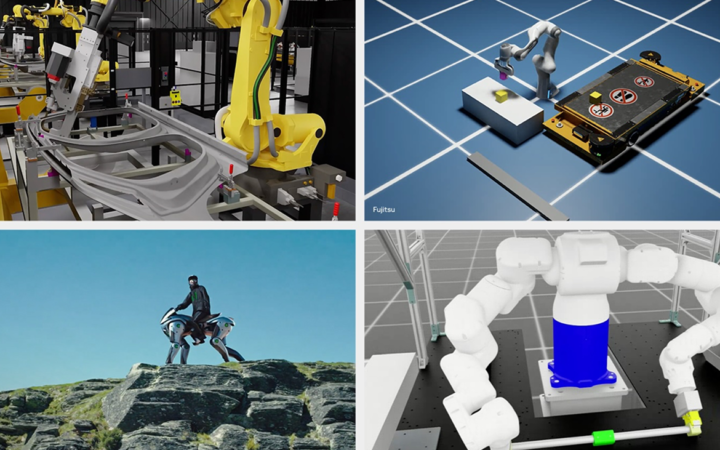
NVIDIA unveiled Cosmos 3 Edge and said Japan’s robotics and manufacturing leaders, from FANUC to Sony, intend to join its Cosmos Coalition to build AI for the physical world.
Microsoft is coaching its sales force to argue its AI products beat OpenAI’s and Anthropic’s on cost, security and completeness, turning on the partners whose models it long relied on.