Anthropic Warns AI Could Self-Replicate Across Smart Devices
Anthropic’s TV-box and virtual-network tests point to a possible AI self-replication threat, with important limits on what the experiments demonstrated.
AGI, or artificial general intelligence, describes a hypothetical AI system with broad cognitive abilities rather than expertise limited to one task. Such a system could transfer knowledge between unfamiliar problems, learn new skills with limited instruction, reason across domains, and adapt its approach as circumstances change. Today’s language, vision, and robotics models can be highly capable, but they remain uneven and dependent on training patterns, tools, and human-defined objectives. Researchers debate how AGI should be measured, whether human-level performance is the right benchmark, and what technical safeguards would be needed before a generally capable system could be deployed responsibly.
Anthropic’s TV-box and virtual-network tests point to a possible AI self-replication threat, with important limits on what the experiments demonstrated.

OpenAI’s mass mathematics release sparks a debate over research, proof verification and Terence Tao’s vision for “Math 2.0.”
Shou Zi Chew expects AI breakthroughs in science within two to three years. ByteDance’s Protenix research shows progress, while verification and agent safety remain key.
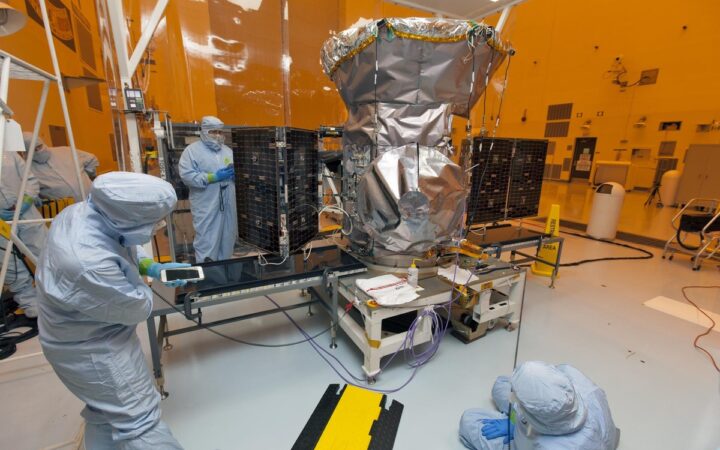
Pavel Rabtsevich used Claude Code to investigate a possible planet 116 light-years away. TESS has approved follow-up observations, but discovery is unconfirmed.
OpenAI has released 722 mathematics manuscripts from an unreleased AI model, with many Lean proofs available and some results still awaiting verification.
Carter Church says GPT-6 Astra deciphered a military letter to General Marmont in six hours, with a published key and scripts supporting the result.
Anthropic says Claude agents in its life sciences lab discovered a novel enzyme system with CRISPR like features in bacteriophage DNA, reviewed favorably by CRISPR pioneer Feng Zhang.
OpenAI says an internal model has resolved more than 100 open math problems and announced an independent advisory group of nine mathematicians to help guide how it reviews and shares such results.
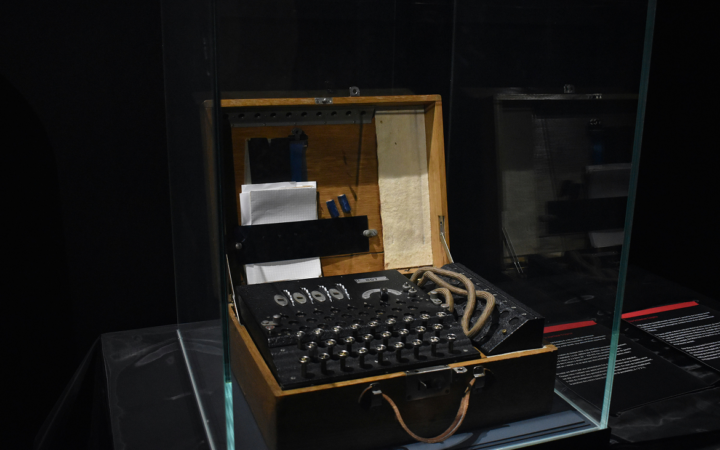
A Bloomberg developer says GPT-6 Astra decrypted a 1941 Wehrmacht radio message that had gone unsolved for 83 years, in about ten hours of AI-assisted work.
A former Google DeepMind researcher resigned and warned that AI has the potential to kill everyone, joining a growing wave of safety researchers speaking out.