Meta to Start Making Its Iris AI Chip in September, Memo Shows
Meta plans to begin manufacturing its in-house Iris AI chip in September as it aims to double computing capacity to 14 gigawatts next year and cut its reliance on Nvidia.
You are viewing the comprehensive archive for articles tagged with "gpu." Our editorial team delivers timely artificial intelligence coverage, practical insights, and industry-focused analysis across the topics shaping how AI is built, funded, regulated, and adopted. This section brings together the most relevant news, research, and expert commentary to help you understand trends and make better technology decisions. Stay informed with AIstify to keep your perspective current and complete.
Meta plans to begin manufacturing its in-house Iris AI chip in September as it aims to double computing capacity to 14 gigawatts next year and cut its reliance on Nvidia.
Qualcomm agreed to acquire Modular, the AI software startup led by Chris Lattner, to build a hardware-agnostic software layer and challenge Nvidia in data center AI.
Kazakhstan’s Data Center Valley would deploy 100,000 Nvidia GPUs near cheap power by 2027, though analysts flag execution risk after a history of stalled deals
SpaceX has released its most detailed look yet at a planned orbital AI data center satellite, unveiling a 70-meter-wingspan structure during the same week the company is pitching investors on a $1.75 trillion public listing.
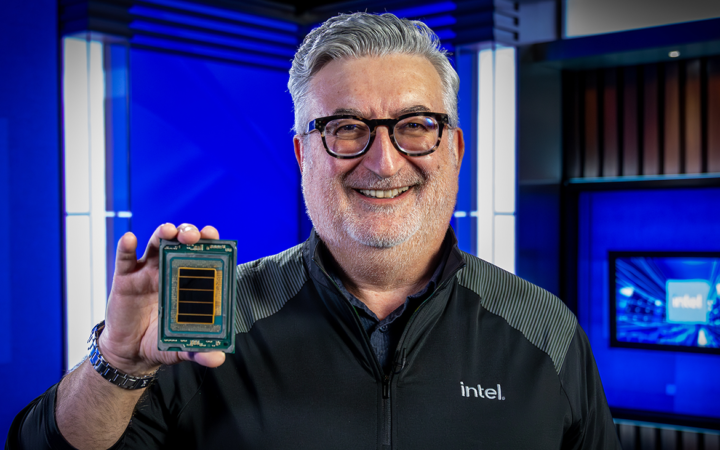
Intel has disclosed new details about Crescent Island, its next-generation AI accelerator designed for data centers and agentic AI workloads. The chip is expected to launch later this year as Intel seeks to compete more aggressively with Nvidia in the rapidly growing AI infrastructure market.
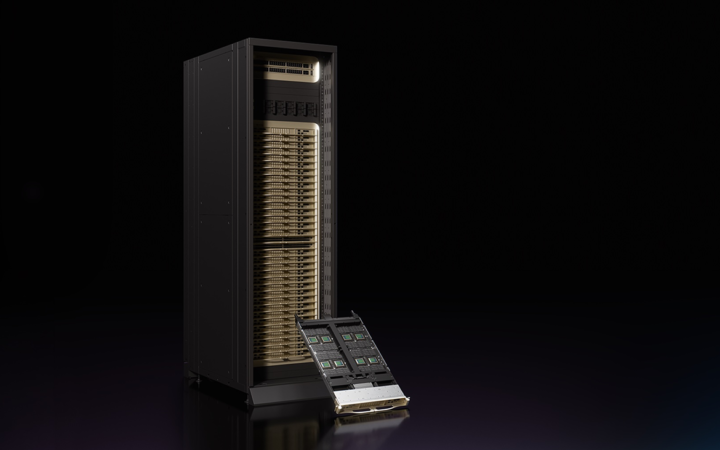
Nvidia has launched Vera, its first CPU designed specifically for AI agents and large-scale AI infrastructure. The processor promises up to 1.8 times faster performance than traditional x86 CPUs and will be adopted by major AI labs, cloud providers, and server manufacturers.
Nvidia has unveiled its first Arm-based PC processor, the RTX Spark superchip, which will power a new generation of Windows laptops and desktops.
Nvidia has committed at least $6.5 billion to photonics companies in recent months as it seeks to overcome AI infrastructure bottlenecks. The investments target optical technologies that could reduce energy consumption and improve data transfer across future AI systems.
ByteDance is developing its own CPUs to reduce dependence on external suppliers as rising demand for AI infrastructure strains global chip supply chains. The company is exploring both Arm and RISC-V architectures to support future AI and data center workloads.
Micron crossed a $1 trillion market valuation for the first time as booming demand for AI memory chips pushed shares to record highs amid the expanding AI infrastructure race.
AMD will invest more than $10 billion across Taiwan’s semiconductor ecosystem to strengthen AI chip manufacturing and packaging technologies. The move supports deployment of the company’s next-generation Helios AI server platform in 2026.
Cerebras Systems completed the largest U.S. tech IPO since Uber, raising $5.55 billion as investors bet on alternative AI chip architectures. The company’s wafer-scale processors are positioned as faster inference systems than traditional GPU-based infrastructure.
Nvidia partners with Corning to expand U.S. optical fiber manufacturing, scaling AI data center infrastructure and domestic production capacity.
Elon Musk said xAI will cease operating as an independent company and become fully integrated into SpaceX under a new SpaceXAI structure. The move combines Musk’s AI models, compute infrastructure, and aerospace operations into a single organization.
Anthropic has signed a compute agreement with SpaceX that adds access to more than 220,000 NVIDIA GPUs at the Colossus 1 data center. The added capacity is already being used to raise Claude usage limits and API availability.