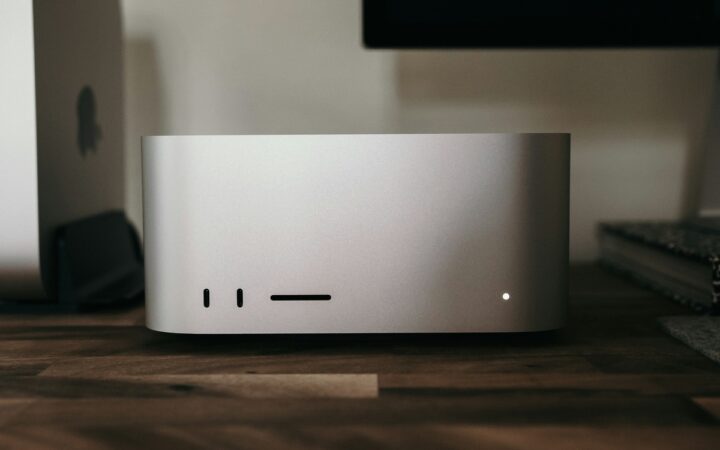
OpenAI has reportedly purchased tens of thousands of Mac mini and Mac Studio units in recent months for reinforcement learning and AI agent training, according to The Information. Anthropic has separately rented Apple silicon capacity through Amazon Web Services for comparable workloads. Neither company has commented on the purchases.
The demand stems from the distinct compute requirements of agentic AI. Training frontier models such as GPT requires massive interconnected GPU clusters where Nvidia remains dominant. Agent training works differently: a model is placed inside a virtual or physical desktop, assigned a task, scored on the outcome, and trained to improve. Running thousands of those sessions simultaneously favors breadth over concentrated processing power, making independent desktop machines an economically attractive option.
Apple silicon’s unified memory architecture is central to the appeal. By keeping CPU, GPU, and memory within a shared pool rather than relying on discrete graphics hardware and separate system memory, Apple’s chips can load and run large models efficiently. The top M5 Ultra configuration supports up to 512 gigabytes of unified memory, sufficient for models running hundreds of billions of parameters on a single machine.
Apple’s Mac business generated approximately $10.4 billion in revenue during its fiscal third quarter, a roughly 29% increase year over year, making it the company’s fastest-growing product line. Apple has not attributed the growth to AI lab purchases, but reports of high-memory configuration shortages and large institutional orders suggest the segment is adding a new demand source. Apple refreshed the Mac mini with its M6 chip and the Mac Studio with M5 Max and M5 Ultra processors last week, adjusting its typical release cycle and positioning both machines more explicitly for AI and clustered computing workloads connected via Thunderbolt 5.
The opportunity carries limits. Nvidia’s economics remain far superior for large-scale model pretraining. Apple also lacks a dedicated enterprise AI organization, having historically targeted consumers and creative professionals. Memory supply constraints could further cap how much of the demand it can fulfill.
Disclaimer: AIstify is an independent media brand owned and operated by NuvexMedia LLC, publishing news, research, and insights on artificial intelligence, emerging technologies, automation, and related industries. NuvexMedia LLC invests in and collaborates with companies across the AI, technology, software, and digital innovation sectors. These relationships do not influence AIstify’s editorial coverage, and the publication maintains full editorial independence to provide accurate, timely, and objective information. © 2026 NuvexMedia LLC. All rights reserved. This content is for informational purposes only and should not be considered legal, tax, investment, financial, or other professional advice.