Amazon in Talks for Up to $50 Billion OpenAI Investment
Amazon is in early discussions to invest tens of billions of dollars in OpenAI, a move that could deepen its position in the global AI race and make it the startup’s largest new backer.

Explore AIstify's latest reporting, research, and expert analysis tagged with "ai hardware", collected in one continuously updated archive.
Amazon is in early discussions to invest tens of billions of dollars in OpenAI, a move that could deepen its position in the global AI race and make it the startup’s largest new backer.

Apple has acquired Israeli AI startup Q.ai to strengthen its audio and hardware-focused AI capabilities. The deal highlights Apple’s growing emphasis on on-device intelligence amid intensifying competition with Meta and Google.
An AI accelerator is specialized computing hardware designed to execute machine learning training or inference workloads efficiently.
ASML posted record orders and raised its 2026 sales outlook, supported by sustained demand for AI-driven chip manufacturing equipment.
Ricursive Intelligence hits a $4 billion valuation after raising $300 million to develop AI systems that autonomously design and improve AI chips.
Samsung plans HBM4 memory chip production for Nvidia next month, targeting AI accelerator demand while competing with SK Hynix in advanced memory supply.
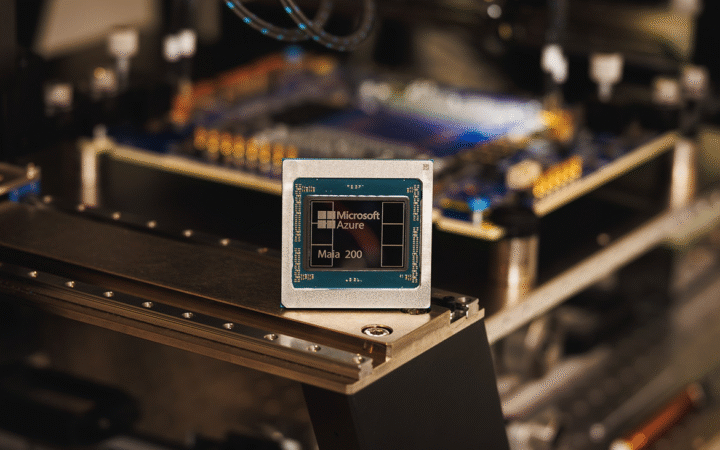
Microsoft has introduced Maia 200, a new AI chip built with TSMC and designed to power GPT-5.2 and Microsoft 365 Copilot, promising faster, more efficient AI performance.
Taiwanese electronics manufacturer Pegatron, a supplier to Apple, is building its first U.S. factory in Texas to produce AI server products, including those using Nvidia chips.
Intel shares fell 14% after the chipmaker issued soft guidance and warned of a supply shortage, raising concerns over its foundry business and AI competitiveness.
Apple is reportedly working on a pin-shaped AI wearable with cameras and microphones, potentially launching in 2027, signaling increased competition in the AI hardware space.
OpenAI is on track to unveil its first consumer device in the second half of 2026, signaling a major expansion beyond software as the company explores a new category of AI-native hardware.
OpenAI will integrate Cerebras’ high-performance AI processors to accelerate real-time model inference, enabling faster responses across workloads.
Meta and EssilorLuxottica are discussing plans to potentially double production capacity for AI-powered smart glasses to meet rising demand. The move would strengthen Meta’s push into AI-driven hardware.
Elon Musk’s AI startup xAI posted a $1.46 billion net loss for Q3 2025, up from $1 billion in the prior quarter, while revenue nearly doubled to $107 million.
Beyond major product launches, CES 2026 is highlighting a wave of unconventional AI-powered devices, from holographic assistants to robotic pets and smart kitchen tools. The gadgets reflect how artificial intelligence is moving into niche consumer applications.