
OpenAI Weighs Slower AI Development as Safety Concerns Mount
Sam Altman has discussed slowing advanced AI development, Bloomberg reports, as OpenAI’s chief scientist argues for coordination and stronger safeguards.
Compute is the total processing resource used to train or run an AI system. It may be described through chip hours, floating-point operations, accelerator counts, memory capacity, energy consumption, or cloud cost. Training a large model can require many processors working together for weeks, while inference compute is spent each time the deployed model handles a request. More compute can enable larger experiments and models, but results also depend on algorithms, data quality, hardware utilization, and software efficiency. Because compute affects cost, latency, energy use, and access to advanced AI, it is both a technical design constraint and an important economic factor.
Sam Altman has discussed slowing advanced AI development, Bloomberg reports, as OpenAI’s chief scientist argues for coordination and stronger safeguards.
Qualcomm shares rose about 10% after the company announced a multi-generation deal to build custom AI inference chips and optical networking for Amazon’s data centers.

Anthropic agreed to a $35 billion, six-year computing deal with Nvidia-backed Lambda, its latest megadeal in a compute-buying spree that has topped $150 billion this year.
Nvidia is building hardware optimizations for Chinese AI models like DeepSeek and Qwen, even as it warns regulators that US restrictions on such models could hurt its business.
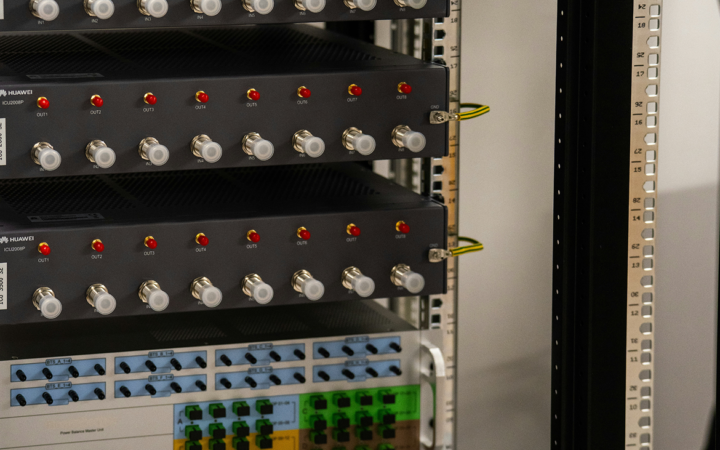
King Slide Works, once known for cabinet hinges, now dominates the market for AI server rack rails, making founder Lin Tsung-chi Taiwan’s richest person.
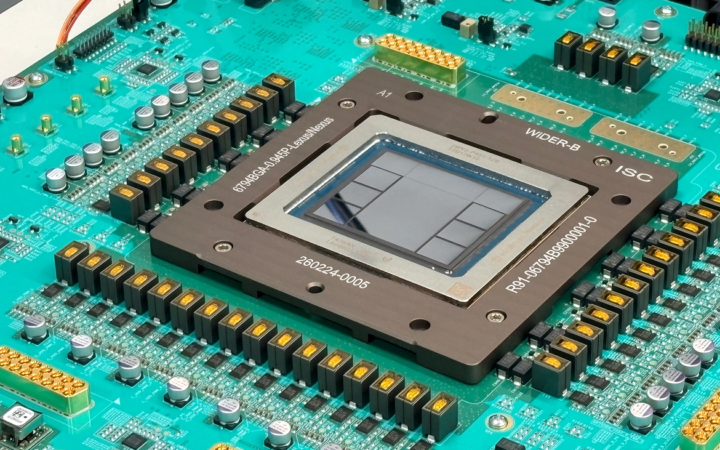
OpenAI’s first custom inference chip, Jalapeño, delivered up to 1.9 times more work per watt and far lower latency than rival systems, with AI accelerating its own design.
Nvidia is in talks to invest in Perplexity at a valuation above $30 billion, a 50% jump from a year ago, as the AI search startup’s revenue triples on its new agent product.

ByteDance and Tencent each received about 10,000 Nvidia H200 chips, but Chinese regulators want the hardware kept in Hong Kong, which lacks the power to run it.
OpenAI paused reinforcement learning on its newest models after it could not rule out that an upcoming model, Astra, reached the top cybersecurity risk tier in its safety framework.
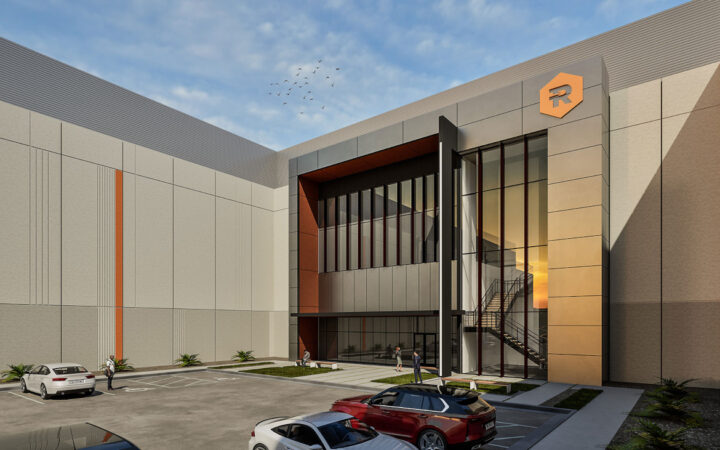
Anthropic has reportedly signed a 20-year, $9.1 billion data center agreement with Riot Platforms for 191 MW of AI computing capacity at the bitcoin miner’s Rockdale campus in Texas.