TurboQuant: Google’s New Way to Run AI Faster with Less Memory
Google has introduced TurboQuant, a new compression algorithm that reduces memory usage in AI systems while maintaining accuracy, improving performance in large models and search.

An AI workflow is the end-to-end sequence used to turn a problem and its data into a functioning artificial intelligence system. Depending on the application, it may include data collection, cleaning, labeling, model selection, training, evaluation, deployment, monitoring, and feedback. Generative AI workflows can also add retrieval, prompt construction, tool calls, guardrails, and human approval steps. Mapping the workflow makes dependencies and failure points visible: poor inputs can undermine a strong model, while missing monitoring can allow quality to decline unnoticed. Well-designed workflows define ownership, measurable acceptance criteria, data-handling rules, and fallback behavior for cases the system cannot handle safely.
Google has introduced TurboQuant, a new compression algorithm that reduces memory usage in AI systems while maintaining accuracy, improving performance in large models and search.

President Donald Trump has appointed top tech executives, including leaders from Meta, Nvidia, and Oracle, to a council shaping U.S. AI policy and strategy.
OpenAI will discontinue its Sora video app, ending a major partnership with Disney and signaling a retreat from generative video amid legal and cost pressures.
OpenAI will discontinue its Sora video-generation app, signaling a strategic shift toward core AI products amid rising competition and high compute costs.
New research shows that telling AI models they are “experts” can reduce accuracy in tasks like coding and math, while improving safety and alignment outcomes.
OpenAI has overhauled ChatGPT’s shopping features, focusing on product discovery after scaling back its Instant Checkout initiative. The update introduces visual browsing and merchant integrations.
Anthropic has upgraded Claude with the ability to control a user’s computer and complete tasks autonomously. The move intensifies competition in the fast-growing AI agent market.
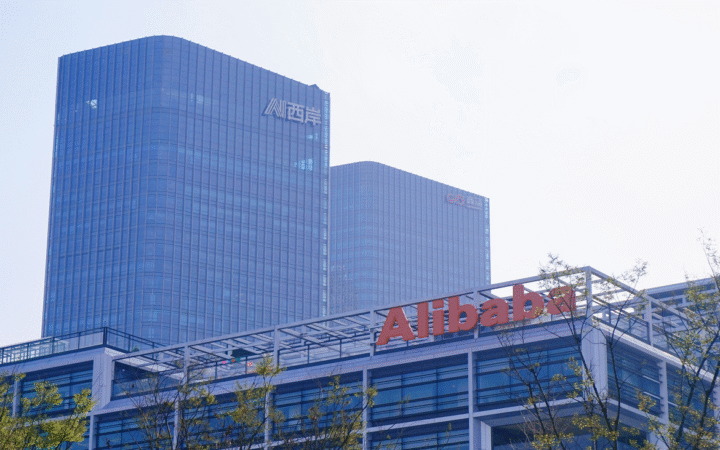
Alibaba has unveiled a new CPU designed for AI agents, focusing on inference and customizable workloads. The chip reflects China’s push to build domestic AI infrastructure.
Nvidia CEO Jensen Huang claims AGI may already exist, reigniting debate over how artificial general intelligence is defined and measured across the industry.
Nvidia has unveiled Kimodo, a motion diffusion model that generates high-quality human and robot movements from text and constraints using large-scale motion capture data.