Key Notes
- Google has announced TPU 8tx and TPU 8i Max, configurations of its eighth-generation accelerators for confidential inference and long-context AI workloads.
- Google Cloud revenue rose 103% to $30.7 billion in the third quarter, but that segment growth should not be equated with standalone chip-business growth.
- Independent Ironwood benchmarks show TPU cost advantages in selected workloads, while lower-precision GPU configurations can still lead and the new systems have not been independently benchmarked in those tests.
Google is intensifying its challenge to NVIDIA with two TPU systems targeting confidential computing and memory-heavy AI agents. The expansion comes as custom accelerators become a more visible part of Google’s cloud business and independent tests show growing competition in the cost of running large models.
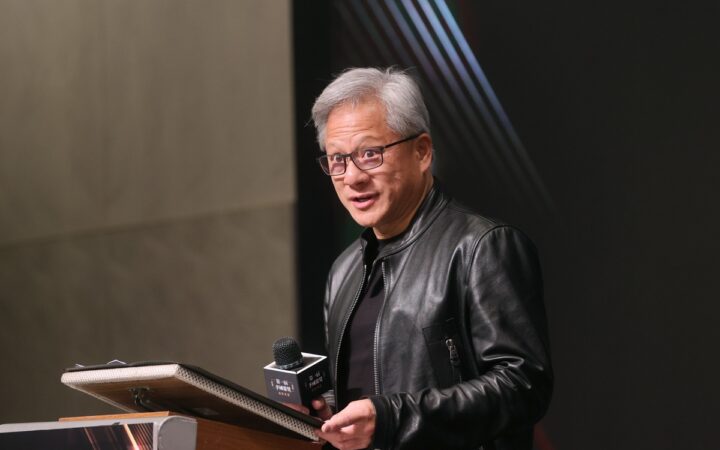
Google’s AI infrastructure chief Amin Vahdat announced TPU 8tx and TPU 8i Max on November 9. They are configurations of eighth-generation TPUs, rather than a new chip generation.
The commercial momentum is substantial. Google Cloud revenue rose 103% year over year to $30.7 billion in the third quarter, according to parent Alphabet’s earnings call. Executives described TPU system sales as a meaningful contributor and forecast a further revenue ramp in 2027. They also said the vast majority of cloud revenue still came from Google Cloud Platform, so the segment’s growth rate should not be presented as the growth rate of a separately reported chip business.
Two Systems, Different Bottlenecks
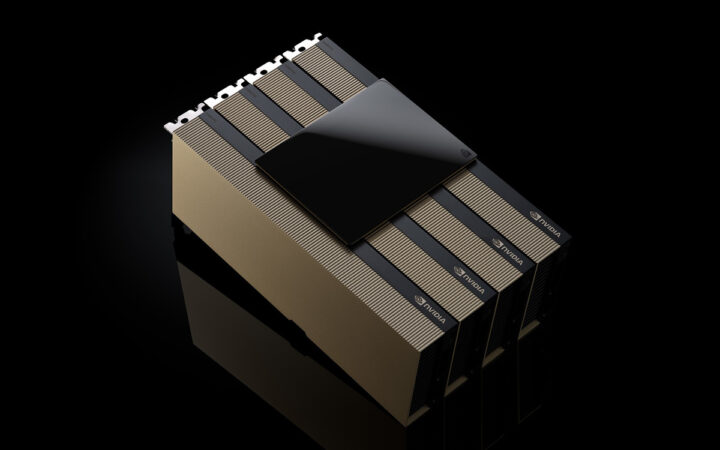
TPU 8tx combines 8t silicon with AMD host processors and hardware protection for data and model weights during processing. Google says latency can be up to 50% lower than on TPU 8t.
TPU 8i Max packages two 8i chips together, doubling compute, SRAM and high-bandwidth-memory bandwidth relative to 8i. Those are comparisons with Google’s own hardware, rather than demonstrated gains over NVIDIA’s GPUs.
The underlying buying decision is becoming more specific. A company handling sensitive financial records may prioritize isolation and control, while an agent reading a large codebase may be constrained by how much context its serving system can keep readily available. Peak processing speed alone does not settle either question.
The Software Battle Is Becoming More Important
Google’s hardware push is accompanied by an effort to make TPUs easier to adopt. In October, it open-sourced TorchTPU, developed with the PyTorch team at Meta, to run existing PyTorch workloads on TPUs with minimal code changes. The stack supports familiar serving tools including vLLM and SGLang.
That matters because switching accelerators involves more than buying a different processor. Engineering time, debugging tools, model compatibility and the reliability of a production deployment all affect the eventual cost. A cheaper chip-hour provides limited advantage if adapting the software consumes the savings.
Independent results suggest the competitive gap is narrowing, with important qualifications. SemiAnalysis reported that seventh-generation Ironwood TPUs delivered 1.2x to 2.7x as many tokens per dollar as B200, B300 and AMD MI355X systems in its FP8 GLM-5.2 agentic-serving comparisons, depending on the target response speed.
The same analysis shows why a blanket victory claim would be misleading: lower-precision GPU configurations can lead on some workloads, and results change with the model, software and speed requirement. These Ironwood measurements also do not constitute independent benchmarks of the newly announced 8tx and 8i Max systems.
The rivalry does not end the companies’ partnership. NVIDIA announced in October that Google Cloud was extending Confidential Bare Metal support to A4X Max instances powered by GB300 NVL72 systems, an expansion AIstify covered at the time. Google is simultaneously developing its own accelerator business and selling infrastructure built with its rival’s hardware.
For AI developers, the significance is a broader set of credible choices. Google’s cloud growth establishes demand, while its software work and independently tested serving performance strengthen the case for evaluating TPUs. The next test is whether those advantages translate into lower total costs and dependable capacity for each customer’s actual models.
Disclaimer: AIstify is an independent media brand owned and operated by NuvexMedia LLC, publishing news, research, and insights on artificial intelligence, emerging technologies, automation, and related industries. NuvexMedia LLC invests in and collaborates with companies across the AI, technology, software, and digital innovation sectors. These relationships do not influence AIstify’s editorial coverage, and the publication maintains full editorial independence to provide accurate, timely, and objective information. © 2026 NuvexMedia LLC. All rights reserved. This content is for informational purposes only and should not be considered legal, tax, investment, financial, or other professional advice.