
Key Notes
- NVIDIA has introduced GR00T 2, a world action model that learns physical skills from human and robot data and works with reasoning agents for multistep tasks.
- NVIDIA reports 40% average success without target-specific demonstrations in a 50-task evaluation, rising to 95% after five demonstrations per task.
- Isaac Lab 3.0 was already available in October, while the GR00T 2 project page lists code for December and the CoRL announcement adds new tools for evaluating industrial robot behavior.
NVIDIA has introduced GR00T 2, a robot foundation model designed to learn delicate physical tasks from human demonstrations and adapt those skills across different machines. The release expands its physical AI strategy from teaching robots how to move toward helping them manipulate objects precisely.
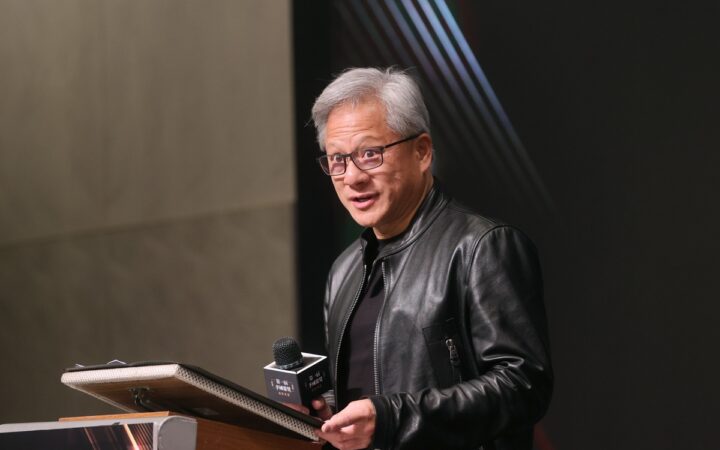
The company announced the model alongside simulation tools and evaluation benchmarks at the Conference on Robot Learning in Austin on November 9. Its demonstrations cover work such as assembling small components, inserting cables and handling laundry. NVIDIA says Siemens is evaluating GR00T 2 for industrial applications.
What the Robot Tests Actually Show
GR00T 2 is a world action model: it predicts future video and robot actions together, according to NVIDIA’s research page. That links the expected change in a scene with the movements needed to produce it, rather than treating perception and physical control as entirely separate problems.
NVIDIA evaluated 50 tasks represented in human video or other robots’ data, but unseen in demonstrations from the target robot. Without target-specific demonstrations, it reports a 40% average success rate; the model completed 40 of the 50 tasks at least once. Succeeding once on a task is different from performing it reliably on every attempt.
One demonstration per task raised average success to 71%, and five raised it to 95%. The researchers say five demonstrations took less than three minutes per task, with each task-specific adaptation using a 30-minute fine-tuning run on one RTX 5090. These are NVIDIA’s experimental results, not a guarantee of equivalent performance on an unfamiliar factory floor.
A separate reasoning agent can call GR00T 2 to sequence skills and check progress. In that arrangement, the agent chooses what to do next and how to recover from errors, while GR00T 2 handles the physical manipulation. The two layers perform complementary jobs.
Simulation Provides the Practice Ground
Isaac Lab 3.0 supplies the training infrastructure around such models. It was already released in October, before CoRL. Its modular design supports different physics engines, including Newton and PhysX, and training across multiple GPUs.
The distinction matters for tasks involving contact. Gripping a deformable object or inserting a connector requires a simulator to represent more than a robot’s route through an empty room. Researchers need to vary objects and conditions, observe failures and refine the policy before asking physical hardware to repeat the work.
Evaluation is another part of the announcement. The VABAR benchmark, developed by researchers at UC Berkeley, NVIDIA and Siemens, defines six industrial task classes, including tool sorting, gear meshing and cable handling. Its controlled variations are designed to test whether a robot can repeat a job as objects and their positions change.
That is a more demanding question than whether a single demonstration looks convincing. Repeatable task definitions and explicit success measures give developers a way to compare policies and identify which conditions cause them to fail.
From a Research Release to Working Robots
The GR00T 2 project page lists code availability for December. The CoRL presentation therefore marks a research announcement and a set of published results, with further developer access still ahead. Isaac Lab 3.0 is a separate, already available framework within the same development pipeline.
The release builds on the robotics platform NVIDIA discussed at GTC Berlin. Its commercial significance will depend on whether the combination of pretrained skills, simulation and structured testing reduces the work needed to deploy dependable robots. For now, the strongest evidence is the disclosed task-by-task testing, with industrial reliability remaining the next hurdle.
Disclaimer: AIstify is an independent media brand owned and operated by NuvexMedia LLC, publishing news, research, and insights on artificial intelligence, emerging technologies, automation, and related industries. NuvexMedia LLC invests in and collaborates with companies across the AI, technology, software, and digital innovation sectors. These relationships do not influence AIstify’s editorial coverage, and the publication maintains full editorial independence to provide accurate, timely, and objective information. © 2026 NuvexMedia LLC. All rights reserved. This content is for informational purposes only and should not be considered legal, tax, investment, financial, or other professional advice.