H2O.ai Names 2026 AI 100 Honorees Across Business and Research
H2O.ai’s 2026 AI 100 recognizes model builders, researchers and business leaders, with honorees spanning nearly 90 organizations worldwide.

Scaling laws are empirical mathematical relationships that estimate how an AI model’s loss or capability changes as training compute, dataset size, or parameter count increases. Researchers use them to plan experiments, allocate resources, and forecast whether a larger training run is likely to deliver worthwhile improvement. The relationships often follow smooth power-law trends within a tested range, but they are not universal laws of intelligence. Architecture changes, data quality, evaluation choice, optimization, inference-time computation, and capability thresholds can alter the curve. Extrapolating far beyond observed evidence is risky, so scaling forecasts should include uncertainty and be revised as new model families and training methods appear.
H2O.ai’s 2026 AI 100 recognizes model builders, researchers and business leaders, with honorees spanning nearly 90 organizations worldwide.
Anthropic’s TV-box and virtual-network tests point to a possible AI self-replication threat, with important limits on what the experiments demonstrated.
OpenAI’s mass mathematics release sparks a debate over research, proof verification and Terence Tao’s vision for “Math 2.0.”
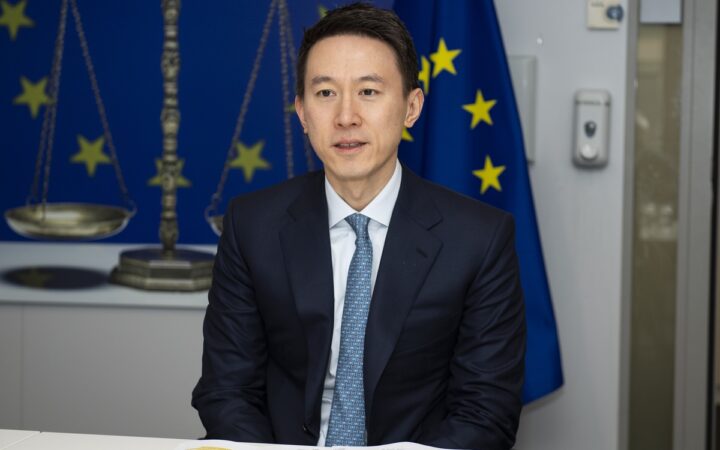
Shou Zi Chew expects AI breakthroughs in science within two to three years. ByteDance’s Protenix research shows progress, while verification and agent safety remain key.
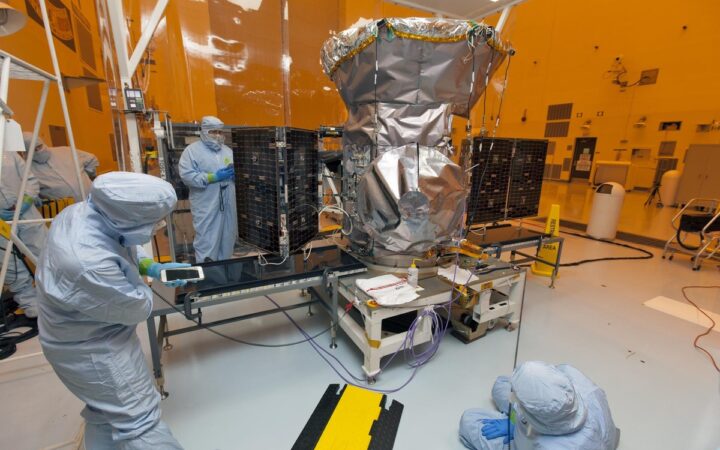
Pavel Rabtsevich used Claude Code to investigate a possible planet 116 light-years away. TESS has approved follow-up observations, but discovery is unconfirmed.
OpenAI has released 722 mathematics manuscripts from an unreleased AI model, with many Lean proofs available and some results still awaiting verification.
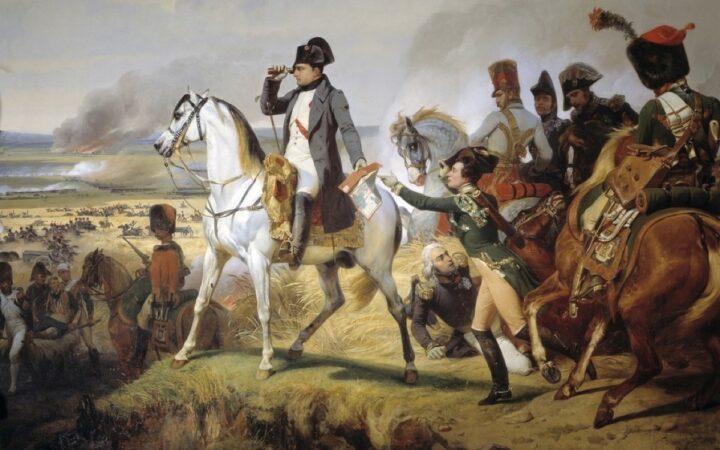
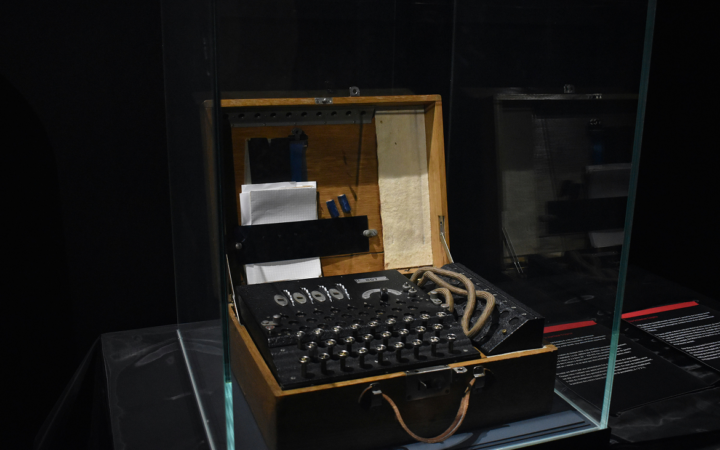
Carter Church says GPT-6 Astra deciphered a military letter to General Marmont in six hours, with a published key and scripts supporting the result.
Anthropic says Claude agents in its life sciences lab discovered a novel enzyme system with CRISPR like features in bacteriophage DNA, reviewed favorably by CRISPR pioneer Feng Zhang.
OpenAI says an internal model has resolved more than 100 open math problems and announced an independent advisory group of nine mathematicians to help guide how it reviews and shares such results.
A Bloomberg developer says GPT-6 Astra decrypted a 1941 Wehrmacht radio message that had gone unsolved for 83 years, in about ten hours of AI-assisted work.