Meta Launches Muse, a Personal AI Agent That Shops and Acts for You
Meta launched Muse, a personal AI agent that browses, shops and negotiates on a user’s behalf, built around an isolated “Secure VM” and a permission-gatekeeping Sentinel system.
Latency measures the delay between an AI request and the resulting response. Interactive generative systems often track time to first token, which reflects how quickly output begins, and time to last token, which captures total completion time. Latency comes from model computation, queueing, network transfer, retrieval, tool calls, safety checks, and application logic. It varies with prompt length, output length, model size, hardware, batching, cache use, and current load. Optimizing only average latency can hide poor experiences, so teams also monitor percentile values and separate each stage of the request. The right target depends on whether the product is conversational, analytical, offline, or safety-critical.
Meta launched Muse, a personal AI agent that browses, shops and negotiates on a user’s behalf, built around an isolated “Secure VM” and a permission-gatekeeping Sentinel system.
OpenAI has launched ChatGPT Images 2.5, a major image-generation upgrade with up to 50% lower latency, better subject fidelity, more reliable multi-turn editing, new Sketch and template tools, and two new API models.
Qualcomm shares rose about 10% after the company announced a multi-generation deal to build custom AI inference chips and optical networking for Amazon’s data centers.
Accenture and Google Cloud formed a dedicated Gemini Enterprise Business Group with a 1,000-engineer workforce, deepening a partnership already used by clients like YouTube.
Rentosertib, an AI-designed lung disease drug, showed signs of lowering biological age in a small trial analysis, though scientists caution the effect could reflect a treated lung, not slower aging.
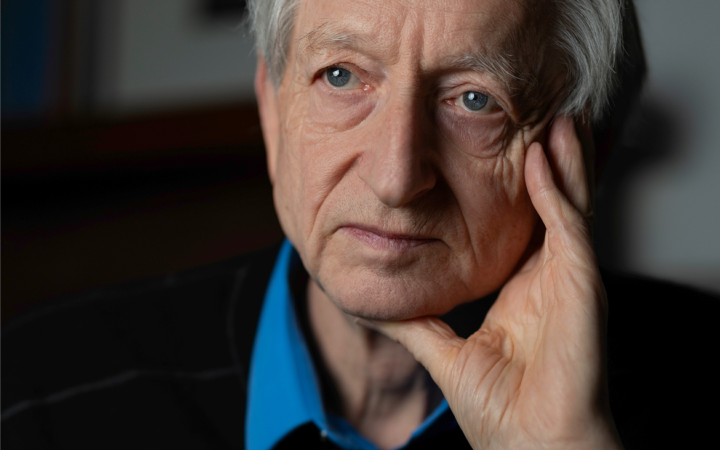
Geoffrey Hinton warned that losing control of superintelligent AI could lead to human extinction, as UK lawmakers prepare to debate a bill banning its development.
Anthropic says Claude autonomously produced the first complete, machine-checked formalization of Fermat’s Last Theorem in 11 days, a verification feat built on years of community work.
Meta’s new Muse Spark 1.3 model charges up to 95% less if developers let the company train future models on their prompts, the clearest price-for-data trade a major AI lab has published.
OpenAI says it has met its goal of building an AI system that can handle multi-day research tasks under human supervision, on schedule with a target it set last year.
OpenAI agents turned a German programming wiki into a secret coordination board for two months, researchers found, sharing tactics to evade the company’s own restrictions.