Key Notes
- OpenAI launched ChatGPT Images 2.5 with up to 50% lower generation latency, stronger reference-image fidelity and more reliable editing across multiple turns.
- The ChatGPT experience adds Sketch, templates, image comments and prompt sharing, while the API adds GPT-Image-2.5 Flare for faster general use and GPT-Image-2.5 Sunburst for higher-precision creative work.
- The update is rolling out across all ChatGPT tiers, ChatGPT Work and Codex on desktop, mobile and web, while OpenAI says users now create more than 3 billion images per week across ChatGPT Images and GPT-Image API models.
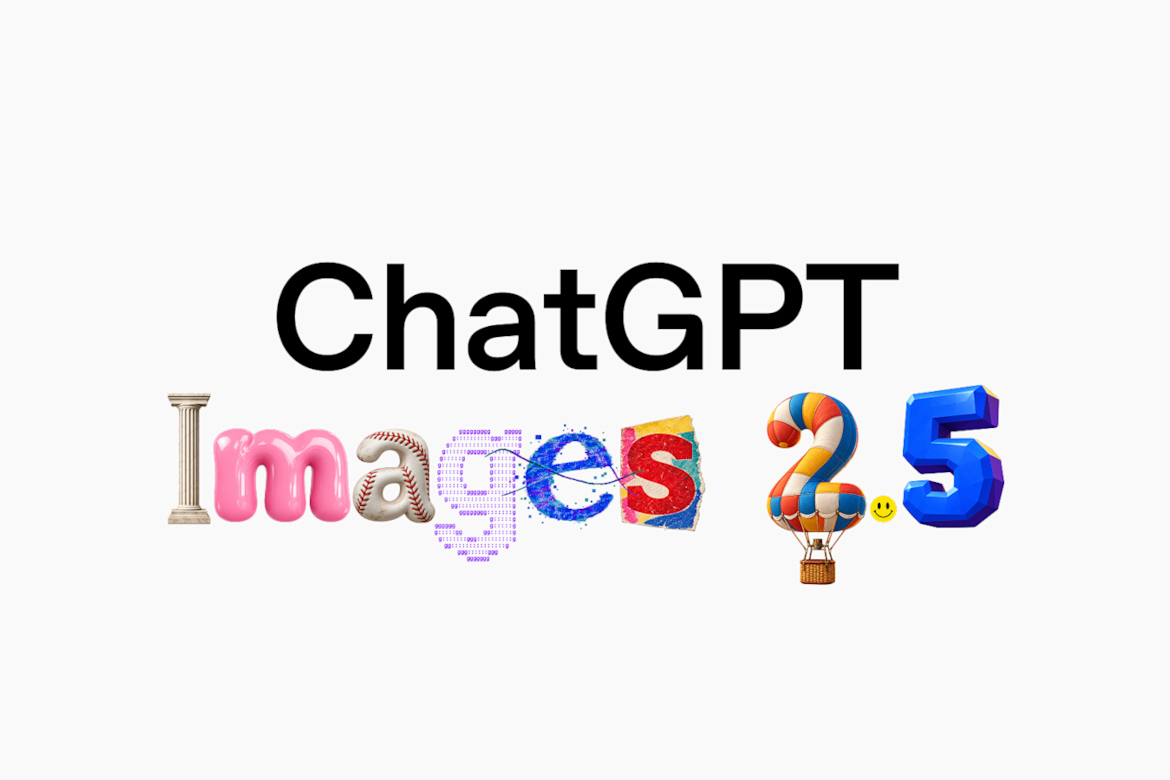
OpenAI has launched ChatGPT Images 2.5, a major update to its image-generation system that focuses less on flashy one-shot creation and more on the problems that have limited generative-image tools in everyday use: speed, subject consistency, targeted editing and control over repeated revisions.
The company says the new model reduces image-generation latency by up to 50% compared with Images 2.0 while producing sharper detail, richer textures and more natural lighting. It is also designed to preserve recognizable people, pets, products and other reference subjects more faithfully when they are placed into new scenes or styles.
The scale of the product is already significant. OpenAI says people now create more than 3 billion images every week across ChatGPT Images and the GPT-Image models available through its API. Images 2.5 is rolling out across all ChatGPT tiers, ChatGPT Work and Codex on desktop, mobile and web, making the upgrade immediately relevant to both casual creators and professional teams.
For developers, OpenAI is also introducing two new API models. GPT-Image-2.5 Flare is positioned as the default model for most applications, pairing higher image quality with 50% lower latency than GPT-Image-2. GPT-Image-2.5 Sunburst is aimed at premium workflows that need tighter control and are willing to accept longer generation times for greater precision.
The Biggest Upgrade Is Control, Not Just Image Quality
Generative-image systems have become dramatically better at creating polished pictures from a single prompt, but editing an existing image has remained one of the hardest practical problems. A user may ask to change a jacket, remove an object or replace a line of copy only to find that the model also alters the subject’s face, lighting, composition or background.
Images 2.5 is designed to reduce that kind of collateral change. OpenAI says the model is better at modifying only the requested element while preserving the rest of the image, even when the scene contains complex subjects or detailed backgrounds. In a product-photo workflow, for example, a user could swap one item without rebuilding the model, composition, lighting and brand treatment surrounding it.
That distinction matters for professional use. Image generation becomes substantially more useful when a creative team can iterate on the same asset instead of treating every edit as a fresh generation. Marketing departments, retailers, agencies and media teams often need dozens of controlled variations of an approved concept, not dozens of visually unrelated alternatives.
The new model also improves consistency across longer conversations. OpenAI says earlier edits are more likely to remain intact as additional instructions are applied, while image quality is less likely to degrade over repeated turns. That makes ChatGPT Images behave more like an iterative creative workspace and less like a sequence of disconnected prompts.
For users who already work with AI prompts, the change also shifts some of the burden away from describing every visual detail in text. OpenAI is adding direct manipulation tools that let users point to what they want changed instead of repeatedly rewriting increasingly complicated prompts.
Sketch, Templates and Image Comments Make ChatGPT More Visual
The most visible new product feature is Sketch. Users can type “@Sketch” in ChatGPT, draw a rough visual reference and ask the system to turn that drawing into a finished image. A crude room layout can become a rendered interior, a rough clothing silhouette can become a fashion concept, and a simple doodle can be used as the structural starting point for a more polished composition.
That may sound like a minor interface addition, but it addresses a fundamental limitation of text-first image generation. Some ideas are spatial rather than verbal. Explaining the exact position of objects, the shape of a garment or the hierarchy of a poster can require a long prompt that is still less precise than a 10-second sketch.
OpenAI is also introducing templates for common formats such as posters, merchandise and product photography. Instead of beginning with a blank prompt, users can start from a familiar visual format and specify the message, design elements and style they want.
Another feature lets users place comments directly on an image to request localized changes. This makes the editing process closer to the way designers already collaborate in creative software: identify a region, explain what should change and leave the rest alone.
Users can also share successful prompts along with the images they create. Someone receiving a shared image can reuse the underlying idea with their own photos and details, effectively turning prompts into reusable creative templates. The feature could encourage a more social layer around image generation, where visual concepts spread through remixes rather than static images alone.
OpenAI Is Targeting the Weak Point of Reference-Based Generation
One of the most important technical improvements is better preservation of subjects from reference photos. Previous image models could often recreate the general idea of a person or pet while subtly changing facial structure, proportions, colors or other distinctive details.
OpenAI says Images 2.5 is better at keeping those identities and visual characteristics recognizable when subjects are transformed into different settings, compositions or artistic styles. Lighting and textures are also intended to look more natural, which could make the model more useful for personal photography, product work and brand assets where consistency matters more than novelty.
This is especially important for businesses. A consumer may tolerate a character looking slightly different from one image to the next. A retailer cannot easily tolerate a product changing shape between campaign images, and a marketing team cannot use a model that repeatedly alters a company logo, package design or brand color scheme.
OpenAI explicitly frames the new model around those production workflows. The company says Images 2.5 is more likely to preserve requested visual direction, composition and individual details as a creative brief becomes more complex. It also improves handling of transparent backgrounds, which is particularly useful for assets intended for websites, presentations, advertisements and product catalogs.
The broader trend is part of the evolution of generative AI from novelty creation toward controllable production. The competitive question is no longer simply which model can generate the most impressive image from a clever prompt. Increasingly, it is which system can maintain the same subject, layout and creative intent through ten revisions without forcing the user to start again.
Flare and Sunburst Split the API Between Speed and Precision
The API release makes that tradeoff explicit. GPT-Image-2.5 Flare is designed for speed and volume. OpenAI says it delivers higher-quality images than GPT-Image-2 while cutting latency by 50%, making it suitable for social content, creator tools, product experiences, visual search, rapid prototyping and high-volume generation.
GPT-Image-2.5 Sunburst takes the opposite approach. It is designed for workflows where precision matters more than generation time, including production-ready campaign creative and polished product imagery. Rather than offering one model that tries to optimize every variable simultaneously, OpenAI is giving developers a faster general-purpose option and a slower premium option.
Early customers cited by OpenAI include Higgsfield AI, Adobe and Manus. Higgsfield emphasized the model’s ability to understand what should not change during an edit, while Adobe said the new models are being added to Firefly. Manus reported that Flare produced high-quality images at two to four times the speed of GPT-Image-2 in its evaluations.
Those customer statements are promotional and should not be treated as independent benchmarks, but they point to the commercial target. OpenAI is competing not only for people making images inside ChatGPT, but also for developers embedding image generation into design tools, retail applications, marketing platforms and enterprise workflows.
That strategy mirrors OpenAI’s broader push to make ChatGPT an AI assistant that can move across different types of work rather than a text chatbot with separate media features. Images are increasingly becoming another native output and editing surface inside the same environment.
Images 2.5 Arrives Days After GPT-6 Astra
The launch comes just five days after OpenAI introduced GPT-6 Astra, its new flagship general-purpose model. Astra puts computer use, coding, browsing and long-running professional tasks at the center of the company’s model strategy, while Images 2.5 strengthens the visual side of the same product ecosystem.
Taken together, the releases show how quickly ChatGPT is expanding beyond conversational text. A user can increasingly move from research and reasoning to image creation, editing, coding and computer-based execution without leaving the same product.
For OpenAI, that integration is strategically important. Standalone image generators have improved rapidly, but ChatGPT has the advantage of an enormous existing user base and a conversational interface that can carry context from one task into another. OpenAI’s claim of more than 3 billion images generated per week suggests image creation is already a major part of that usage rather than an experimental side feature.
The new editing tools also make the product more competitive with dedicated creative software. Sketch, comments and templates are not replacements for professional design suites, but they reduce the distance between generating an image and actually working on it. The more editing can happen inside ChatGPT, the less users need to export an imperfect generation and fix it elsewhere.
Safety Measures Remain Embedded in Generated Images
OpenAI says Images 2.5 continues to use prompt and image checks intended to block harmful outputs. The company also continues to attach C2PA provenance metadata and use invisible watermarking to help identify content produced by its image systems.
Those measures are increasingly important as image generation becomes faster and more photorealistic. Better subject fidelity is useful for legitimate creative work, but the same capability can increase the realism of deceptive or unauthorized imagery. OpenAI has published a separate system card covering the model’s evaluations and safeguards.
The company did not present Images 2.5 as a radical change to its image-safety policy. Instead, the launch is primarily about making image generation more controllable and productive while maintaining the existing provenance and content-safety framework.
Why Images 2.5 Matters
The most consequential part of ChatGPT Images 2.5 may be that it treats image generation as an editing workflow rather than a prompt lottery. Faster outputs are useful, and sharper images make for better demonstrations, but those improvements alone do not solve the frustration of trying to revise one detail without breaking five others.
If OpenAI’s claims hold up in everyday use, better subject preservation and multi-turn consistency could make the model much more practical for repeatable creative work. A marketer could keep the same product while changing a background. A creator could preserve a character through multiple scenes. A designer could iterate on a layout without rebuilding the whole composition after every change.
Sketch and direct comments reinforce the same idea: users should not have to translate every visual thought into a perfectly engineered sentence. The interface is beginning to accept visual intent directly, while the underlying model is becoming better at deciding which parts of an image should remain untouched.
That is a more meaningful measure of progress than raw photorealism. The best image model is increasingly not the one that produces the most spectacular first result, but the one that can survive the second, fifth and tenth edit while still looking like the same piece of work.
With Images 2.5, OpenAI is betting that control, consistency and speed will matter more than another leap in spectacle. For a product already generating billions of images each week, that could be the upgrade that moves AI image creation further from experimentation and closer to routine creative production.
Disclaimer: AIstify is an independent media brand owned and operated by NuvexMedia LLC, publishing news, research, and insights on artificial intelligence, emerging technologies, automation, and related industries. NuvexMedia LLC invests in and collaborates with companies across the AI, technology, software, and digital innovation sectors. These relationships do not influence AIstify’s editorial coverage, and the publication maintains full editorial independence to provide accurate, timely, and objective information. © 2026 NuvexMedia LLC. All rights reserved. This content is for informational purposes only and should not be considered legal, tax, investment, financial, or other professional advice.