
Key Notes
- Rentosertib, an AI-designed drug built to treat idiopathic pulmonary fibrosis (IPF), showed reduced predicted biological age across six independent proteomic "aging clocks" in a new Nature Biotechnology analysis of blood samples from the drug's earlier 42-patient Phase IIa trial, over 12 weeks.
- The primary trial's actual endpoint was lung function (forced vital capacity), where the 60mg group gained ~98mL versus a ~20mL decline on placebo — a "promising trend," per Insilico, not a formally met efficacy endpoint.
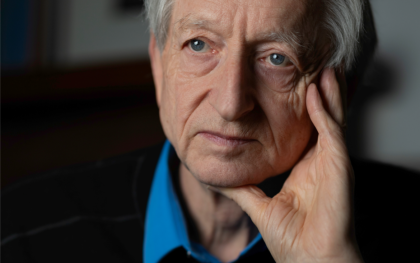
- 2013 Nobel laureate Michael Levitt cautioned the study can't yet distinguish "slower aging" from simply "a treated lung" in a small (42-person), fatal-disease population, and says the next needed step is a trial in healthy volunteers.
Rentosertib, an experimental drug designed with artificial intelligence to treat idiopathic pulmonary fibrosis, showed an unexpected secondary signal in a new analysis published in Nature Biotechnology: patients’ predicted biological age appeared to drop across six independently developed scientific measurement tools called proteomic aging clocks, tracked over 12 weeks.
The drug comes from Insilico Medicine, a clinical-stage AI drug discovery company. Its generative AI platform, Pharma.AI, first identified a protein called TNIK as a promising drug target, notable because TNIK is linked both to idiopathic pulmonary fibrosis, a serious and typically fatal scarring lung disease affecting roughly five million people worldwide, and to several recognized biological hallmarks of aging. Insilico’s AI chemistry system then designed rentosertib specifically to act on that target, taking the drug from target identification to a preclinical candidate in roughly 18 months.
The aging findings come from a secondary, retrospective analysis of blood samples originally collected during rentosertib’s Phase IIa clinical trial, which enrolled just 42 IPF patients. Researchers from Harvard Medical School, Stanford University, the Broad Institute, Peking University and other institutions ran longitudinal blood protein data through six separate, independently built aging clocks, including models named ProtAge, OrganAge and PAC.
All six models pointed in the same direction, indicating a reduction in predicted biological age among treated patients; the strongest average signal suggested roughly three to four years of reversal, with one clock showing a maximum of six years in some patients. It is worth being precise about scale here: this is a proteomic biomarker measurement, not a clinical assessment of aging or lifespan, and the sample size of 42 people is small.
The trial’s actual primary purpose, treating lung disease, produced its own separate and more conventionally structured result. In the group receiving a 60-milligram daily dose, patients showed an average gain of 98.4 milliliters in forced vital capacity, a standard measure of lung function that typically declines with age and disease, compared with an average decline of 20.3 milliliters among those on placebo.
Insilico describes this as a “promising dose-dependent trend in efficacy” that met the trial’s primary safety endpoint, language that stops short of claiming a formally met efficacy endpoint. Rentosertib has since progressed into Phase III clinical development for IPF in China.
Why the Caution Matters as Much as the Result
Independent scientific reaction has been notably measured, and Insilico’s own announcement, titled “shows potential for biological age reversal,” reflects that hedging directly. Michael Levitt, the 2013 Nobel laureate in chemistry, offered the sharpest note of caution: the trial cannot yet distinguish between the drug genuinely slowing biological aging and the more mundane possibility that treating a serious lung disease simply produced a healthier-looking blood profile in patients who were, physiologically, doing better.
That distinction matters enormously for how the finding should be interpreted, since a drug that improves markers of aging specifically in sick patients recovering from a targeted disease is a meaningfully different claim than a drug shown to slow aging broadly. Levitt said the next essential step is testing the effect in healthy volunteers, who would have no underlying disease to confound the biological age signal, a study that has not yet been conducted.
The result is genuinely interesting as a proof of concept for how AI-driven drug discovery might be evaluated going forward, since researchers say this is the first instance of a drug designed for a novel AI-identified target being prospectively studied with aging biomarkers layered into a standard disease-focused clinical trial, rather than searching for aging effects only after a drug reaches approval.
But the appropriately cautious reading is that this is early, secondary evidence in a very small population with a serious illness, not a demonstrated anti-aging therapy, and confirming whether the effect is real, causal and generalizable will require larger, longer trials specifically designed to test it.
Disclaimer: AIstify is an independent media brand owned and operated by NuvexMedia LLC, publishing news, research, and insights on artificial intelligence, emerging technologies, automation, and related industries. NuvexMedia LLC invests in and collaborates with companies across the AI, technology, software, and digital innovation sectors. These relationships do not influence AIstify’s editorial coverage, and the publication maintains full editorial independence to provide accurate, timely, and objective information. © 2026 NuvexMedia LLC. All rights reserved. This content is for informational purposes only and should not be considered legal, tax, investment, financial, or other professional advice.