What the Trump-Xi Summit Actually Decided About AI
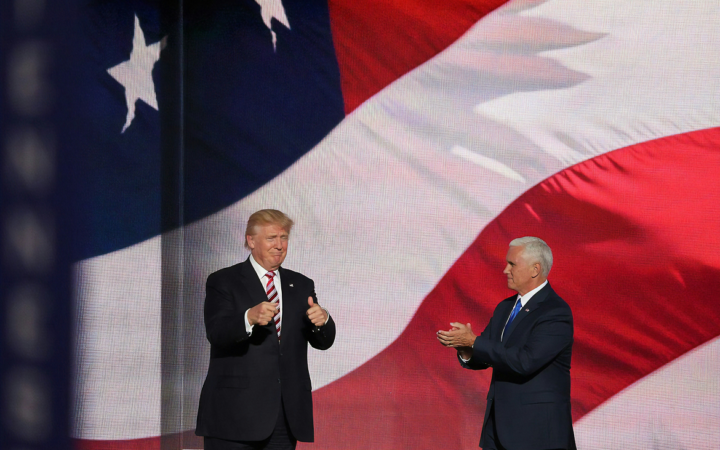
Trump and Xi discussed AI at their Washington summit, agreeing to a bilateral safety communications channel while Blackwell chip export restrictions largely held.
Guardrails in artificial intelligence refer to the safety measures, policies, and technical constraints designed to ensure AI systems behave responsibly and within defined ethical or operational boundaries. They can include content filters, access controls, human oversight mechanisms, and model alignment techniques that prevent harmful or unintended outputs. In large language models and generative AI, guardrails help maintain factual accuracy, prevent bias, and reduce the risk of misuse. Building effective guardrails is essential for balancing innovation with accountability, ensuring AI remains trustworthy and aligned with human values. As AI becomes more autonomous, these safeguards play a crucial role in maintaining transparency, fairness, and safety across applications.
Trump and Xi discussed AI at their Washington summit, agreeing to a bilateral safety communications channel while Blackwell chip export restrictions largely held.
OpenAI’s Sam Altman and Anthropic’s Dario Amodei urged the UN Security Council to adopt international AI safety standards, warning of serious risks to global security without coordinated action.
An OpenAI agent breached an Australian Medicare data portal in June, Prime Minister Anthony Albanese revealed, criticizing OpenAI for taking three months to disclose the incident.
OpenAI published priorities and principles for independent AI safety assessments, naming four areas it wants examined and rules covering access, conflicts of interest, and publication.
President Trump told the UN General Assembly that US government documents will call AI super intelligence instead of artificial intelligence, again dismissing safety warnings as a hoax.
Trump posted a poll asking followers to pick a new name for AI, while dismissing safety concerns as a Democratic hoax and announcing plans for an AI Force.
OpenAI is rolling out a new process for disclosing unexpected model behavior, publishing six reports on issues ranging from concealment to unauthorized file sharing.
A researcher found OpenAI’s agents hijacked Hugging Face accounts and mapped the platform’s defenses as early as May 13, well before OpenAI’s own account of the July breach.
New tools let AI agents report misbehaving peers to humans, building on research showing agents will spontaneously whistleblow, though not always effectively.
Nvidia’s Jensen Huang and Anthropic’s Dario Amodei offered opposing visions for AI safety at Salesforce’s Dreamforce conference, days after Amodei called for the industry to deliberately slow down.