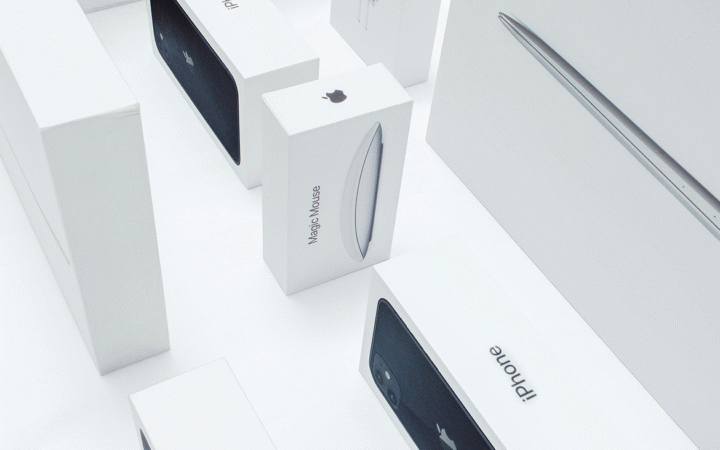
Apple Reportedly Developing AI Wearable
Apple is reportedly working on a pin-shaped AI wearable with cameras and microphones, potentially launching in 2027, signaling increased competition in the AI hardware space.

A GPU, or graphics processing unit, is a processor built to perform many calculations in parallel. Although originally designed for rendering graphics, this structure is well suited to the matrix and vector operations at the center of deep learning. GPUs accelerate both model training and inference, and multiple units can be connected to handle larger models or datasets. Performance depends not only on raw arithmetic speed but also on memory capacity, memory bandwidth, interconnects, numerical formats, cooling, and software libraries. Consumer, data-center, and integrated GPUs serve different workloads, so the most expensive chip is not automatically the most efficient choice for every AI application.
Apple is reportedly working on a pin-shaped AI wearable with cameras and microphones, potentially launching in 2027, signaling increased competition in the AI hardware space.
OpenAI now uses age prediction to adjust ChatGPT’s safety settings for teens. Users 18 and older can verify their age to disable extra restrictions.
OpenAI is on track to unveil its first consumer device in the second half of 2026, signaling a major expansion beyond software as the company explores a new category of AI-native hardware.
OpenAI has invested in Merge Labs, a brain-computer interface startup founded by CEO Sam Altman, as part of a $250 million seed round valuing the company at $850 million.
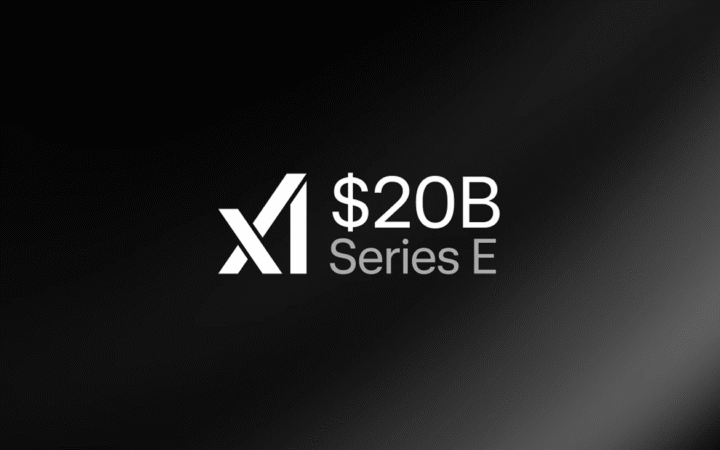
xAI closed a $20 billion Series E round, exceeding its original target and adding strategic backing from NVIDIA and Cisco. The funding supports expanded data center capacity, large-scale GPU deployment, and continued development of the Grok model family.
Beyond major product launches, CES 2026 is highlighting a wave of unconventional AI-powered devices, from holographic assistants to robotic pets and smart kitchen tools. The gadgets reflect how artificial intelligence is moving into niche consumer applications.
Google released a major upgrade to its Gemini Deep Research agent, giving developers access to advanced autonomous research capabilities through the Interactions API. The company also introduced DeepSearchQA, a benchmark for evaluating multi-step web research agents.
Google introduced the Titans architecture and the MIRAS framework to enable AI models to handle massive contexts and update their internal memory while running, improving performance in long-sequence tasks.
AWS AI Factories bring dedicated AI infrastructure directly into customer data centers, enabling enterprises and governments to rapidly develop and deploy AI applications while meeting data sovereignty and regulatory requirements.
OpenAI co-founder Ilya Sutskever says the era of scaling compute and data as the main driver of AI progress is ending, arguing that meaningful advances now depend on true scientific breakthroughs and solving AI’s poor generalization.