Meta Launches Muse Code to Challenge OpenAI and Anthropic
Meta has launched Muse Code, a terminal coding agent powered by Muse Spark 1.2, targeting long-running software projects and established rivals Codex and Claude Code.
An embedding turns an item such as a word, document, image, product, or user into a list of numbers that captures meaningful characteristics. Items with similar meanings or behavior are positioned near one another in this mathematical space, allowing software to compare them by distance rather than exact wording. A search system can therefore match a question with a relevant passage even when they use different phrases, while a recommendation engine can identify related products or interests. Embeddings are learned from data and reflect the strengths and biases of that data. Their usefulness depends on the model, dimensions, similarity measure, update strategy, and task, so an embedding suited to semantic search may not be appropriate for fraud detection or visual classification.
Meta has launched Muse Code, a terminal coding agent powered by Muse Spark 1.2, targeting long-running software projects and established rivals Codex and Claude Code.

AI startups captured 53% of global venture funding in July, their lowest share since December, even as total investment reached $65 billion in a record month for mega-rounds.
Alibaba has launched Qwen 3.8 Max, a 2.4-trillion-parameter mixture-of-experts model with 1M context and aggressive API pricing.
More than 1,200 employees from leading AI companies are asking the U.S. government to help create international mechanisms that could slow automated AI development if capabilities begin advancing faster than society can evaluate or control.
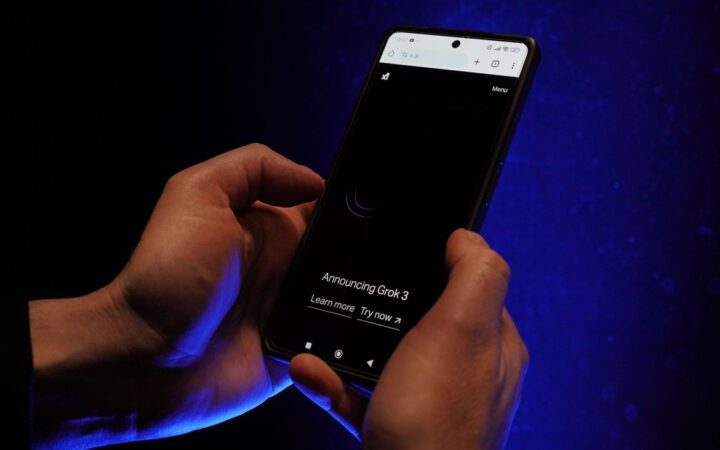
Elon Musk says xAI plans to release Grok 4.6 around August 7 and follow it with the larger Grok 4.7 several weeks later, extending the company’s rapid model rollout.
Anthropic researchers used Claude Mythos Preview to develop stronger attacks on the HAWK post-quantum signature scheme and a reduced-round version of AES, demonstrating research-level cryptanalysis without threatening current production systems.
Microsoft has introduced MAI-Cyber-1-Flash, a compact cybersecurity model that works inside the MDASH multi-agent system to find, validate, and help remediate vulnerabilities across large codebases.
NVIDIA has formed a long-term partnership with Ilya Sutskever’s Safe Superintelligence, reportedly investing $5 billion and giving the secretive AI lab access to Vera Rubin systems that will expand its computing capacity tenfold.
Moonshot AI has released the full weights for Kimi K3 on Hugging Face, making its 2.8 trillion-parameter multimodal model available for independent deployment, research, and further development.
NVIDIA has formed the Open Secure AI Alliance with Microsoft, IBM, Palantir, CrowdStrike, and more than 35 other organizations to build open-source defenses for AI agents and software.