
Key Notes
- Xi Jinping proposed an open AI ecosystem for BRICS, including joint language-model development and specialist training.
- The speech did not identify participating models, repositories, access conditions or a launch timetable.
- Implementation will depend on the infrastructure, licensing and governance arrangements that follow the announcement.
China has proposed building an open AI ecosystem with BRICS countries, offering cooperation on large language models and specialist training as Beijing seeks a larger role in shaping how the technology spreads internationally.
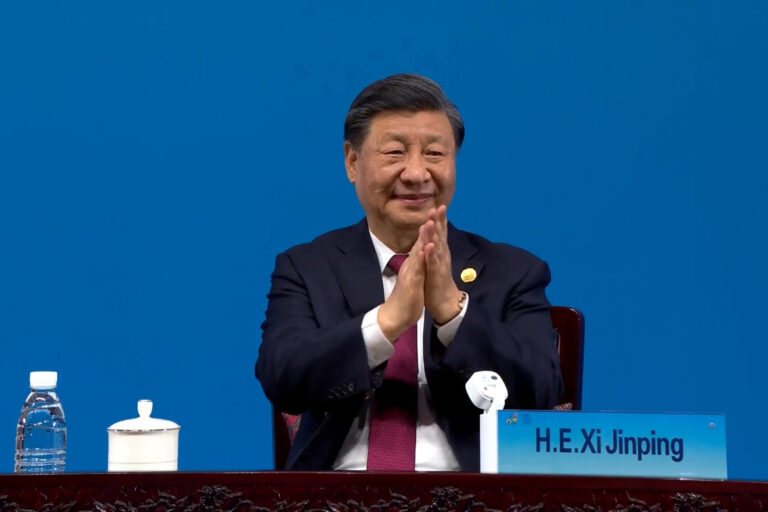
President Xi Jinping outlined the initiative at the BRICS summit in New Delhi on September 13. His proposal puts shared development and practical adoption at the center of China’s offer, alongside programs intended to help member countries build their own technical expertise.
The announcement establishes a direction for cooperation. It does not yet give developers a model to download, an application endpoint to use or a timetable for joining a common platform.
What China Is Proposing
The Chinese government’s account of Xi’s remarks describes China taking a leading role in a BRICS open-source AI community. It identifies cooperation in developing and applying large language models, together with specialized seminars and training.
Xi placed the AI initiative within a wider set of proposals covering trade, industrial digitalization, manufacturing standards and engineering skills. That makes the announcement part of an economic cooperation agenda, with AI presented as something member countries should be able to develop and use across their economies.
The full speech does not identify DeepSeek or Alibaba’s Qwen as providers for the proposed community. Neither model family should therefore be treated as a confirmed participant.
An Open Ecosystem Needs Operating Details
The proposal leaves several questions for subsequent agreements: what will be shared, who will maintain it, how access will work and which institutions will pay for the computing infrastructure. Those decisions will determine whether the initiative becomes useful to a university team or a business trying to deploy AI locally.
A research collaboration, access to a hosted model and permission to download and adapt model weights provide different levels of independence. The speech’s language about openness does not establish a particular software license or guarantee that every component of a future system will be publicly available.
Training deserves attention alongside the models themselves. An organization needs people who can evaluate output, prepare suitable data and maintain a deployment. A shared model can lower one barrier to adoption while leaving those operational requirements in place.
For multilingual services, participating teams would also need to establish how systems perform in the languages and settings in which they will be used. A general promise of cooperation does not answer those practical questions, but joint development could provide a way to work on them.
Chinese Models Provide Context, Not a Confirmed Lineup
The proposal comes against a backdrop of Chinese model releases such as Alibaba’s Qwen3.8-Max and DeepSeek V4.1 Flash. Those products help explain the commercial relevance of an open AI community, but their individual release terms cannot be transferred to a diplomatic initiative that has not named its technology partners.
The broader AI governance question is how participating countries would share authority over the resulting systems. A common platform would need decisions about data handling, security updates and responsibility when a model is changed or deployed in a sensitive setting.
It would also need a sustainable operating model. Making software available is one task; providing reliable computing capacity and maintaining tools over time is another. The announcement does not specify how those costs would be divided.
The next meaningful evidence will be an implementation plan: named partners, access conditions, infrastructure commitments and concrete training programs. Until those appear, Xi’s remarks are best understood as a proposal to organize AI cooperation across BRICS, rather than the launch of a finished shared AI service.
Disclaimer: AIstify is an independent media brand owned and operated by NuvexMedia LLC, publishing news, research, and insights on artificial intelligence, emerging technologies, automation, and related industries. NuvexMedia LLC invests in and collaborates with companies across the AI, technology, software, and digital innovation sectors. These relationships do not influence AIstify’s editorial coverage, and the publication maintains full editorial independence to provide accurate, timely, and objective information. © 2026 NuvexMedia LLC. All rights reserved. This content is for informational purposes only and should not be considered legal, tax, investment, financial, or other professional advice.