US Curbs on Anthropic Seen as a Gift to China’s AI Push
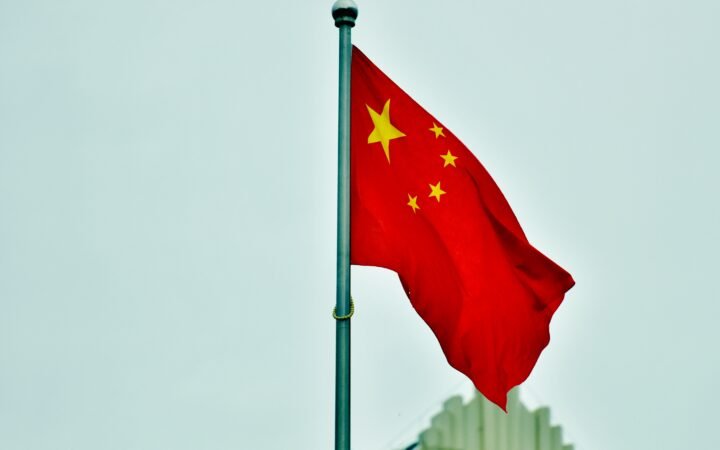
As Washington limits Anthropic’s and OpenAI’s top models on security grounds, critics warn the restrictions are handing momentum to Chinese open-weight rivals like GLM-5.2.

An AI workflow is the end-to-end sequence used to turn a problem and its data into a functioning artificial intelligence system. Depending on the application, it may include data collection, cleaning, labeling, model selection, training, evaluation, deployment, monitoring, and feedback. Generative AI workflows can also add retrieval, prompt construction, tool calls, guardrails, and human approval steps. Mapping the workflow makes dependencies and failure points visible: poor inputs can undermine a strong model, while missing monitoring can allow quality to decline unnoticed. Well-designed workflows define ownership, measurable acceptance criteria, data-handling rules, and fallback behavior for cases the system cannot handle safely.
As Washington limits Anthropic’s and OpenAI’s top models on security grounds, critics warn the restrictions are handing momentum to Chinese open-weight rivals like GLM-5.2.

About $2.3 trillion was wiped from the Magnificent 7 in June as investors questioned Big Tech’s huge AI spending, even as chip and memory stocks kept climbing.
A record European heatwave is highlighting a growing threat to the AI boom: extreme weather that stresses data centers and the power grids they depend on at once.
Microsoft is heading for its worst month since 2008 as investors worry that its heavy AI spending may not pay off and that AI could erode demand for its core software.
South Korea announced about $880 billion in planned investment to expand chipmaking, AI data centers and robotics, aiming to double memory output and revive regions outside Seoul.
HP is scaling a strategic partnership with OpenAI, using the Frontier platform to roll out AI agents across customer support, software development and security after early pilots.
Google has limited Meta’s use of its Gemini AI models after Meta sought more computing capacity than Google could supply, delaying some of Meta’s internal projects.
OpenAI is leaning toward pushing its IPO to 2027 rather than accept less than a $1 trillion valuation, weeks after filing confidentially for a US listing.
Gemini 3.5 Flash computer use folds screen control into one cheap model with prompt-injection safeguards, though it is a preview and the benchmark is self-reported.
GPT-5.6 Sol brings stronger coding and cyber capabilities with OpenAI’s most robust safeguards, but a government-approved rollout echoes the Anthropic model ban.