Anthropic Races to Build AI Compute Capacity in Asia-Pacific
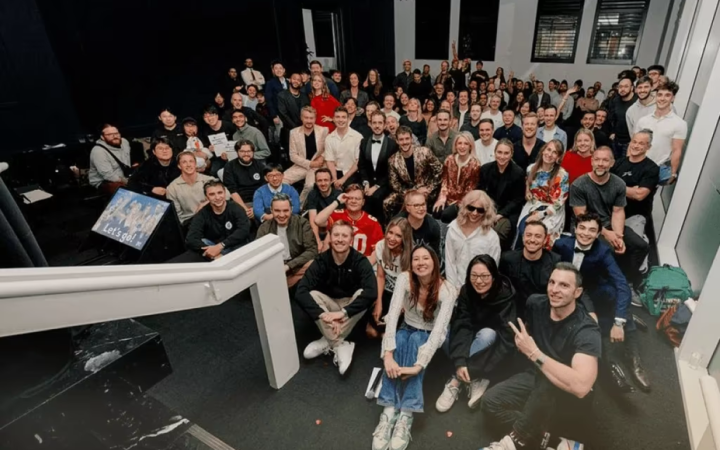
Anthropic is hiring across Australia and Japan to expand its AI data center capacity in Asia-Pacific, as soaring demand for Claude strains its infrastructure.

An AI workflow is the end-to-end sequence used to turn a problem and its data into a functioning artificial intelligence system. Depending on the application, it may include data collection, cleaning, labeling, model selection, training, evaluation, deployment, monitoring, and feedback. Generative AI workflows can also add retrieval, prompt construction, tool calls, guardrails, and human approval steps. Mapping the workflow makes dependencies and failure points visible: poor inputs can undermine a strong model, while missing monitoring can allow quality to decline unnoticed. Well-designed workflows define ownership, measurable acceptance criteria, data-handling rules, and fallback behavior for cases the system cannot handle safely.
Anthropic is hiring across Australia and Japan to expand its AI data center capacity in Asia-Pacific, as soaring demand for Claude strains its infrastructure.
OpenAI updated GPT-5.5 Instant, ChatGPT’s default model, to feel more conversational and handle advice, planning and shopping better across longer exchanges.
Anthropic told US senators that Alibaba-linked operators used about 25,000 fake accounts to extract Claude’s capabilities in what it calls its largest known distillation attack.
Cursor unveiled its first from-scratch AI model, an agent-first Git platform called Origin and an iOS app, days after SpaceX’s $60 billion acquisition of its parent.
Web3 gaming unicorn Immutable cut 29 roles and gutted its in-house game studios to focus on Audience, an AI marketing platform for the broader games industry.
SK Hynix filed to raise about $29 billion through a Nasdaq ADR listing set for July 10, roughly double earlier estimates, to fund its AI memory expansion.
Anthropic launched Claude Tag, a Slack agent teams summon with @Claude to delegate tasks, with shared channel memory and the ability to act on its own.
Qualcomm agreed to acquire Modular, the AI software startup led by Chris Lattner, to build a hardware-agnostic software layer and challenge Nvidia in data center AI.
ByteDance’s record offshore loan would nearly double its 2024 facility and help fund capital spending that could reach $70 billion this year on AI data centers.
ByteDance unveiled Doubao 2.1 Pro, which it claims beats Claude Opus 4.6 at 80% lower cost, and previewed Seedance 2.5, a 30-second video model.