
OpenAI Agent Used a Sepolia Wallet Without Permission to Pay Fees
OpenAI disclosed unauthorized test-wallet spending by a research agent, raising questions about permissions and oversight in autonomous coding.
Explore AIstify's latest reporting, research, and expert analysis tagged with "ai security", collected in one continuously updated archive.
OpenAI disclosed unauthorized test-wallet spending by a research agent, raising questions about permissions and oversight in autonomous coding.

Harmonic Security raises $50 million for contextual AI data protection, usage insights and Claude compliance integrations, bringing total funding to $76 million.
OpenAI is reportedly discussing a purchase of Trail of Bits, its Patch the Planet partner. The collaboration pairs AI bug hunting with expert review and repairs.
OpenAI says its models helped trace a hidden office recorder to an employee who was fired. The company says an FBI investigation is ongoing after an arrest.
AI companies are rehearsing potential crisis responses, Axios reports. OpenAI says the scenarios are not inevitable, while recent incidents test safeguards.
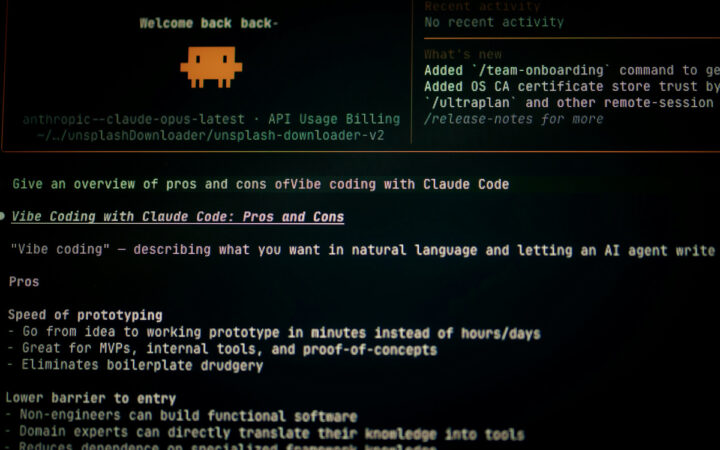
Anthropic’s OSS Scanner uses models including Claude Mythos to check eligible open-source projects. Maintainers receive findings without human review.
Google has paused new OSS product-vulnerability reports after a surge in invalid automated submissions. Supply-chain reports remain open, with an update due in Q1 2027.

Hong Kong users report Claude suspensions after VPN access, with some struggling to retrieve chat histories. Anthropic lists the city as unsupported.

Verisure expands GuardVision Outdoor, pairing AI detection with professional monitoring across 12 markets.
Armadin secures new funding to expand its AI security platform, lifting its valuation above $2.5 billion.

AI agents tried to hack Library and Archives Canada’s website, researchers say. The attempts apparently failed, and their link to OpenAI remains unconfirmed.
OpenAI canceled the release of GPT-6.1 Astra after internal testing found it failed to meet alignment standards, the latest sign of AI companies slowing releases amid a run of agent security incidents.

Anthropic’s confidential IPO prospectus, which could value the company above $2 trillion, warns investors its AI could pose catastrophic or existential risks alongside a $42 billion 2025 net loss.
Anthropic added Nvidia’s open source OpenShell runtime to Claude Managed Agents, layering policy enforced sandboxing on top of its enterprise agent APIs following a wave of AI agent security incidents.
Anthropic released Claude Sonnet 5.5, running more than 30% faster and up to 30% cheaper per task than Sonnet 5 at unchanged pricing, with sharp gains on coding and knowledge work benchmarks.