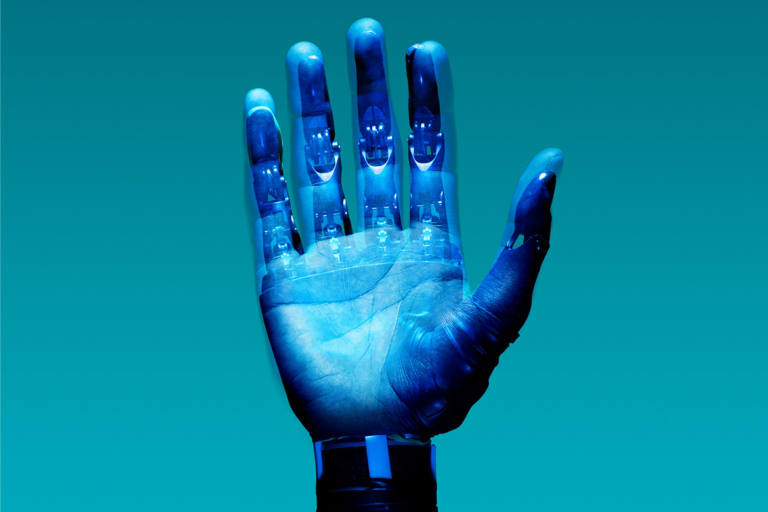

Silicon Valley’s attention is increasingly shifting from conversational AI toward robotics, as technology companies race to combine advanced artificial intelligence with physical machines capable of operating in the real world.
According to Business Insider, leading AI firms including Nvidia, OpenAI, Meta, and Tesla are investing heavily in humanoid robotics, viewing embodied AI as one of the next major growth opportunities for the industry. The trend reflects a broader effort to move beyond software-based assistants and deploy AI systems capable of performing physical tasks across industries.
The latest developments were highlighted at Nvidia’s GTC Taipei event, where the company unveiled a standardized humanoid robot blueprint designed for academic researchers. The platform is expected to become available in late 2026 and aims to provide a common foundation for robotics development, potentially reducing barriers to entry for universities, research institutions, and startups.
OpenAI is also expanding its robotics ambitions. CEO Sam Altman recently announced the launch of OpenAI Robotics, a dedicated division focused on developing robots that can assist skilled workers with infrastructure projects. The company ultimately envisions personal robots capable of helping individuals with a wide range of everyday activities.
Meanwhile, Tesla continues to advance its Optimus humanoid robot program, while startups such as Figure AI are attracting significant investor interest. Figure AI was most recently valued at $39 billion and has signed a commercial agreement with Catalyst Brands to deploy humanoid robots in distribution and logistics environments.
The growing activity signals a new phase of AI development in which success may depend not only on software capabilities but also on the ability to integrate intelligence with hardware, sensors, mobility systems, and real-world operations.
Building AI for the Physical World
Unlike conversational AI systems, robotics requires the integration of multiple technologies into a single platform. Developers must combine perception systems, computer vision, sensors, real-time control software, simulation environments, and physical actuators capable of interacting safely with the surrounding environment.
These challenges make robotics significantly more complex than deploying cloud-based AI models. Success depends on reliable performance in unpredictable real-world settings, where robots must continuously interpret sensory information and make decisions with minimal latency.
As a result, companies are increasingly investing in specialized hardware, simulation platforms, and edge computing systems capable of running advanced AI models directly on robotic devices.
The pace of adoption will likely depend on factors such as safety, reliability, regulation, and commercial viability. Analysts and industry observers are expected to closely monitor pilot deployments, infrastructure investments, and the emergence of common hardware standards as the race to bring AI into the physical world accelerates.
Disclaimer: AIstify is an independent media brand owned and operated by NuvexMedia LLC, publishing news, research, and insights on artificial intelligence, emerging technologies, automation, and related industries. NuvexMedia LLC invests in and collaborates with companies across the AI, technology, software, and digital innovation sectors. These relationships do not influence AIstify’s editorial coverage, and the publication maintains full editorial independence to provide accurate, timely, and objective information. © 2026 NuvexMedia LLC. All rights reserved. This content is for informational purposes only and should not be considered legal, tax, investment, financial, or other professional advice.