
Alphabet announced plans to raise $80 billion through a combination of stock offerings and private investment as the company accelerates spending on artificial intelligence infrastructure. The financing includes a $10 billion investment from Berkshire Hathaway and is intended to support growing demand for Google’s AI products and services.
The company said the capital will be used to expand its AI compute infrastructure as customer demand increasingly exceeds available capacity. Alphabet has become one of the largest investors in AI infrastructure globally as it seeks to strengthen its position against competitors including Microsoft, Amazon, Meta, and OpenAI.
The funding package consists of several components. Berkshire Hathaway will invest $10 billion, while Alphabet plans to raise another $30 billion through underwritten offerings, including $15 billion in mandatory convertible preferred stock. The remaining $40 billion will come through an at-the-market offering program for Class A and Class C shares expected to begin in the third quarter.
The announcement follows a series of major capital raises by Alphabet. Earlier this year, the company issued more than $30 billion in global bonds and raised roughly $11 billion in European debt markets. Those transactions followed a $25 billion bond offering completed in late 2025.
Alphabet has simultaneously increased its AI investment plans. In April, the company raised its projected capital expenditures for 2026 to between $180 billion and $190 billion. CEO Sundar Pichai said at the time that compute capacity had become one of the company’s biggest strategic concerns as AI demand continues to accelerate.
The financing also deepens Berkshire Hathaway’s relationship with Alphabet. Prior to the announcement, Berkshire’s stake in the company was already valued at roughly $20 billion, making it one of the investment firm’s largest technology holdings outside Apple.
The Escalating Cost of AI
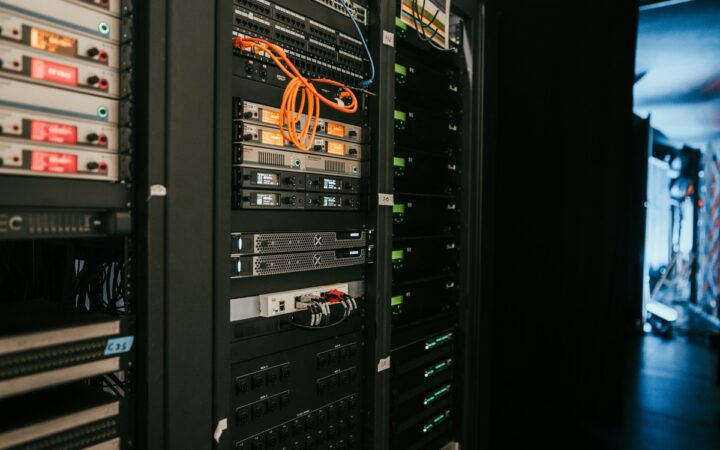
The announcement highlights the enormous capital requirements emerging in the AI industry. Building and operating advanced AI systems increasingly depends on access to data centers, networking infrastructure, specialized semiconductors, power generation, and land for future expansion.
Major technology companies are responding with unprecedented spending plans. Alphabet, Microsoft, Meta, and Amazon are expected to invest more than $700 billion collectively in capital expenditures this year, while some Wall Street analysts project industry-wide AI infrastructure spending could surpass $1 trillion annually by 2027.
The scale of investment reflects a growing consensus that access to computing capacity will become one of the defining competitive advantages of the AI era.
The Infrastructure Race Intensifies
Alphabet’s fundraising effort comes as technology companies race to secure the resources needed to support increasingly powerful AI models and agentic systems. Demand for AI computing has expanded beyond model training to include inference workloads, enterprise deployments, and real-time AI applications.
The move mirrors similar initiatives across the industry. SoftBank recently committed €45 billion to build AI data centers in France and continues to finance Stargate, the $500 billion AI infrastructure project in the United States. Nvidia has invested billions in photonics technologies and next-generation AI infrastructure, while Microsoft, Amazon, and Meta continue expanding global data center capacity.
For Alphabet, the additional capital provides greater flexibility to address what executives increasingly view as the company’s primary challenge: ensuring sufficient compute capacity to meet demand. As AI adoption accelerates across both enterprise and consumer markets, the ability to rapidly scale infrastructure may prove just as important as advances in AI models themselves.
Disclaimer: AIstify is an independent media brand owned and operated by NuvexMedia LLC, publishing news, research, and insights on artificial intelligence, emerging technologies, automation, and related industries. NuvexMedia LLC invests in and collaborates with companies across the AI, technology, software, and digital innovation sectors. These relationships do not influence AIstify’s editorial coverage, and the publication maintains full editorial independence to provide accurate, timely, and objective information. © 2026 NuvexMedia LLC. All rights reserved. This content is for informational purposes only and should not be considered legal, tax, investment, financial, or other professional advice.