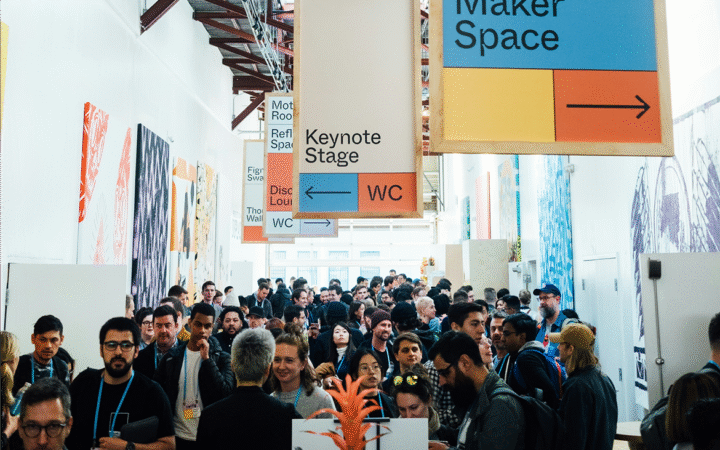
India AI Summit Secures Over $250 Billion in Infrastructure Deals
India’s AI Impact Summit in New Delhi delivered more than $250 billion in investment commitments, spanning data centers, AI infrastructure, and global expansion plans.

Sequence-to-sequence, or Seq2Seq, describes models that map an input sequence to an output sequence whose length may differ. Machine translation converts words in one language into another, speech recognition maps audio frames to text, and summarization produces a shorter sequence from a longer document. Many Seq2Seq systems use an encoder to represent the input and a decoder to generate output step by step, often with attention between them. Transformer encoder–decoder architectures largely replaced earlier recurrent designs. Training typically uses paired examples and token-level loss, while inference relies on greedy, beam, or sampling-based decoding. Quality depends on alignment, context limits, data coverage, and evaluation beyond surface overlap.
India’s AI Impact Summit in New Delhi delivered more than $250 billion in investment commitments, spanning data centers, AI infrastructure, and global expansion plans.
Bill Gates canceled his keynote appearance at India’s AI Impact Summit hours before speaking, as renewed scrutiny over past ties to Jeffrey Epstein intensified following U.S. Justice Department disclosures.
Fei-Fei Li’s World Labs secured a $200 million investment from Autodesk as part of a broader $1 billion round, deepening collaboration on AI systems that generate and reason about 3D environments.
Mistral AI CEO Arthur Mensch said more than half of today’s enterprise software could be replaced by AI, intensifying investor concerns about the future of SaaS business models.
Anthropic has released Claude Sonnet 4.6, upgrading its mid-tier AI model with stronger coding, computer use, and long-context reasoning while keeping pricing unchanged.
Perplexity says it will not reintroduce advertising into its AI answers, distancing itself from rivals that are experimenting with ads to offset rising costs.
Apple is developing multiple AI-powered wearable devices, including smart glasses, an AI pendant, and camera-enabled AirPods, according to a new report from Bloomberg.
Figma has introduced a new MCP integration that allows work created in Claude Code to be sent directly into Figma as fully editable design layers, linking AI-assisted coding with visual design workflows.
The Government of Rwanda and Anthropic have signed a three-year MOU to expand AI access across education, health, and public sector systems, building on prior regional initiatives.
Infosys has partnered with Anthropic to integrate Claude models into its Topaz AI platform, aiming to build enterprise-grade AI agents for industries such as banking, telecom, and manufacturing.