
Google has unveiled the Gemini 3.5 family of AI models, launching Gemini 3.5 Flash as its new flagship model for coding, AI agents, and long-running autonomous workflows.
The company said Gemini 3.5 Flash combines frontier-level reasoning performance with significantly faster response speeds, positioning it as a model optimized for agentic systems that can execute multi-step tasks across software, enterprise workflows, and web environments.
Gemini 3.5 Flash is now the default model powering the Gemini app and AI Mode in Google Search globally. It is also available through Google Antigravity, Gemini API, Google AI Studio, Android Studio, and Gemini Enterprise platforms.
Google said the model outperforms Gemini 3.1 Pro across several internal coding and agentic benchmarks, including Terminal-Bench 2.1, GDPval-AA, and MCP Atlas. The company also claimed the model generates output tokens four times faster than other frontier AI systems while maintaining competitive reasoning quality.
Google also confirmed that Gemini 3.5 Pro is already being tested internally and is expected to launch next month.
AI Agents Become the Center of Gemini
Google is positioning Gemini 3.5 Flash as a model specifically built for long-horizon agentic workflows rather than traditional chatbot interactions.
The company said the model performs particularly well in tasks involving planning, iteration, tool usage, and collaborative subagents capable of working in parallel on large-scale problems. When combined with Google’s updated Antigravity framework, Gemini 3.5 Flash can deploy coordinated AI subagents to execute multi-step workflows under human supervision.
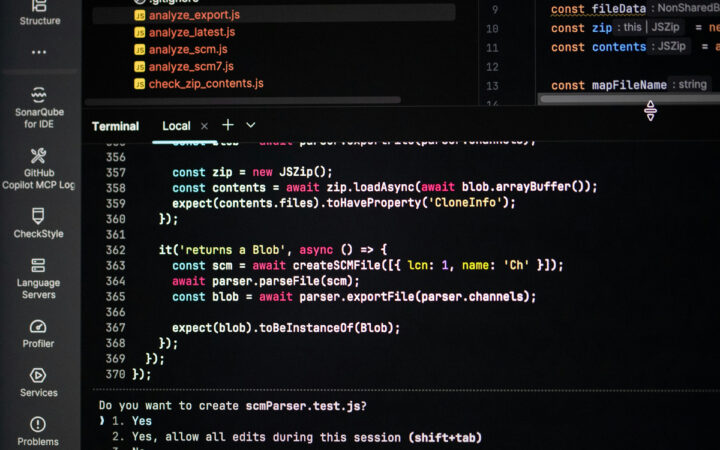
Google showcased examples involving software engineering, financial document preparation, data analysis, and automated asset categorization. The company said the model can complete tasks that previously required days or weeks of manual work at substantially lower operational cost.
The model also introduces stronger multimodal capabilities for generating interactive user interfaces, graphics, and visual workflows directly from prompts.
Gemini 3.5 Flash additionally powers Gemini Spark, Google’s upcoming personal AI agent platform that operates continuously in the background to help users manage digital tasks and workflows. Google said Spark is beginning to roll out to trusted testers before expanding to Gemini AI Ultra subscribers in the United States next week.
Higher Pricing Reflects Shift Toward Enterprise AI
Google also raised pricing significantly compared with the previous Flash generation. Gemini 3.5 Flash costs $1.50 per million input tokens and $9 per million output tokens through the API, roughly triple the pricing of Gemini 3.1 Flash.
The higher pricing reflects the broader industry trend toward positioning AI models less as low-cost chatbot tools and more as infrastructure for enterprise automation and software engineering workflows. Companies developing frontier models are increasingly competing on long-duration agentic performance, coding reliability, and orchestration capabilities rather than raw conversational quality alone.
Google said Gemini 3.5 was developed under its Frontier Safety Framework with expanded cybersecurity and CBRN safeguards, alongside new interpretability systems designed to evaluate the model’s reasoning processes before responses are generated.
The launch also signals Google’s effort to integrate Gemini more deeply across its consumer and enterprise ecosystem. By making 3.5 Flash the default model inside Search, Gemini, Android Studio, and enterprise products simultaneously, Google is pushing toward a unified AI platform strategy built around persistent agents, multimodal interfaces, and continuous workflow automation.
Disclaimer: AIstify is an independent media brand owned and operated by NuvexMedia LLC, publishing news, research, and insights on artificial intelligence, emerging technologies, automation, and related industries. NuvexMedia LLC invests in and collaborates with companies across the AI, technology, software, and digital innovation sectors. These relationships do not influence AIstify’s editorial coverage, and the publication maintains full editorial independence to provide accurate, timely, and objective information. © 2026 NuvexMedia LLC. All rights reserved. This content is for informational purposes only and should not be considered legal, tax, investment, financial, or other professional advice.