AMD said it will invest more than $10 billion across Taiwan’s semiconductor and artificial intelligence ecosystem as the company accelerates development of next-generation AI infrastructure and intensifies competition with Nvidia.
The investment will focus on expanding partnerships tied to advanced chip manufacturing, packaging, and AI server deployment, according to a company announcement released Thursday.
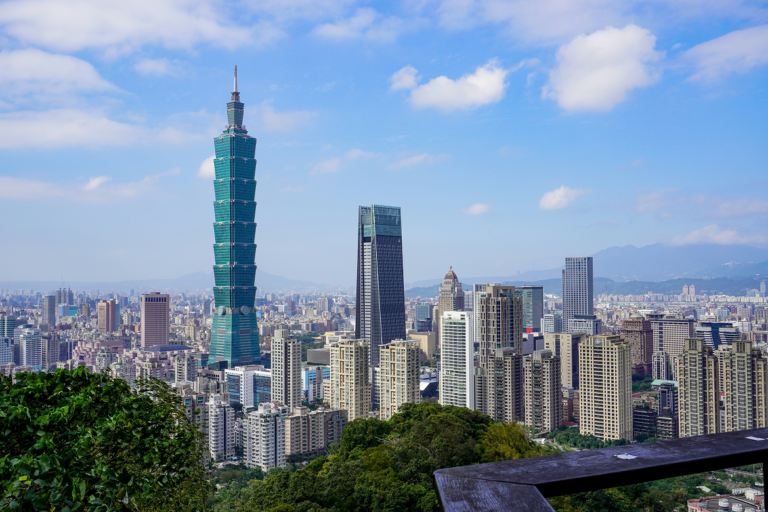
Taiwan remains the center of the global semiconductor industry because of Taiwan Semiconductor Manufacturing Co. (TSMC), the world’s largest contract chipmaker and a key supplier for companies including Nvidia, Apple, and AMD.
AMD said the new spending will support development of advanced silicon, packaging, and manufacturing technologies designed to improve AI system performance, energy efficiency, and deployment speed.
The company specifically highlighted collaborations with Taiwanese packaging firms ASE and SPIL to advance chip interconnect technologies that allow processors and memory systems to communicate more efficiently inside AI infrastructure.
AMD said the technologies being developed through the initiative are intended to support deployment of its Helios AI server platform, scheduled for release in the second half of 2026.
AI Infrastructure Spending Intensifies
The announcement comes during a period of escalating global investment in AI computing infrastructure as semiconductor companies race to meet demand for large-scale AI training and inference systems.
AMD has emerged as one of the major beneficiaries of the AI infrastructure boom, with its shares more than doubling this year as investors increasingly view the company as one of the strongest challengers to Nvidia’s dominance in AI accelerators.
The company has aggressively expanded its AI hardware roadmap through GPUs, server systems, and high-performance networking technologies aimed at hyperscalers, enterprises, and cloud providers.
Helios represents part of AMD’s broader effort to compete more directly with Nvidia’s integrated AI infrastructure strategy, which combines GPUs, networking, software, and server platforms into large-scale AI computing systems.
AMD named manufacturing and infrastructure partners including Sanmina, Wiwynn, Wistron, and Inventec as contributors to Helios deployment efforts.
The focus on advanced chip packaging is particularly important because AI systems increasingly rely on tightly interconnected chips and memory modules to improve bandwidth and computing performance while reducing energy consumption.
Taiwan Strengthens Its Position in Global AI Supply Chains
The investment further reinforces Taiwan’s central role in the global AI hardware supply chain despite growing geopolitical tensions surrounding semiconductor manufacturing.
Taiwanese firms dominate several critical parts of advanced chip production, including fabrication, packaging, testing, and server manufacturing. As AI models grow larger and more computationally demanding, chip packaging and integration technologies have become increasingly strategic for the industry.
Nvidia, Google, Microsoft, Amazon, and Meta have all expanded long-term infrastructure spending tied to advanced semiconductor supply chains over the past year. AMD’s latest investment signals that competition in AI is increasingly shifting beyond model development into ownership of manufacturing capacity, packaging technology, server infrastructure, and global supply chain partnerships.
Disclaimer: AIstify is an independent media brand owned and operated by NuvexMedia LLC, publishing news, research, and insights on artificial intelligence, emerging technologies, automation, and related industries. NuvexMedia LLC invests in and collaborates with companies across the AI, technology, software, and digital innovation sectors. These relationships do not influence AIstify’s editorial coverage, and the publication maintains full editorial independence to provide accurate, timely, and objective information. © 2026 NuvexMedia LLC. All rights reserved. This content is for informational purposes only and should not be considered legal, tax, investment, financial, or other professional advice.