Microsoft Heads for Worst Month Since 2008 on AI Spending Fears
Microsoft is heading for its worst month since 2008 as investors worry that its heavy AI spending may not pay off and that AI could erode demand for its core software.
Sequence-to-sequence, or Seq2Seq, describes models that map an input sequence to an output sequence whose length may differ. Machine translation converts words in one language into another, speech recognition maps audio frames to text, and summarization produces a shorter sequence from a longer document. Many Seq2Seq systems use an encoder to represent the input and a decoder to generate output step by step, often with attention between them. Transformer encoder–decoder architectures largely replaced earlier recurrent designs. Training typically uses paired examples and token-level loss, while inference relies on greedy, beam, or sampling-based decoding. Quality depends on alignment, context limits, data coverage, and evaluation beyond surface overlap.
Microsoft is heading for its worst month since 2008 as investors worry that its heavy AI spending may not pay off and that AI could erode demand for its core software.

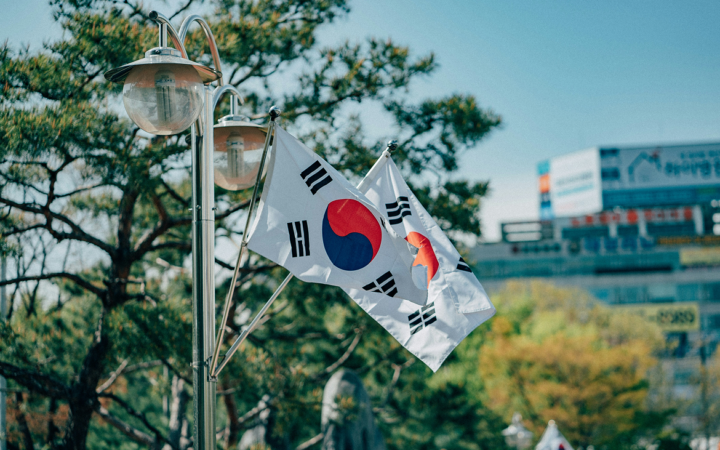
South Korea announced about $880 billion in planned investment to expand chipmaking, AI data centers and robotics, aiming to double memory output and revive regions outside Seoul.
HP is scaling a strategic partnership with OpenAI, using the Frontier platform to roll out AI agents across customer support, software development and security after early pilots.
Google has limited Meta’s use of its Gemini AI models after Meta sought more computing capacity than Google could supply, delaying some of Meta’s internal projects.
OpenAI is leaning toward pushing its IPO to 2027 rather than accept less than a $1 trillion valuation, weeks after filing confidentially for a US listing.
Gemini 3.5 Flash computer use folds screen control into one cheap model with prompt-injection safeguards, though it is a preview and the benchmark is self-reported.
GPT-5.6 Sol brings stronger coding and cyber capabilities with OpenAI’s most robust safeguards, but a government-approved rollout echoes the Anthropic model ban.
Anthropic is hiring across Australia and Japan to expand its AI data center capacity in Asia-Pacific, as soaring demand for Claude strains its infrastructure.
OpenAI updated GPT-5.5 Instant, ChatGPT’s default model, to feel more conversational and handle advice, planning and shopping better across longer exchanges.
Anthropic told US senators that Alibaba-linked operators used about 25,000 fake accounts to extract Claude’s capabilities in what it calls its largest known distillation attack.