OpenAI Makes GPT-5.6 Luna Free with Unlimited ChatGPT Text Chats
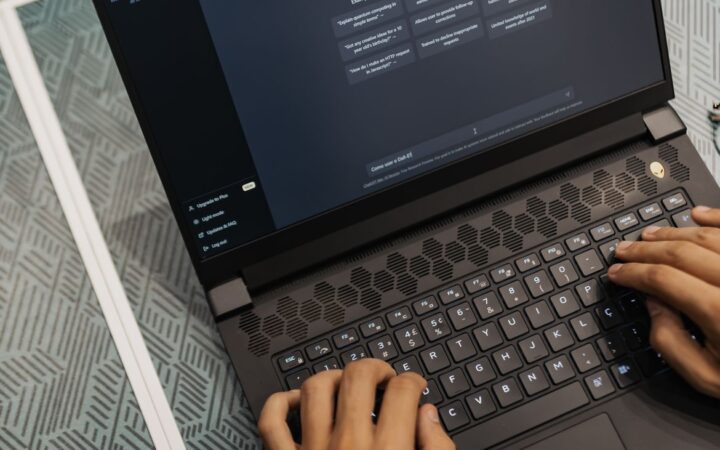
OpenAI is replacing GPT-5.5 Instant with GPT-5.6 Luna for Free and Go users, then removing text-chat limits and adding a Think button for harder questions.
Self-supervised learning creates training signals from the data itself instead of relying entirely on human labels. A model may predict masked words, reconstruct a missing image region, identify whether two views came from the same object, or learn the next element in a sequence. These objectives let systems pretrain on enormous collections of text, images, audio, or video and develop representations that can later support specific tasks. The approach reduces annotation needs but does not remove data-quality concerns; the model can absorb bias, private information, duplication, and harmful patterns from its source material. Downstream evaluation is necessary because success on the pretraining objective may not translate evenly across applications or groups.
OpenAI is replacing GPT-5.5 Instant with GPT-5.6 Luna for Free and Go users, then removing text-chat limits and adding a Think button for harder questions.
Demis Hassabis is becoming Alphabet chief scientist as Koray Kavukcuoglu takes operational control of DeepMind and four Google veterans launch Discovery Loop.
Meta has launched Muse Code, a terminal coding agent powered by Muse Spark 1.2, targeting long-running software projects and established rivals Codex and Claude Code.
AI startups captured 53% of global venture funding in July, their lowest share since December, even as total investment reached $65 billion in a record month for mega-rounds.
More than 1,200 employees from leading AI companies are asking the U.S. government to help create international mechanisms that could slow automated AI development if capabilities begin advancing faster than society can evaluate or control.
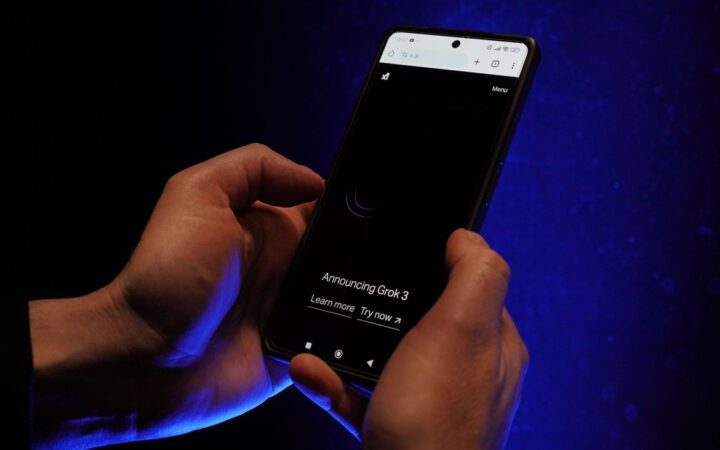
Elon Musk says xAI plans to release Grok 4.6 around August 7 and follow it with the larger Grok 4.7 several weeks later, extending the company’s rapid model rollout.
Anthropic researchers used Claude Mythos Preview to develop stronger attacks on the HAWK post-quantum signature scheme and a reduced-round version of AES, demonstrating research-level cryptanalysis without threatening current production systems.
Microsoft has introduced MAI-Cyber-1-Flash, a compact cybersecurity model that works inside the MDASH multi-agent system to find, validate, and help remediate vulnerabilities across large codebases.
NVIDIA has formed a long-term partnership with Ilya Sutskever’s Safe Superintelligence, reportedly investing $5 billion and giving the secretive AI lab access to Vera Rubin systems that will expand its computing capacity tenfold.
Moonshot AI has released the full weights for Kimi K3 on Hugging Face, making its 2.8 trillion-parameter multimodal model available for independent deployment, research, and further development.