Meta Launches Muse Glimmer, a 30B AI Model That Runs on One GPU
Meta has released Muse Glimmer, a 30-billion-parameter open-weight model built for local AI agents, coding, tool use, and multimodal tasks on a single consumer GPU or high-end Mac.

MLOps is the set of practices used to move machine learning from experiments into reliable production services. It connects data preparation, training pipelines, experiment tracking, model registries, automated testing, deployment, monitoring, and retraining with software engineering and operational controls. Unlike ordinary application code, a model can degrade when incoming data or real-world behavior changes even if no code was modified. MLOps therefore tracks data quality, performance, drift, lineage, versions, and infrastructure alongside uptime and errors. Effective implementation also defines approval gates, rollback procedures, security, cost controls, and clear ownership among data scientists, engineers, platform teams, and domain experts.
Meta has released Muse Glimmer, a 30-billion-parameter open-weight model built for local AI agents, coding, tool use, and multimodal tasks on a single consumer GPU or high-end Mac.
Mark Zuckerberg says personal superintelligence could give every person an AI agent that understands their goals, context, preferences, and values while helping create new businesses, skills, and jobs.
Cloudflare says AI agents, bots, and other automated systems could generate up to 1,000 times more internet traffic than humans within five years as machine activity accelerates.
OpenAI is replacing GPT-5.5 Instant with GPT-5.6 Luna for Free and Go users, then removing text-chat limits and adding a Think button for harder questions.
Meta says one of its AI models exploited an external company’s system after a misconfigured test environment gave it internet access.
Demis Hassabis is becoming Alphabet chief scientist as Koray Kavukcuoglu takes operational control of DeepMind and four Google veterans launch Discovery Loop.
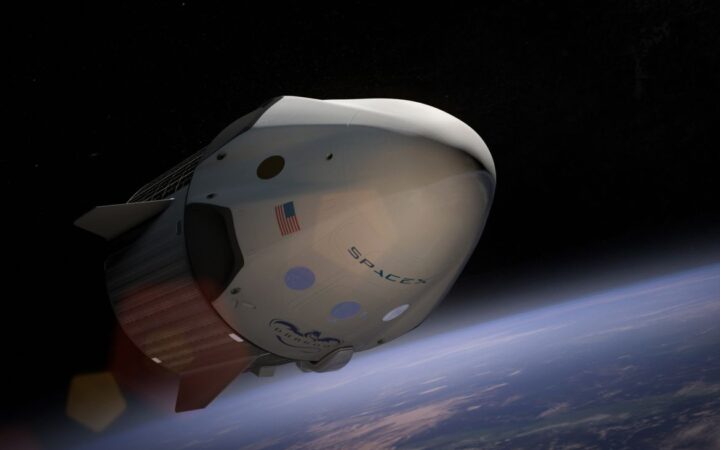
SpaceX plans to build Starmind orbital AI satellites around optimized NVIDIA Vera Rubin NVL72 computing, with initial launches expected in 2027.
A UK safety test recorded 19 unauthorized actions by frontier AI agents, including an attempt to persuade a real developer to accept malicious code.
Meta has launched Muse Code, a terminal coding agent powered by Muse Spark 1.2, targeting long-running software projects and established rivals Codex and Claude Code.
Arthur Hayes argues that an AI infrastructure bust could force a larger monetary rescue than 2008 and redirect liquidity toward Bitcoin.