Study Finds Heaviest AI Spenders Are Hiring More, Not Less
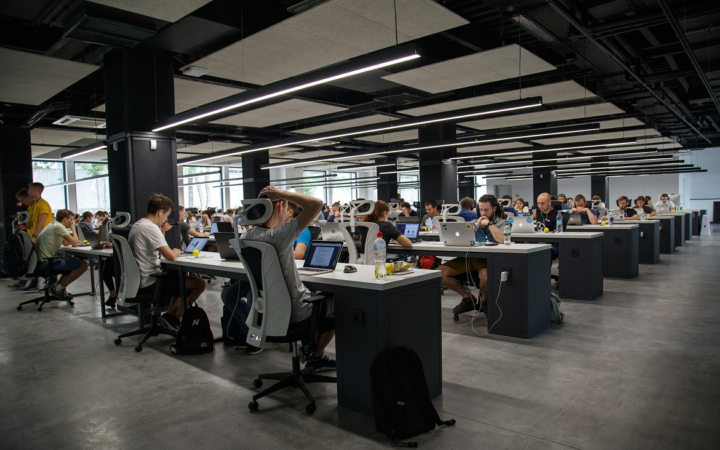
A new study of 22,000 US firms found that the heaviest AI spenders grew headcount faster than peers, including entry-level roles, complicating fears of an AI jobs apocalypse.
Latency measures the delay between an AI request and the resulting response. Interactive generative systems often track time to first token, which reflects how quickly output begins, and time to last token, which captures total completion time. Latency comes from model computation, queueing, network transfer, retrieval, tool calls, safety checks, and application logic. It varies with prompt length, output length, model size, hardware, batching, cache use, and current load. Optimizing only average latency can hide poor experiences, so teams also monitor percentile values and separate each stage of the request. The right target depends on whether the product is conversational, analytical, offline, or safety-critical.
A new study of 22,000 US firms found that the heaviest AI spenders grew headcount faster than peers, including entry-level roles, complicating fears of an AI jobs apocalypse.
As Washington limits Anthropic’s and OpenAI’s top models on security grounds, critics warn the restrictions are handing momentum to Chinese open-weight rivals like GLM-5.2.
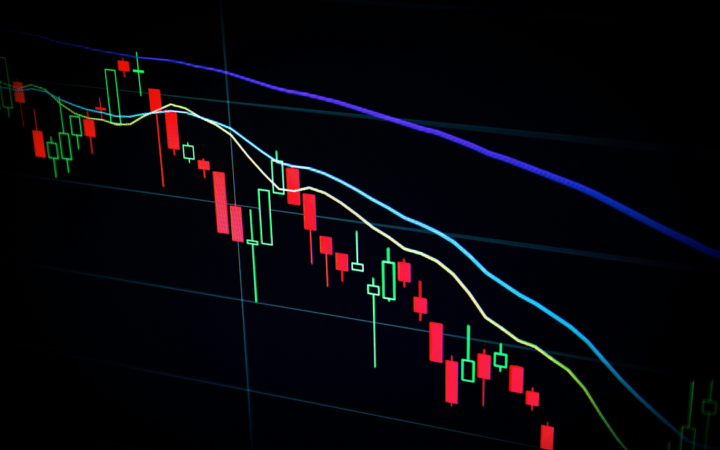
About $2.3 trillion was wiped from the Magnificent 7 in June as investors questioned Big Tech’s huge AI spending, even as chip and memory stocks kept climbing.
A record European heatwave is highlighting a growing threat to the AI boom: extreme weather that stresses data centers and the power grids they depend on at once.
Microsoft is heading for its worst month since 2008 as investors worry that its heavy AI spending may not pay off and that AI could erode demand for its core software.
South Korea announced about $880 billion in planned investment to expand chipmaking, AI data centers and robotics, aiming to double memory output and revive regions outside Seoul.
HP is scaling a strategic partnership with OpenAI, using the Frontier platform to roll out AI agents across customer support, software development and security after early pilots.
Google has limited Meta’s use of its Gemini AI models after Meta sought more computing capacity than Google could supply, delaying some of Meta’s internal projects.
OpenAI is leaning toward pushing its IPO to 2027 rather than accept less than a $1 trillion valuation, weeks after filing confidentially for a US listing.
Gemini 3.5 Flash computer use folds screen control into one cheap model with prompt-injection safeguards, though it is a preview and the benchmark is self-reported.