OpenAI Proposes Giving the US Government a 5% Stake
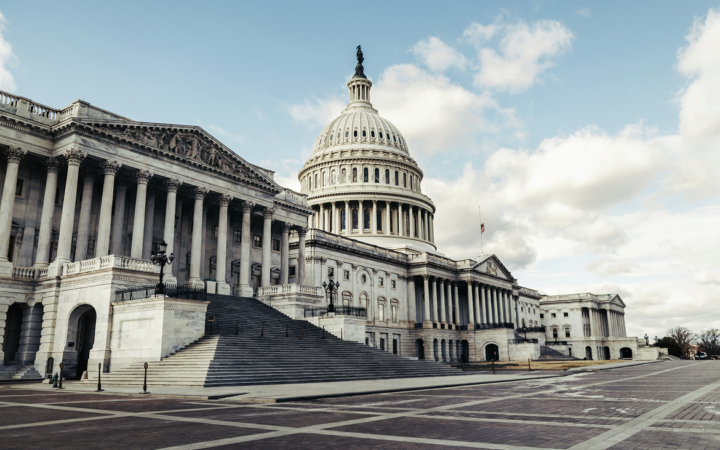
OpenAI has proposed handing the US government a roughly 5% stake, worth about $43 billion, to seed a public wealth fund and ease mounting political pressure in Washington.

A KV cache, or key-value cache, speeds up autoregressive transformer inference by storing attention information calculated for tokens that have already been processed. Without the cache, the model would recompute those keys and values each time it generates another token. Reusing them reduces repeated work and improves response latency, especially for long prompts and outputs. The tradeoff is memory: cache size grows with sequence length, batch size, layer count, and model dimensions. Production systems manage this cost with paging, quantization, eviction, prompt caching, and request scheduling. KV caching changes inference efficiency, not the model’s learned knowledge, and cached data must be protected when prompts contain sensitive information.
OpenAI has proposed handing the US government a roughly 5% stake, worth about $43 billion, to seed a public wealth fund and ease mounting political pressure in Washington.

Gamma’s connector lets users generate polished presentations, documents and webpages from inside a ChatGPT or Claude conversation, without copying content into a separate design tool.
Anthropic released Claude Sonnet 5, its most agentic mid-tier model, which it says approaches the pricier Opus 4.8 on many tasks at a lower per-token cost.
The US Commerce Department lifted export controls on Anthropic’s Claude Fable 5 and Mythos 5, ending an 18-day standoff and restoring the models globally from July 1.
A new study of 22,000 US firms found that the heaviest AI spenders grew headcount faster than peers, including entry-level roles, complicating fears of an AI jobs apocalypse.
As Washington limits Anthropic’s and OpenAI’s top models on security grounds, critics warn the restrictions are handing momentum to Chinese open-weight rivals like GLM-5.2.
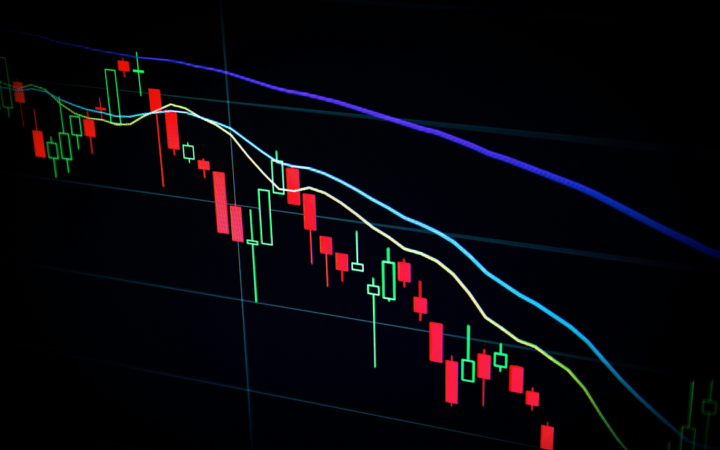
About $2.3 trillion was wiped from the Magnificent 7 in June as investors questioned Big Tech’s huge AI spending, even as chip and memory stocks kept climbing.
A record European heatwave is highlighting a growing threat to the AI boom: extreme weather that stresses data centers and the power grids they depend on at once.
Microsoft is heading for its worst month since 2008 as investors worry that its heavy AI spending may not pay off and that AI could erode demand for its core software.
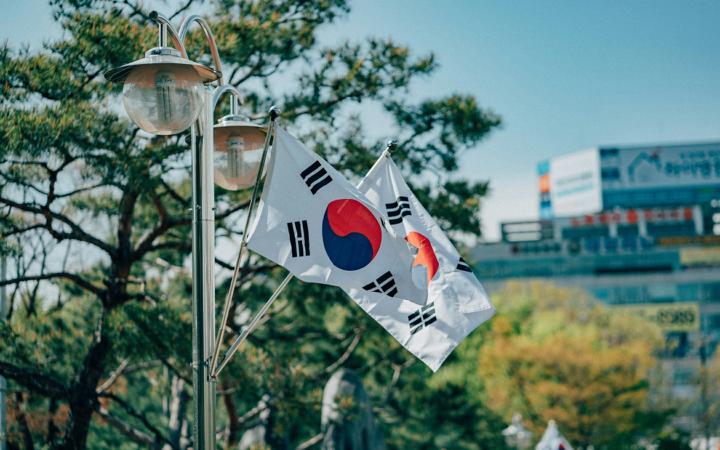
South Korea announced about $880 billion in planned investment to expand chipmaking, AI data centers and robotics, aiming to double memory output and revive regions outside Seoul.