Anthropic Secures Colossus Supercomputer Capacity From SpaceXAI
Anthropic has signed a deal to access SpaceXAI’s Colossus 1 supercomputer, adding more than 220,000 NVIDIA GPUs to support Claude training and inference workloads.

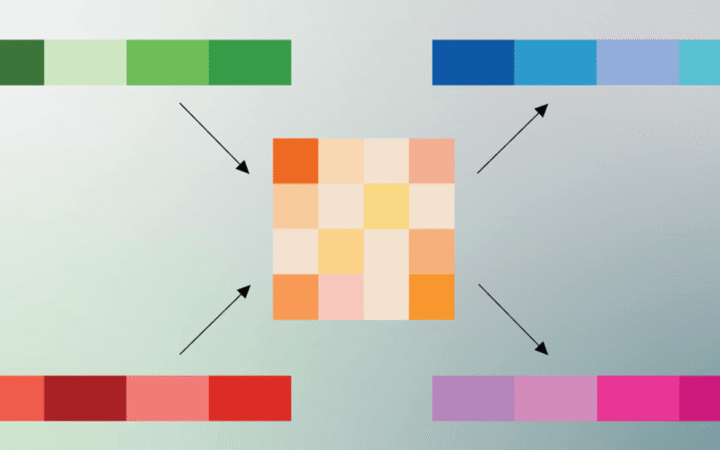
A GPU, or graphics processing unit, is a processor built to perform many calculations in parallel. Although originally designed for rendering graphics, this structure is well suited to the matrix and vector operations at the center of deep learning. GPUs accelerate both model training and inference, and multiple units can be connected to handle larger models or datasets. Performance depends not only on raw arithmetic speed but also on memory capacity, memory bandwidth, interconnects, numerical formats, cooling, and software libraries. Consumer, data-center, and integrated GPUs serve different workloads, so the most expensive chip is not automatically the most efficient choice for every AI application.
Anthropic has signed a deal to access SpaceXAI’s Colossus 1 supercomputer, adding more than 220,000 NVIDIA GPUs to support Claude training and inference workloads.
OpenAI’s rumored AI-focused smartphone could enter mass production in 2027, earlier than previously expected, according to analyst Ming-Chi Kuo.
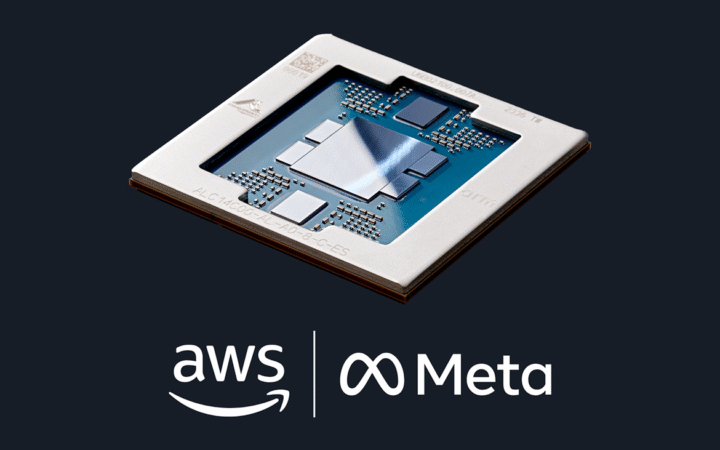
Meta will deploy tens of millions of AWS Graviton cores to power its next generation of AI systems. The deal highlights rising demand for CPU-driven infrastructure alongside GPUs.
AI startup Recursive Superintelligence has raised $500 million from Nvidia and GV to pursue self-improving AI systems, despite having no public product.
LinkedIn is testing a new platform that lets users earn up to $150 per hour training AI models. The move taps into fast-growing demand for human feedback in AI.
As John Ternus prepares to take over as Apple CEO, investors are demanding a clearer AI strategy. The company risks falling behind rivals investing heavily in AI.
Intel has joined Elon Musk’s Terafab project aimed at scaling AI chip production, though its exact role remains unclear. The effort targets massive compute output for AI and robotics.
Broadcom is expanding its role in AI infrastructure through new chip and compute deals with Google and Anthropic. The move reflects accelerating demand for large-scale AI capacity.
Nvidia has invested $2 billion in Marvell as part of a partnership to expand AI infrastructure, including custom chips, networking, and silicon photonics.
Google has introduced TurboQuant, a new compression algorithm that reduces memory usage in AI systems while maintaining accuracy, improving performance in large models and search.