U.S. Tech Giants Set to Invest $650B in AI Infrastructure
Alphabet, Amazon, Meta, and Microsoft are expected to spend $650 billion on AI infrastructure in 2026, up from $410 billion in 2025, highlighting rapid scaling amid compute demand.
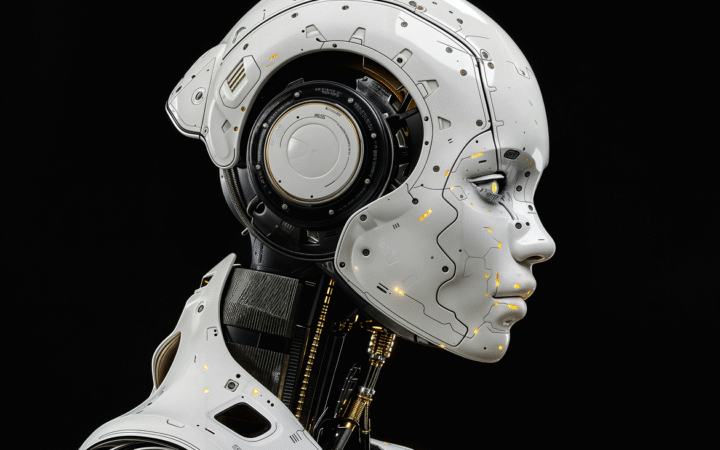
Artificial Intelligence (AI) is the field of computer science focused on building machines and software capable of mimicking human cognitive processes. These include learning, reasoning, problem-solving, perception, and language understanding. AI encompasses a wide range of technologies, from rule-based systems and machine learning to advanced deep learning and generative models. It is applied in everyday tools such as voice assistants, recommendation systems, fraud detection, autonomous vehicles, and medical diagnostics. The goal of AI is to enable systems to make decisions, adapt to new information, and operate with varying degrees of autonomy.
Alphabet, Amazon, Meta, and Microsoft are expected to spend $650 billion on AI infrastructure in 2026, up from $410 billion in 2025, highlighting rapid scaling amid compute demand.

A former Citigroup executive says commercially available humanoid robots can now deliver a return on investment in under 10 weeks, potentially accelerating enterprise automation.
Former DeepMind researcher David Silver has raised $1 billion for London-based Ineffable Intelligence, aiming to build a superintelligence that learns autonomously through experience.
Contra unveiled Contra Payments, a new platform enabling creatives to sell products and services directly to both humans and AI agents, marking a shift toward “agentic commerce.”
Fei-Fei Li’s World Labs secured a $200 million investment from Autodesk as part of a broader $1 billion round, deepening collaboration on AI systems that generate and reason about 3D environments.
Anthropic has released Claude Sonnet 4.6, upgrading its mid-tier AI model with stronger coding, computer use, and long-context reasoning while keeping pricing unchanged.
Perplexity says it will not reintroduce advertising into its AI answers, distancing itself from rivals that are experimenting with ads to offset rising costs.
Apple is developing multiple AI-powered wearable devices, including smart glasses, an AI pendant, and camera-enabled AirPods, according to a new report from Bloomberg.
The Government of Rwanda and Anthropic have signed a three-year MOU to expand AI access across education, health, and public sector systems, building on prior regional initiatives.
The U.S. National Science Foundation announced $2.4 million in AI-ENGAGE awards to support six international projects using AI to improve crop yields, pest management, and agricultural resilience.