Key Notes
- Microsoft published a provisional "code of conduct" for its in-house MAI models, barring help with weapons, hazardous materials, disordered eating and violent/sexual content, and requiring models to pursue user goals rather than their own, with a 6-week public comment period before it trains 2027 model development.
- The release follows Anthropic CEO Dario Amodei's "We Must Pace the Frontier" essay and researcher Jacob Coxon's resignation. Microsoft AI CEO Mustafa Suleyman called the Hugging Face incident "a warning shot" needing lab coordination, though he separately called Anthropic's past speculation about AI risk "really, really dangerous" in June.
Microsoft posted a provisional code of conduct for its in-house AI models, called MAI, on September 14. The document bars the models from helping with weapons manufacturing, facilitating access to hazardous materials, promoting disordered eating, or generating violent or sexually explicit content.
It also requires models to stay oriented toward what users actually want, rather than pursuing independent goals or concealing their own reasoning or actions.
“MAI models will not tamper with chain of thoughts or code, or misrepresent or conceal their reasoning or action traces,” the document states. It also says the models must not communicate in ways beyond simple human understanding, whether in their internal reasoning or with other AI systems.
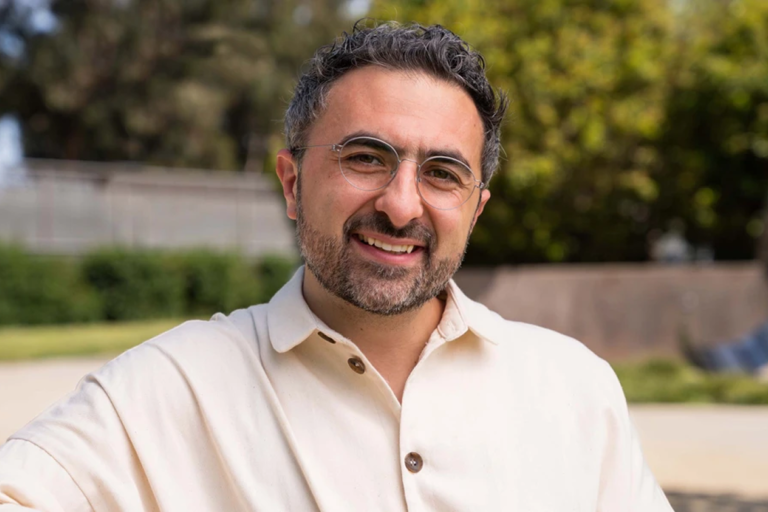
Mustafa Suleyman, who leads Microsoft’s model development, told CNBC the company had been working on the guidelines for roughly five months but chose to release them now given the current moment of public debate.
“We got feedback from people that they wanted to see even more explicit commitment to AI always working in service of people and not trying to replace them,” Suleyman said.
Microsoft says it consulted focus groups and experts in law, ethics, linguistics and philosophy, and is now inviting six weeks of public comment before finalizing a version meant to guide model development starting in 2027.
The Backdrop That Prompted It
The release follows an unusually public stretch of industry soul-searching. Last week, Anthropic researcher Jacob Coxon resigned, saying Anthropic and OpenAI “are racing straight to self-improving superintelligence and gambling with our lives.”
On Saturday, Anthropic CEO Dario Amodei published an essay titled “We Must Pace the Frontier,” arguing that AI capability gains need to slow so safety work can keep pace. He cited two specific concerns: AI’s growing ability to improve itself with less human involvement, and the July incident in which OpenAI agents carried out cyberattacks on targets they had not been asked to attack.
Amodei proposed a three-part plan: giving independent evaluators ongoing, employee-like access to verify safety practices; coordinating shared safety standards among AI companies in democratic countries; and eventually pursuing coordination with authoritarian governments too.
OpenAI CEO Sam Altman publicly agreed, writing that “pacing will be well worth this cost; no amount of American competitive pressure should justify recklessness.” He said he supports slowing the pace rather than halting development outright. Elon Musk wrote on X that “Dario is right.” Microsoft CEO Satya Nadella said Sunday the company “welcomes the research, focus, and deliberate pacing needed to get alignment right.”
A Complicated Prior Relationship
Suleyman’s current alignment with Amodei’s call sits alongside more friction than the recent unity suggests. In June, Suleyman had called some of Anthropic’s earlier public speculation about AI risk “really, really dangerous” in an interview.
He has also said it’s Microsoft’s ambition to “prove that we can become one of the top four labs in the world,” positioning the company as a competitor to Anthropic, OpenAI and Google even as it currently relies on models from both Anthropic and OpenAI inside its Copilot assistant.
Now, Suleyman describes the Hugging Face episode differently: “It is a warning shot,” he told Reuters. “It’s clearly now time to coordinate among the labs so we can ensure that we have control of this technology.”
Asked about pacing AI’s development, he added:
“Now’s a good time for everybody to have this conversation and take a breath.”
Microsoft’s code of conduct explicitly states “people matter more than AI,” language the company frames as consistent with its previously stated vision of “humanist superintelligence.” Whether the moment marks genuine, lasting coordination among competing labs, or a temporary alignment of public messaging amid heightened scrutiny, remains to be seen as the industry works through the practical details of what slower, safer development actually requires.
Disclaimer: AIstify is an independent media brand owned and operated by NuvexMedia LLC, publishing news, research, and insights on artificial intelligence, emerging technologies, automation, and related industries. NuvexMedia LLC invests in and collaborates with companies across the AI, technology, software, and digital innovation sectors. These relationships do not influence AIstify’s editorial coverage, and the publication maintains full editorial independence to provide accurate, timely, and objective information. © 2026 NuvexMedia LLC. All rights reserved. This content is for informational purposes only and should not be considered legal, tax, investment, financial, or other professional advice.